


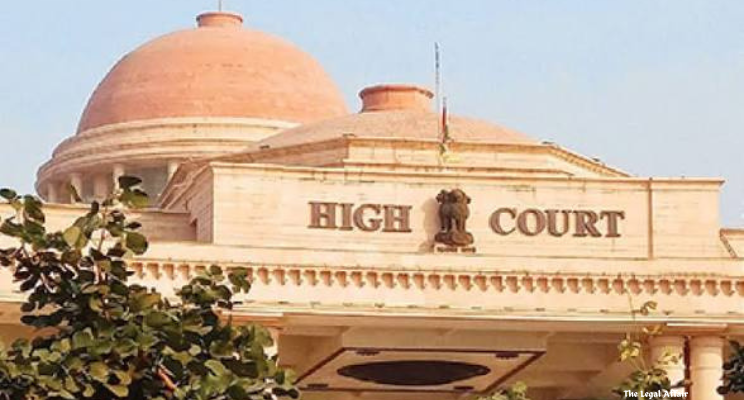
Introduction:
The Allahabad High Court, in Anup Kumar Shrivastava v. State of U.P. through Principal Secretary, Home, Lucknow (2026 LiveLaw (AB) 508), has clarified that an accused facing prosecution under the Prevention of Corruption Act, 1988 cannot seek discharge solely because the alleged disproportionate assets were reduced during the course of investigation. Justice Ram Manohar Narayan Mishra held that a reduction in the quantum of alleged disproportionate assets, or the fact that the remaining discrepancy forms only a small percentage of the accused’s income, does not justify discharge at the pre-trial stage.
The case arose from a criminal revision challenging the order of the trial court rejecting the revisionist’s discharge application in a prosecution under Sections 13(1)(e) and 13(2) of the Prevention of Corruption Act. The prosecution alleged that during the check period from April 1, 2004 to December 31, 2004, the accused possessed assets disproportionate to his known sources of income. While the FIR initially alleged disproportionate assets of ₹3.16 lakh, the Anti-Corruption Wing, after a detailed investigation, reassessed the figure at approximately ₹1.69 lakh and filed a charge sheet after obtaining the requisite sanction for prosecution.
The revisionist argued that the reduction in the alleged discrepancy demonstrated the weakness of the prosecution case and that the remaining amount could be explained by loans from friends and relatives as well as assets belonging to his Hindu Undivided Family (HUF). The High Court was therefore required to determine whether these contentions justified discharge before the commencement of trial.
Arguments of the Parties:
The revisionist contended that the prosecution had failed to establish his “known sources of income” as required under the Prevention of Corruption Act. He argued that the sanction for prosecution had been granted mechanically without proper application of mind and that the trial court had rejected his discharge application without adequately considering his submissions.
It was further submitted that the alleged disproportionate assets had been substantially reduced during the investigation from ₹3.16 lakh to about ₹1.69 lakh, demonstrating that the initial allegations were exaggerated. The revisionist maintained that the remaining discrepancy was insignificant when compared to his total income and could be satisfactorily explained through loans received from friends and relatives, besides assets attributable to his Hindu Undivided Family. According to him, these circumstances warranted his discharge.
The State opposed the revision, contending that at the stage of considering discharge or framing of charges, the court is not expected to undertake a detailed examination of evidence or make mathematical calculations regarding the precise extent of disproportionate assets. It argued that the Investigating Agency had examined the financial records, prepared a detailed calculation chart, and concluded that the accused had incurred expenditure exceeding his lawful income by ₹1,69,815 during the check period.
The prosecution further submitted that the accused’s explanations regarding loans, family assets, or other financial transactions constituted matters of defence that could only be established during trial by producing documentary evidence and examining witnesses. Therefore, these disputed factual issues could not be considered while deciding a discharge application.
Court’s Judgment:
Dismissing the revision petition, the Allahabad High Court upheld the trial court’s refusal to discharge the accused. The Court observed that the Anti-Corruption Wing had conducted a detailed investigation, scrutinised the income and expenditure of the revisionist, and prepared a calculation chart showing excess expenditure over known lawful income. The sanctioning authority had also granted sanction after examining the material collected during the investigation.
The Court categorically held that the mere reduction of the alleged disproportionate assets during investigation cannot by itself become a ground for discharge. Likewise, the fact that the remaining discrepancy constitutes only a small fraction of the accused’s income does not eliminate the existence of a prima facie case. These aspects may be relevant during trial but are insufficient to terminate criminal proceedings at the threshold.
The High Court also rejected the revisionist’s reliance on alleged loans from friends and relatives and the existence of HUF assets. It observed that these explanations involve disputed questions of fact requiring evidence. During trial, the accused would have full opportunity to establish that the amounts were received from lawful sources by producing contemporaneous documents, examining witnesses, and demonstrating compliance with service rules governing borrowing, lending, and financial disclosures applicable to government servants.
The Court emphasised that such factual enquiries cannot be undertaken while deciding a discharge application. At that stage, the court is only required to determine whether the material collected during investigation raises a prima facie case against the accused.
In reaching its conclusion, the High Court relied upon the Supreme Court’s decision in State v. R. Soundirarasu (2022 LiveLaw (SC) 741), wherein it was held that while considering discharge under Section 239 CrPC, courts cannot conduct a mini trial or evaluate the defence case in detail. The Court also referred to Amit Kapoor v. Ramesh Chander (2012), where the Supreme Court held that even a strong suspicion regarding the accused’s involvement is sufficient to frame charges and that courts should refrain from meticulously assessing the evidence at the preliminary stage.
Applying these settled principles, the High Court found that the inquiry report and the material collected during investigation created a grave suspicion regarding the accused’s involvement in possessing disproportionate assets. Since a prima facie case existed, the trial court had rightly refused to discharge the accused.
Finding no illegality, perversity, or procedural irregularity in the impugned order, the High Court dismissed the criminal revision and directed that the prosecution should proceed to trial, where the accused would have every opportunity to establish his defence through admissible evidence.