


Introduction:
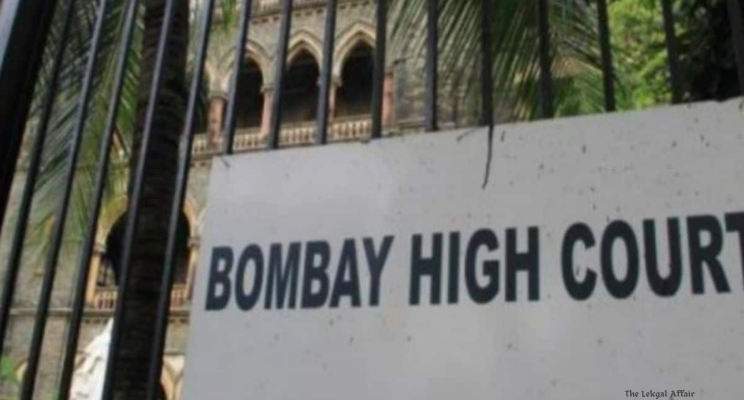
In Ajitnath Tatyasaheb Shetti & Anr. v. M/s. Govindram Shobharam and Company [Civil Revision Application No. 4 of 2025; 2026 LiveLaw (Bom) 81], the Bombay High Court delivered a significant ruling clarifying the legal consequences of demolition of tenanted premises during the pendency of eviction proceedings. Justice M.M. Sathaye held that demolition of the building does not extinguish tenancy rights nor render eviction proceedings infructuous under the Maharashtra Rent Control Act, 1999 (MRCA).
The case arose from a Civil Revision Application under Section 115 of the Code of Civil Procedure, 1908 (CPC), filed by the landlord challenging the appellate court’s decision which had reversed a decree of eviction earlier granted by the Trial Court. The eviction was sought on the grounds of bona fide requirement under Section 16(1)(g) and non-user under Section 16(1)(n) of the MRCA.
During the pendency of the appeal, the building—declared dangerous—was demolished pursuant to a municipal notice. The appellate court held that since the premises had ceased to exist, the landlord’s bona fide requirement did not survive and the ground of non-user also failed. However, the High Court disagreed, restoring the decree of eviction and laying down important principles governing tenancy rights when the superstructure is destroyed.
Background of the Case:
The landlord had instituted a suit seeking eviction of the respondent-tenant from ground floor premises situated in a building that had fallen into dilapidated condition. The suit was based on two principal grounds:
Bona fide requirement under Section 16(1)(g) of the MRCA, asserting genuine need for occupation.
Non-user under Section 16(1)(n), alleging that the tenant had ceased to use the premises for the purpose for which they were let.
The Trial Court, upon appreciation of evidence, decreed eviction on both grounds. The tenant preferred an appeal.
During the pendency of the appellate proceedings, the building was demolished pursuant to municipal action, as it was declared dangerous and unfit for occupation. The Appellate Court reversed the decree, holding that since the premises no longer existed, the landlord’s bona fide requirement could not survive and the plea of non-user became redundant.
Aggrieved by this reversal, the landlord approached the High Court in revision.
Arguments on Behalf of the Applicants (Landlords):
The landlords contended that the Appellate Court had committed a serious error in law by holding that demolition extinguished tenancy rights and defeated the eviction suit.
It was argued that when tenancy is created in respect of premises situated in a building, the subject matter of the demise includes both the land and the superstructure. The destruction of the building alone does not determine the tenancy so long as the land continues to exist.
The applicants emphasised that the crucial date for assessing bona fide requirement is the date of institution of the suit. On that date, the building existed, albeit in a dilapidated condition. The subsequent demolition was an event beyond their control and could not be used to negate their genuine requirement.
With respect to non-user, the landlords submitted that evidence on record established prolonged non-use by the tenant. The Appellate Court had misread the pleadings and evidence, resulting in perverse findings.
They further argued that the approach of the Appellate Court amounted to miscarriage of justice, warranting interference under Section 115 CPC.
Arguments on Behalf of the Respondent (Tenant):
The tenant defended the appellate judgment, arguing that once the building was demolished, the very subject matter of the tenancy ceased to exist. Consequently, the eviction suit became infructuous.
It was contended that bona fide requirement necessarily presupposes the existence of premises capable of occupation. If the structure is no longer standing, the landlord’s need cannot be meaningfully assessed.
Regarding non-user, the tenant argued that once demolition occurred, the question of use or non-use lost relevance.
The respondent also submitted that revisional jurisdiction under Section 115 CPC is limited and cannot be invoked merely because another view is possible. According to the tenant, the Appellate Court had exercised its discretion based on subsequent events and its decision did not warrant interference.
Court’s Analysis:
Justice M.M. Sathaye undertook a detailed examination of tenancy principles and the statutory framework under the MRCA.
Tenancy and Destruction of Building
The Court observed that when tenancy is created in respect of premises in a building standing on land, both the land and the building constitute the subject matter of demise. The tenancy is not confined to bricks and mortar alone but extends to the site on which the structure stands.
The Court held:
“… once the tenancy is created in respect of the premises in the building standing on the land, it is ‘the building and the land’ which are both components of the subject matter of demise and destruction of the building alone does not determine the tenancy when the land, which is the site of the building continues to exist.”
Thus, demolition of the superstructure does not ipso facto extinguish tenancy rights.
Bona Fide Requirement – Relevant Date
On the question of bona fide requirement, the Court reiterated that the crucial date for assessment is the date of institution of the suit. Subsequent events may be considered only if they completely eclipse or extinguish the landlord’s need.
The Court found that on the date of filing of the suit, the premises existed. The landlord’s requirement was pleaded and proved. Demolition during pendency did not nullify the requirement.
The Court clarified that subsequent events cannot automatically defeat substantive rights unless they render the original cause of action wholly redundant. In the present case, the requirement subsisted despite demolition.
Non-User
The High Court noted that the Trial Court had decreed eviction on the ground of non-user after evaluating evidence. The Appellate Court had not properly appreciated this aspect and had summarily rejected the ground solely due to demolition.
The High Court found such reasoning flawed and legally untenable.
Revisional Jurisdiction
Addressing the scope of Section 115 CPC, the Court held that interference is justified where the subordinate court has acted with material irregularity or committed jurisdictional error.
In the present case, the Appellate Court had misread pleadings and evidence and adopted an approach that amounted to perverse appreciation. This resulted in miscarriage of justice, thereby justifying revisional interference.
Judgment:
The High Court partly allowed the Civil Revision Application.
The judgment dated 12/09/2024 of the Appellate Court was quashed and set aside.
The decree of eviction dated 03/07/2018 passed by the Trial Court was restored on the grounds of bona fide requirement and non-user.
The ruling firmly establishes that demolition of a tenanted structure during pendency of proceedings does not render eviction suits infructuous, nor does it extinguish tenancy so long as the land continues to exist.