


Introduction:
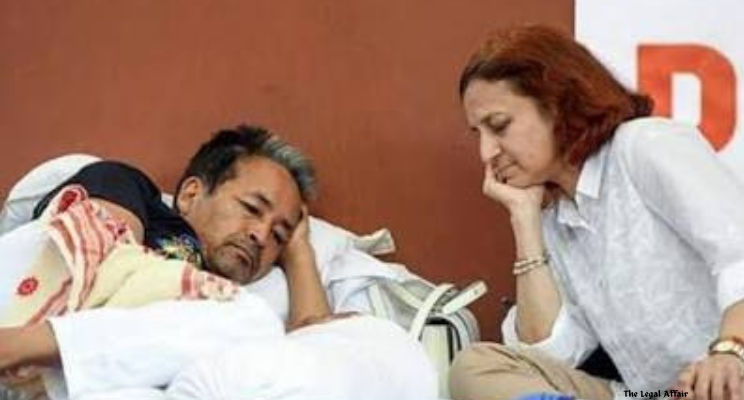
The Delhi High Court, in Gitanjali J. Angmo v. Union of India & Others (2026 LiveLaw (Del) 669), delivered an important judgment reaffirming that the right to life under Article 21 of the Constitution extends to ensuring appropriate medical care and respecting a patient’s choice of treatment where circumstances warrant such protection. A Division Bench comprising Chief Justice D.K. Upadhyaya and Justice Tejas Karia directed that activist Sonam Wangchuk, who had been on a prolonged hunger strike and was undergoing treatment at Safdarjung Hospital, be immediately shifted to Medanta Hospital, Gurgaon, the hospital of his choice. The Court held that such a transfer would fulfil the constitutional requirement of protecting his fundamental rights while ensuring uninterrupted medical supervision.
The proceedings arose out of an appeal filed by Dr. Gitanjali Angmo, wife of Sonam Wangchuk, challenging the order of a Single Judge who had declined to direct the activist’s transfer to a private hospital. Wangchuk had been taken into medical custody after being removed from Jantar Mantar, where he was observing a hunger strike in solidarity with the Cockroach Janta Party and students protesting the alleged NEET paper leak. Earlier, the High Court had directed the Union Government to ensure that he received daily medical monitoring and necessary treatment in view of his deteriorating health.
As concerns regarding Wangchuk’s physical condition intensified, the Division Bench called for detailed medical reports from Safdarjung Hospital, AIIMS, and his personal physician. The Court also sought the presence of senior medical experts to independently assess his condition before determining whether a transfer to a private hospital was medically justified.
The case raised significant constitutional questions concerning the scope of Articles 19 and 21 of the Constitution, particularly whether a person undergoing medical treatment while exercising a form of peaceful protest could insist upon receiving treatment at a hospital of his choice, provided such transfer did not compromise medical care or public interest.
Arguments of the Parties:
On behalf of the appellant, senior counsel submitted that Sonam Wangchuk’s health had substantially deteriorated because of his continued hunger strike and that his constitutional right to life included not merely access to medical treatment but also the right to receive treatment in an institution where he reposed confidence. It was argued that his continued hospitalization at Safdarjung Hospital despite his request to be shifted to Medanta unnecessarily restricted his autonomy and personal liberty guaranteed under Articles 19 and 21 of the Constitution.
The appellant relied upon medical reports prepared by private laboratories as well as the opinions of doctors who had been personally monitoring Wangchuk’s condition. These reports indicated concerns regarding his blood parameters, including reduced Total Leukocyte Count (TLC) and potassium levels, thereby establishing the need for continuous expert medical supervision. It was submitted that Medanta Hospital possessed the necessary infrastructure and specialist doctors to provide uninterrupted treatment while respecting Wangchuk’s personal choice.
The appellant further requested that family members, particularly his wife, be allowed unrestricted access to him during his hospitalization so that emotional support and informed participation in medical decisions could be ensured throughout the course of treatment.
The Union of India opposed the appeal before the Single Judge but adopted a more balanced approach before the Division Bench after detailed medical consultations were conducted. Solicitor General Tushar Mehta informed the Court that the respondents would have no objection if Wangchuk were shifted to Medanta Hospital, provided that his treatment continued under proper medical supervision.
Medical experts from AIIMS, Safdarjung Hospital and Wangchuk’s personal physician also participated in the proceedings. After examining blood and urine reports and discussing Wangchuk’s condition with the Court, the doctors broadly agreed that he required constant clinical monitoring because of abnormalities detected in his medical investigations. While there was no dispute regarding the seriousness of his condition, the consensus among the experts was that continuous specialist care remained essential irrespective of the institution where such treatment was provided.
This convergence of medical opinion significantly narrowed the dispute before the Court, leaving the primary issue to be whether constitutional principles justified permitting Wangchuk’s transfer to the hospital of his own choice.
Court’s Judgment:
After carefully considering the medical evidence and hearing all parties, the Division Bench allowed the appeal and directed the immediate transfer of Sonam Wangchuk from Safdarjung Hospital to Medanta Hospital, Gurgaon.
The Court noted that it had examined the pathological reports prepared by private laboratories, the affidavit filed by doctors at Safdarjung Hospital, and had personally interacted with senior medical experts, including representatives from AIIMS and Wangchuk’s treating physician. On the basis of this comprehensive assessment, the Court found that all medical experts substantially agreed that Wangchuk required continuous monitoring because of concerns relating to his blood profile, particularly his reduced Total Leukocyte Count and potassium levels.
The Bench observed that the issue before it was not merely one of medical administration but also involved the protection of constitutional rights. Referring to the submissions advanced regarding Articles 19 and 21 of the Constitution, the Court held that where adequate medical care could be provided at the hospital preferred by the patient, permitting such transfer would better protect the individual’s fundamental rights.
The Court therefore concluded that shifting Wangchuk to Medanta Hospital would satisfy both constitutional requirements and medical necessity. It observed that such transfer would adequately safeguard his health while simultaneously respecting his autonomy and dignity, which form an integral part of the right to life guaranteed under Article 21.
Accordingly, the Court directed that Wangchuk be immediately shifted to Medanta Hospital. The Director of the hospital was instructed to constitute a team of doctors possessing the requisite expertise to continuously monitor his health. The medical team was further directed to administer such treatment and medication as considered appropriate in accordance with accepted medical protocols and professional judgment.
Recognising the importance of family support during hospitalization, the Court also directed that Dr. Gitanjali Angmo be granted access to her husband throughout his stay at Medanta Hospital. Subject to medical protocols, she was permitted to visit him whenever she desired so that she could remain informed regarding his treatment and recovery.
At the same time, the Court balanced Wangchuk’s personal autonomy with the responsibilities accompanying medical treatment. It directed him to fully cooperate with the team of doctors at Medanta Hospital and comply with the treatment advised by them in accordance with established medical standards.
While concluding the proceedings, the Division Bench placed on record its appreciation for the assistance rendered by the doctors from AIIMS, Safdarjung Hospital and Wangchuk’s personal physician, acknowledging their professional cooperation in assisting the Court to arrive at an informed decision.
The Court also orally clarified that its concern throughout the proceedings remained confined to the protection of Wangchuk’s life, safety and constitutional rights. It consciously refrained from expressing any opinion regarding the political or social issues associated with the hunger strike or the broader protests that formed its background. The judgment thus maintained a clear distinction between the constitutional obligation to preserve life and the political context in which the medical emergency arose.
The decision underscores the constitutional principle that the right to life encompasses not merely survival but also access to timely, effective and appropriate healthcare. While the State bears a responsibility to protect individuals in its custody or care, such responsibility must be exercised in a manner consistent with personal dignity and individual autonomy. By permitting hospitalization at a medical institution chosen by the patient, the Delhi High Court recognised that constitutional rights do not stand suspended merely because a person is undergoing treatment during the course of a public protest.
The judgment further illustrates the judiciary’s role in balancing medical expertise, individual liberty and State responsibility. Rather than substituting its own medical opinion, the Court relied upon the consensus of independent medical experts before fashioning relief that protected both health and constitutional freedoms. In doing so, the Delhi High Court reaffirmed that preservation of life under Article 21 requires not only access to medical treatment but also respect for the patient’s legitimate preferences where such accommodation is medically feasible and legally permissible.