


Introduction:
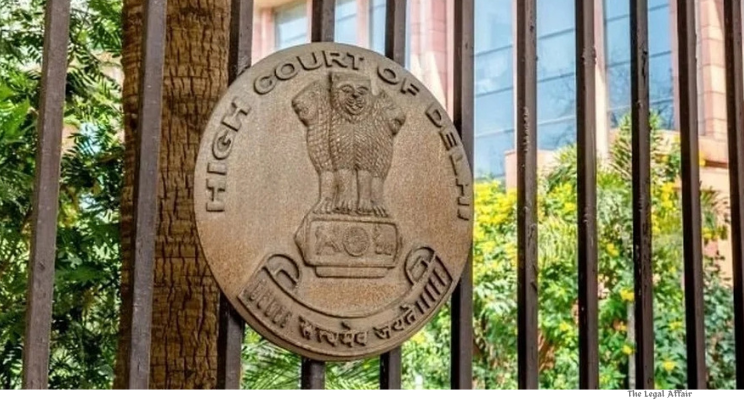
In the matter of Aakash Deep Chouhan v. CBI & Anr, the Delhi High Court took up a petition filed by Aakash Deep Chouhan who contested the framing of charges under Section 120B of the Indian Penal Code read with Section 9 of the Prevention of Corruption Act, 1988. Central to his plea was a challenge to the interception of his telephone calls and messages by the Central Bureau of Investigation (CBI), contending that these interceptions were executed unlawfully and in violation of his fundamental rights. The CBI, meanwhile, alleged that Chouhan colluded with others to procure a sub-contract in a government infrastructure project and facilitated corrupt transactions. The Court, presided by Justice Amit Mahajan, was faced with balancing the rights to privacy of the accused against the imperative to investigate and deter corruption, which the Court observed undermines public trust and national economic interests.
Arguments of the Petitioner (Aakash Deep Chouhan):
- Violation of Fundamental Rights & Illegal Interception: Chouhan contended that the interception of his calls and messages was not authorised under law and thus violates his constitutional right to privacy. He argued that the CBI failed to comply with legal safeguards under the Indian Telegraph Act and relevant rules, making the intercepted communications inadmissible in court.
- Absence of Legal Grounds: He asserted that no “public emergency” or sufficient “public safety” justification was shown, necessary conditions under Section 5(2) of the Indian Telegraph Act for lawful interception. In his view, mere suspicion of wrongdoing does not meet the stringent threshold required.
- Prejudice to Trial: Chouhan argued that the intercepted evidence formed the basis of the charges framed against him and was prejudicial to his right to a fair trial. He sought expunction or destruction of intercepted transcripts to ensure that the trial proceeded on credible and legally obtained evidence alone.
- Insufficient Basis for “Grave Suspicion”: The petitioner contested the sufficiency of evidence shown by the prosecution to establish grave suspicion or probable cause for interception. He maintained that the allegations were weak and not substantiated by preliminary inquiry, making the interception arbitrary.
Arguments of the Respondent (CBI & Union of India):
- Legality Under Telegraph Act & Public Safety: CBI emphasized that interceptions were ordered by the Ministry of Home Affairs, relying on Section 5(2) of the Telegraph Act. They argued that corruption threatens national economic security, and thus public safety was invoked correctly. Evidence of clandestine demand for motorcycle as gratification and conspiracy to influence senior officials added weight to grave suspicion.
- Seriousness of Corruption: The CBI stressed the pervasive spread of corruption and its impact on public confidence, infrastructure development, and resource allocation. They contended that intercepting communications of those engaged in corrupt activity served public interest and safety, legally justifying the measures.
- Judicial Precedent & Safeguards: They underscored that interception, while infringing privacy, may be permitted if done in accordance with the procedure established by law. Interceptions were carried out post approval by the Home Ministry and under judicial oversight where required. This, they contended, ensured legality and compliance with the “least intrusive” principle.
- Admissibility and Material Relevance: The agency asserted that the recordings are crucial to establishing conspiracy – meeting the “grave suspicion” test – and are therefore admissible. Destruction of these records would cripple prosecution and enable the accused to escape legal consequences.
- No Procedural Deficiency: CBI maintained that protocol under Telegraph Rules had been followed, including required record-keeping, authorized access, and proper chain of custody. There was no evidence of malafide intention or procedural defect. On that ground, the evidence remained reliable and valid.
Judgment by Justice Amit Mahajan:
Privacy Is Not Absolute: The Court reiterated that while the right to privacy is constitutional, it is not absolute. It can be restricted by procedures established by law, especially where national interest or public safety is concerned.
- Statutory Authorization: The intercepting authority was validly instituted by the Ministry of Home Affairs under Section 5(2) of the Telegraph Act; such authorisation carries the force of law.
- Public Safety Meets Threshold: Approving CBI’s plea, the Court held that corruption adversely impacts the national economy and infrastructure development, tampering with integrity of public institutions. These circumstances qualify as threats to “public safety.” The interception was therefore justifiable under legal provisions.
- No Procedural Lapse Found: The Court examined whether there was any procedural error in the interception. Satisfied that the necessary criteria of lawful interception—such as obtaining authorization, specifying duration, and maintaining confidentiality—were all satisfied, the Court held that no derogation from procedure had occurred.
- ‘Grave Suspicion’ Established: Given the seriousness of allegations—demanding and accepting illegal gratification via intermediaries—the Court found that a prima facie case of grave suspicion existed, warranting interception.
- Admissibility Sustained: As the interceptions were lawful and procured via established statutory procedures, the Court ruled that there was no basis to expunge or destroy the intercepted messages or call data.
- No Judicial Overreach: The Court warned against judicial usurpation over executive discretion where statutory safeguards have been adhered to. The Court will interfere only if procedural or constitutional deficiencies are proven; in their absence, interception evidence remains intact.
- Charges Can Stand: With the evidence intact and procedure upheld, charges under IPC Section 120B and PC Act Section 9 stand on firm ground. The trial court’s framing of these charges was affirmed.
Conclusion:
Justice Mahajan dismissed the petition filed by Aakash Deep Chouhan, thereby affirming the legality, rationale, and admissibility of intercepted telephone calls and messages used by the CBI in its corruption investigation. The Court emphasized that corruption carries significant harm to public trust and economic well-being and that India’s statutes permit interception in such scenarios. By upholding executive discretion within legal confines, the ruling preserves the balance between individual rights and the state’s duty to probe and prevent large-scale corrupt practices.