


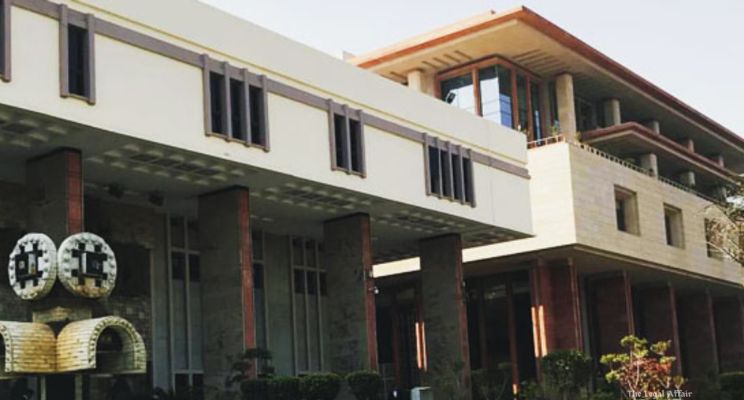
Introduction:
In a significant ruling, the Delhi High Court, presided by Justice Dharmesh Sharma, dismissed a petition challenging the installation of a statue of the Maharani of Jhansi inside the Shahi Idgah Park, located in the Sadar Bazar area of Delhi. The petition was filed by the Shahi Idgah Managing Committee, which sought to restrain the authorities from installing the statue, claiming that the land was a waqf property and had been used for religious purposes, primarily for offering namaz.
The Committee argued that the installation of the statue amounted to encroachment on waqf property, citing a 1970 gazette notification that categorized the land as an ancient property from the Mughal period, used for religious activities by the Muslim community. Despite these assertions, the Court ruled against the petitioners, stating that the land belonged to the Delhi Development Authority (DDA) and could be allocated for public use at the discretion of the DDA.
This judgment underscores the Court’s stance on public property management, religious rights, and the role of civic bodies like the DDA and the Municipal Corporation of Delhi (MCD) in maintaining public spaces.
Background:
The Shahi Idgah Park, located in the heart of Delhi’s Sadar Bazar, has long been a contested space, with the Shahi Idgah Managing Committee asserting that the park was part of the larger Idgah compound, a waqf property, historically used for religious prayers (namaz). The park is said to have the capacity to accommodate up to 50,000 worshippers at a time. The Committee’s contention is based on a gazette notification issued in 1970, which acknowledges the historical significance of the property, linking it to the Mughal era.
The current dispute arose when the MCD announced the installation of a statue of the Maharani of Jhansi within the park area. The Committee argued that this act not only infringed on their religious rights but also amounted to an illegal encroachment on a waqf property. They claimed that such installations could interfere with the use of the park for religious purposes and sought a court order to halt the installation.
The petitioners urged the Court to recognize the park as an integral part of the waqf property, arguing that the Delhi Waqf Board had the authority over the land and that any allocation for non-religious purposes would violate their rights. They further contended that the Delhi Minority Commission had issued a status quo order regarding the park, which they believed prevented any changes or installations within the park until the matter was resolved.
Petitioners’ Arguments:
The Shahi Idgah Managing Committee made several key arguments to substantiate their claim:
- Historical Significance and Waqf Status:
The petitioners argued that the Shahi Idgah Park is a waqf property, established during the Mughal period, and has been continuously used for religious purposes, particularly for offering namaz. They referred to a 1970 gazette notification, which they claimed validated the status of the park as part of the larger Idgah complex. According to the Committee, the property’s waqf status prohibits any use of the land for purposes that are not related to religious activities.
- Encroachment and Religious Infringement:
The Committee contended that the installation of a statue of the Maharani of Jhansi would amount to an encroachment on the waqf property and interfere with their right to perform religious duties. They emphasized that the park had historically been used by the Muslim community for religious congregations, and any non-religious structure within the premises would compromise their ability to exercise their religious rights.
- Violation of Status Quo Order:
The petitioners also pointed to a status quo order issued by the Delhi Minority Commission, which they believed prohibited any new installations or alterations within the park. They argued that the installation of the statue would directly violate this order, and that any such action taken by the MCD or DDA should be deemed unlawful.
- Fundamental Rights:
The Committee further invoked their fundamental rights under the Indian Constitution, particularly their right to practice and propagate religion. They argued that the installation of the statue would interfere with the peaceful exercise of their religious rights and sought protection under Articles 25 and 26 of the Constitution.
- Claim of Waqf Board’s Authorization:
The petitioners also contended that the Delhi Waqf Board had control over the park and that its designation as waqf property prevented any public use of the land that conflicted with its religious purpose. They argued that the DDA had no legal standing to allocate the land for public use or allow the installation of any non-religious structure within the premises.
Respondents’ Arguments:
On the other hand, the Delhi Development Authority (DDA), along with the Municipal Corporation of Delhi (MCD) and other respondents, presented the following counterarguments:
- Ownership of the Land:
The DDA argued that the land in question, including the parks and open spaces surrounding the Shahi Idgah, is government property and under the ownership and jurisdiction of the DDA. They asserted that the land was public property and not exclusively designated for religious use. Therefore, the DDA had the legal right to allocate portions of the land for public purposes, such as the installation of the statue of the Maharani of Jhansi.
- Public Use and Civic Responsibility:
The respondents emphasized that the park and open spaces surrounding the Shahi Idgah were intended for public use and were maintained by the DDA. The MCD, which had proposed the installation of the statue, argued that the statue was part of a broader civic initiative to commemorate historical figures and that such installations in public spaces did not interfere with the religious rights of any group.
- No Violation of Religious Rights:
The respondents contended that the installation of the statue would not infringe upon the religious rights of the Muslim community. They argued that the park could still be used for religious purposes, such as offering namaz, and that the installation of the statue did not prevent or hinder these activities in any way.
- Delhi Minority Commission’s Lack of Jurisdiction:
The respondents also argued that the status quo order issued by the Delhi Minority Commission had no legal standing in this case, as the Commission did not have jurisdiction over the land in question. They maintained that the DDA, as the rightful owner of the land, had the authority to make decisions regarding its use and allocation, and that the Commission’s order was irrelevant to the proceedings.
- Maintenance and Upkeep of Public Spaces:
The respondents stressed the importance of maintaining public spaces like parks for the benefit of the wider community. They argued that the installation of the statue was a public interest project aimed at preserving historical and cultural heritage, and that the opposition to the statue was based on a narrow interpretation of religious rights.
Court’s Judgment:
After hearing the arguments from both sides, Justice Dharmesh Sharma dismissed the petition filed by the Shahi Idgah Managing Committee, ruling in favor of the DDA and MCD. The Court made several key observations in its judgment:
- DDA’s Ownership of the Land:
The Court reaffirmed that the parks and open spaces surrounding the Shahi Idgah are the property of the Delhi Development Authority and that the DDA has the legal right to allocate portions of the land for public use. The Court emphasized that the land in question is public property, and the DDA’s decision to install a statue of the Maharani of Jhansi did not violate any legal or constitutional provisions.
- No Infringement on Religious Rights:
The Court rejected the Committee’s argument that the installation of the statue would interfere with their religious rights. The judgment stated that the installation of the statue in a public park did not prevent the use of the space for religious purposes, such as offering namaz. The Court held that the petitioners had failed to demonstrate how their religious rights were being endangered by the installation of the statue.
- Invalidity of the Delhi Minority Commission’s Order:
The Court held that the status quo order issued by the Delhi Minority Commission was beyond its jurisdiction and had no legal effect on the DDA’s authority to manage and allocate the land. The Court noted that the Commission had no authority to interfere in the DDA’s management of public property, and therefore, the petitioners could not rely on the order to oppose the installation of the statue.
- Public Interest and Civic Responsibility:
The Court recognized the importance of preserving public spaces for civic use and historical commemoration. It acknowledged the MCD’s efforts to maintain the park and its decision to install a statue of the Maharani of Jhansi as a public interest project. The Court concluded that the petitioners had no legal or fundamental right to oppose the installationor the maintenance of the park by the DDA and MCD.