


Introduction:
The Delhi High Court has declined to quash an FIR lodged against a company and its executives accused of profiteering during the COVID-19 pandemic by selling substandard oxygen concentrators at inflated prices. The petitioners sought the FIR’s dismissal because their operations were lawful, transparent, and compliant with tax regulations. However, the Court observed that the allegations of exploiting a public health crisis for-profit and distributing defective medical devices require thorough investigation and cannot be dismissed prematurely.
Petitioners’ Contentions:
The company and its executives argued that their actions were entirely legal, emphasizing that the oxygen concentrators were imported and sold via legitimate banking channels. They maintained transparency through tax compliance and lawful operations, utilizing their online platform and authorized distributors.
The petitioners contended that the FIR lacked evidence to support the charges of cheating, fraud, or sale of substandard goods. They highlighted that the trial court, during bail hearings in 2021, had observed no prima facie case of cheating, suggesting that such charges were added solely to justify arrests.
They further claimed that the FIR did not initially allege that the oxygen concentrators were substandard, with this accusation surfacing only later. The petitioners asserted that their products were legally purchased and marketed during the pandemic to meet critical public needs.
Prosecution’s Contentions:
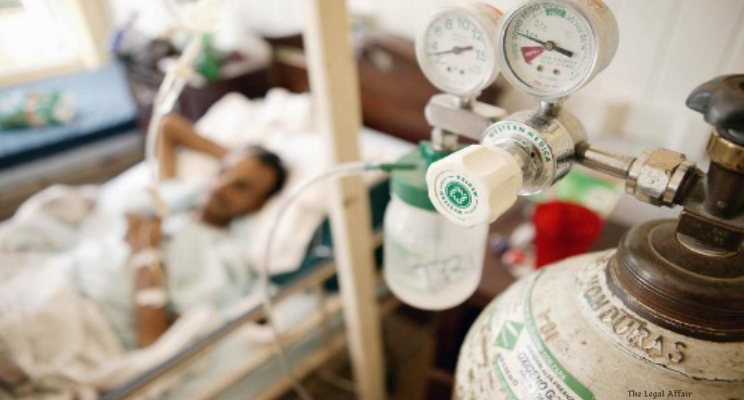
The prosecution alleged that the company and its executives exploited the dire oxygen shortage during the pandemic by selling defective and untested oxygen concentrators at exorbitant profits. The products failed to meet WHO standards, which mandate oxygen purity levels of 82%-96%.
The FIR accused the petitioners of earning an undue profit margin of Rs. 40,000–42,000 per concentrator by capitalizing on the health crisis. The prosecution highlighted that the petitioners sold these products despite their inability to meet the requisite quality standards necessary to treat COVID-19 patients.
While the Delhi Police had dropped charges under the Essential Commodities Act, the prosecution maintained that the allegations of wrongful gains and exploiting the public health crisis warranted further investigation. They argued that dismissing the FIR at this stage would undermine the investigative process and leave serious allegations unanswered.
Judgment:
Justice Dinesh Kumar Sharma refused to quash the FIR, emphasizing the importance of a thorough investigation into the allegations. The Court observed that the sale of oxygen concentrators that did not meet WHO or government standards was a critical issue requiring scrutiny. Whether the petitioners knowingly sold substandard products or acted with mala fide intent remains to be determined.
The Court noted that the petitioners had been granted the liberty to inspect the oxygen concentrators’ quality and legality but appeared to have prioritized profit over public welfare. The FIR alleges significant profiteering, taking undue advantage of a national health crisis, and compelling people in desperate need to pay exorbitant sums for essential medical devices.
The Court acknowledged the prosecution’s claim that the petitioners’ actions caused substantial harm to public interest during the pandemic when access to reliable and effective oxygen concentrators was vital. It stated that these allegations cannot be disregarded merely because the petitioners claimed to have adhered to legal procedures in their transactions.
Although the petitioners argued that the allegations were unsubstantiated, the Court underscored that the investigation was still ongoing and crucial issues remained unresolved. It ruled that the petitioners could not seek relief prematurely, as the evidence required further scrutiny. The Court clarified that the petitioners could approach an appropriate forum for relief after the completion of the investigation.