


Introduction:
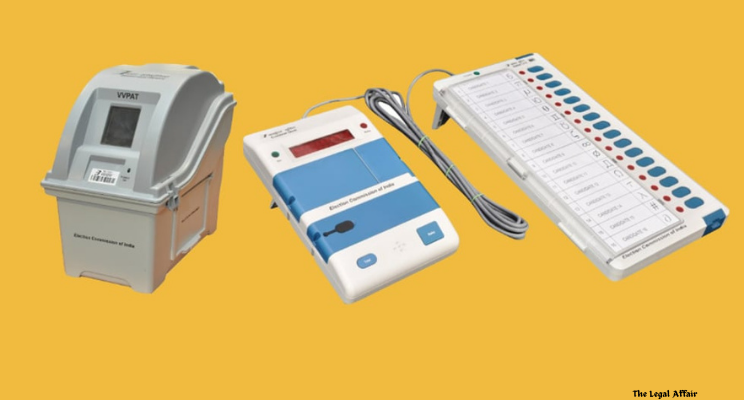
The Delhi High Court, in Ramesh Chander v. Election Commission of India (LPA-47/2025), dismissed an appeal seeking directions to the Election Commission of India (ECI) to comply with Section 61A of the Representation of the People Act, 1951 (RPA) before conducting elections through electronic voting machines (EVMs). Section 61A provides that the ECI may adopt the use of voting machines in constituencies it deems fit, notwithstanding the provisions of the Act or the rules made thereunder. The appellant argued that the ECI must assess constituency-wise circumstances to justify the use of EVMs and sought a judicial mandate requiring the ECI to specify such circumstances. The Court, comprising Acting Chief Justice Vibhu Bakhru and Justice Tushar Rao Gedela, observed that Section 61A empowers the ECI to prescribe voting machines for constituencies without requiring individualized explanations for each constituency. The Court also relied on the Supreme Court’s precedent in Association of Democratic Reforms v. Election Commission of India & Anr. (2024), which upheld the validity of EVMs unless substantial evidence challenges their reliability. Concluding that the petition lacked merit, the High Court dismissed it, reaffirming the ECI’s discretion in implementing EVMs as per the legislative framework.
Arguments of the Appellant:
The appellant contended that Section 61A imposes an obligation on the ECI to examine constituency-specific circumstances before approving the use of EVMs. It was argued that the ECI’s general directions, such as the one issued on March 22, 2019, do not satisfy the statutory requirement of addressing the unique circumstances of each constituency. The appellant further emphasized that the EVM mechanism could potentially undermine transparency and electoral fairness unless detailed justifications for its use are provided for every constituency. The prayer included directions to ensure that the statutory mandate under Section 61A is strictly adhered to, particularly to promote electoral integrity.
Arguments of the Respondent (Election Commission of India):
The ECI countered the appellant’s interpretation of Section 61A, asserting that the provision grants it broad discretion to adopt EVMs in constituencies it deems appropriate. The non-obstante clause in Section 61A, the ECI argued, overrides other provisions and allows for flexible implementation of voting machines without the requirement of specifying circumstances for each constituency individually. The ECI further noted that its 2019 directions comprehensively outlined constituencies where EVMs were to be adopted, fulfilling the statutory requirement. The ECI relied on the Supreme Court’s decision in the Association of Democratic Reforms, emphasizing that unless substantial evidence is presented against EVMs, their use remains valid and legally sound.
Court’s Judgment:
The Delhi High Court analyzed Section 61A and concluded that its plain language does not support the appellant’s contention that constituency-specific circumstances must be specified. The provision, the Court observed, uses a non-obstante clause to empower the ECI to adopt EVMs “in such manner as may be prescribed” and “in such constituencies as the ECI may specify.” This language, according to the bench, grants the ECI broad discretion without requiring individualized explanations. The Court referenced the Supreme Court’s decision in the Association of Democratic Reforms, which upheld the legitimacy of EVMs unless credible evidence demonstrated their inefficacy or bias. The bench also pointed out that the ECI’s directions dated March 22, 2019, sufficiently demonstrated compliance with Section 61A, as they explicitly outlined constituencies where EVMs were to be used. Rejecting the appellant’s interpretation as inconsistent with the statutory framework, the Court held that there was no merit in the petition and dismissed it. The judgment reiterated the importance of judicial restraint in matters where statutory authorities like the ECI are granted discretion to act under the law.