


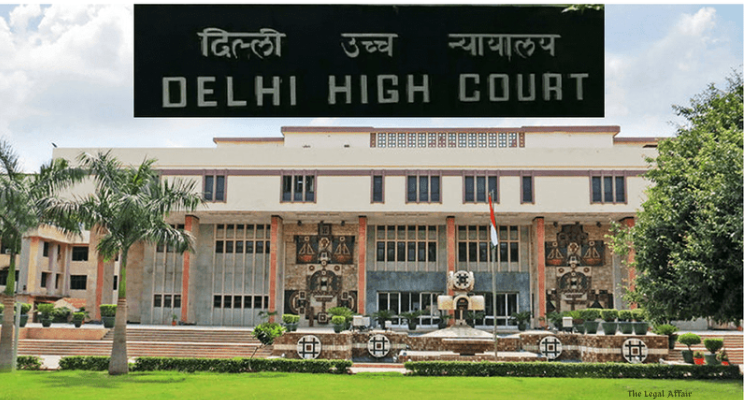
Introduction:
The Delhi High Court recently upheld an arbitral award ordering the refund of an Earnest Money Deposit (EMD) in a commercial dispute involving Adani Enterprises Limited and Shri Somnath Fabrics Private Limited, about a coal sale and purchase agreement. Justice Sachin Datta’s judgment focused on the petitioner’s failure to demonstrate any actual financial loss as required under Sections 73 and 74 of the Indian Contract Act, 1872, to justify the forfeiture of the EMD. The court’s ruling reinforces that forfeiture of deposits in contractual disputes must be supported by demonstrable loss, underscoring fair business practices in such transactions.
Brief Facts of the Case:
This dispute originated from a Coal Sale and Purchase Agreement dated September 8, 2020. Under this agreement, the petitioner, Adani Enterprises Limited, agreed to supply 10,000 MT of coal to the respondent, Shri Somnath Fabrics Private Limited, at a base price of Rs. 2,997 per MT, culminating in a total contract value of Rs. 2,99,70,000, excluding applicable taxes. Clause 7.1 of the agreement mandated the respondent to pay a non-refundable EMD of Rs. 3 crore upon signing. While the EMD was indeed paid in full, it was submitted in multiple instalments over some time.
Following the payment of the EMD, the respondent requested a delivery order for the coal; however, the petitioner failed to respond or fulfil its obligation to supply the coal. The respondent, frustrated by this non-performance, sent a legal notice to Adani Enterprises, demanding either the delivery of coal or a refund of the EMD amounting to Rs. 3 crore.
The petitioner, in its response, claimed that the delay in the full payment of EMD—completed through instalments—constituted a breach of the agreement’s terms, specifically Clause 7.1. They asserted that this staggered payment approach violated the contractual requirement that EMD be paid immediately upon signing, and therefore, the EMD should be non-refundable.
The respondent, contesting this position, invoked the dispute resolution clause, which led to arbitration. A Sole Arbitrator was appointed to examine the dispute, and after considering both sides’ arguments and examining the contract, awarded the respondent a full refund of the EMD, finding no evidence that the petitioner had suffered any actual loss.
Arguments of the Petitioner:
The petitioner argued primarily on two fronts:
- Non-Compliance with Payment Timelines: The petitioner asserted that the respondent’s installment-based payment of the EMD violated Clause 7.1, which specified that the EMD be paid in full at the time of signing the agreement. According to the petitioner, this breach justified their stance that the EMD was forfeitable and non-refundable, as the respondent’s failure to adhere to the timeline amounted to a material breach of the agreement.
- Non-Refundable EMD Clause: The petitioner contended that the contract stipulated the EMD as non-refundable and thus not subject to repayment regardless of whether actual damages were sustained. They asserted that by agreeing to these terms, the respondent effectively waived any rights to a refund in cases of breach, arguing that the contract language explicitly protected their right to retain the EMD.
- Absence of Factual Findings in Award: The petitioner further argued that the arbitrator’s conclusions lacked substantive basis and asserted that the respondent’s alleged breach made the EMD irrecoverable under the agreement. They contended that the arbitral award should have addressed the petitioner’s inability to meet contractual obligations due to the respondent’s delayed payments.
Arguments of the Respondent:
The respondent contended that they had fulfilled their contractual obligations by paying the entire EMD, albeit in instalments. They argued:
- Compliance with Payment Obligation: Despite a delayed payment schedule, the respondent pointed out that the petitioner had accepted all instalment payments without protest or clarification, thus implying acceptance of the payment arrangement. They argued that the petitioner’s passive acceptance of delayed instalments amounted to an implicit waiver of the requirement for immediate payment of EMD.
- Failure of Performance by Petitioner: The respondent emphasized that it was the petitioner who failed to fulfil its obligation under the contract by neither confirming delivery nor supplying the agreed-upon coal. They argued that they were entitled to a refund of the EMD since the petitioner did not execute its contractual responsibilities, making the forfeiture unjustified.
- No Evidence of Actual Loss: Citing Sections 73 and 74 of the Indian Contract Act, the respondent argued that without demonstrating actual damages suffered due to the alleged breach, the petitioner could not lawfully withhold the EMD. They further submitted that the petitioner did not produce any evidence indicating that they had purchased or secured the coal as per the contract terms, meaning they did not suffer any loss from non-delivery.
The Tribunal’s Findings:
In the arbitral award, the Tribunal made several key observations:
- Requirement of Actual Loss for Forfeiture: Relying on Sections 73 and 74 of the Indian Contract Act, the Tribunal stated that forfeiture of the EMD could only be justified if the petitioner demonstrated an actual financial loss due to the respondent’s breach. The petitioner’s failure to establish such loss rendered the EMD’s forfeiture unjustifiable.
- Adverse Inference Due to Lack of Coal Procurement Evidence: The Tribunal took an adverse view of the petitioner’s failure to present any evidence regarding the procurement of the coal. Since no documentation or evidence was submitted to show purchase, quality, or customs details, the Tribunal inferred that the Petitioner did not intend to execute its contractual duties.
- Acceptance of Installment Payments Implied Waiver: By accepting the EMD instalments over time without complaint, the Tribunal held that the Petitioner implicitly waived its right to insist on a one-time payment as stipulated in Clause 7.1. The Tribunal thus concluded that the respondent’s staggered payments could not be held against it.
- No Active Termination of Contract by Petitioner: The petitioner had neither terminated the contract nor provided formal notice to the respondent regarding the perceived breach. This failure to communicate or act indicated a lack of intent to enforce the alleged breach.
High Court’s Observations and Judgment
When the petitioner challenged the arbitral award under Section 34 of the Arbitration and Conciliation Act, 1996, the Delhi High Court dismissed the petition, supporting the Tribunal’s award. Justice Sachin Datta observed:
- No Scope for Merits-Based Review: Justice Datta emphasized that Section 34 petitions are not designed for merit-based reviews or re-evaluation of evidence. Given that the Arbitrator’s findings were thoroughly reasoned and legally plausible, the High Court found no grounds to interfere with the award.
- Lack of Actual Loss and Forfeiture Invalidity: The court observed that the petitioner had not proven any actual damages due to the delayed EMD payment. Citing Kailash Nath Associates vs. Delhi Development Authority, the court reiterated that forfeiture requires concrete proof of actual loss, which was absent in this case. As such, the forfeiture of the EMD could not stand.
- Waiver of Payment Schedule by Petitioner’s Conduct: By accepting instalment payments, the petitioner effectively waived its right to claim breach on the grounds of delayed EMD payment. The court endorsed the arbitrator’s reasoning, holding that the delayed payments, accepted without objection, did not qualify as a breach.
- Interpretation of Non-Refundable EMD Clause: Justice Datta also dismissed the petitioner’s argument that the EMD’s “non-refundable” label justified retention without proof of loss. According to the court, the label alone does not bypass Sections 73 and 74 of the Contract Act, which prevent parties from retaining sums without demonstrating actual damages.
- No Patent Illegality in the Award: Justice Datta noted that the arbitral award contained no evident illegality or fundamental error warranting judicial intervention. The arbitrator’s factual determinations and interpretation of thecontract terms were fair, reasonable, and legally sound.