


Introduction:
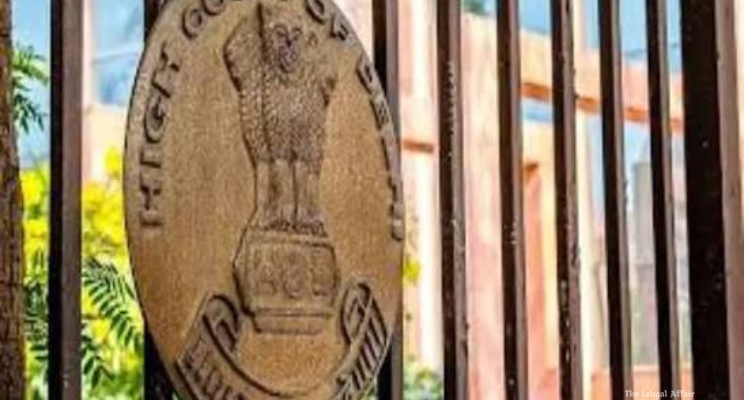
In a significant development concerning environmental governance and urban ecological protection, the Delhi High Court recently stayed the operation of a Standard Operating Procedure (SoP) issued by the Delhi Government that permitted “general tending and light pruning” of tree branches with a girth below 15.7 centimeters without prior permission from the Tree Officer. The Court observed that the impugned notification directly contradicted an earlier binding judgment of the High Court and could not be sustained in law.
The order was passed by Justice Jasmeet Singh while hearing a contempt petition in Bhavreen Kandhari v. Vijay Kumar Bidhuri and Others. The petition was filed by environmental activist Bhavreen Kandhari, who alleged that the Delhi Government, through the impugned notification, had attempted to circumvent and effectively nullify a previous judicial ruling delivered in 2023 in Prof. Dr. Sanjeev Bagai & Ors. v. Department of Environment, Govt. NCT of Delhi & Ors.
The controversy centered around a notification dated May 2, 2025, purportedly issued under Section 33 of the Delhi Preservation of Trees Act, 1994. Through this notification, the Delhi Government introduced an SoP allowing pruning of branches below a specified girth without requiring prior approval from the Tree Officer. The notification further authorized government agencies to undertake pruning in public areas irrespective of branch girth if trees posed a threat to life, property, or traffic movement, subject to supervision by senior horticulture officers.
The Delhi Preservation of Trees Act, 1994 is a special legislation enacted with the objective of protecting and preserving trees within the National Capital Territory of Delhi. The Act regulates felling, pruning, and removal of trees and establishes a permission-based mechanism under the supervision of designated Tree Officers. The legislation reflects the recognition that urban green cover is critical for maintaining ecological balance, reducing pollution, and protecting public health in a rapidly urbanizing city like Delhi.
The earlier 2023 judgment of the Delhi High Court had already examined the legality of similar guidelines permitting pruning without prior approval. In that case, the Court held that any pruning activity must conform to the statutory scheme under Section 9 of the Act and that exemptions bypassing the Tree Officer’s oversight were contrary to legislative intent.
Despite the earlier ruling attaining finality, the Delhi Government issued the fresh SoP in 2025. This prompted allegations that the executive authorities were effectively seeking to overrule or dilute a binding judicial decision through administrative action.
The present proceedings therefore raised important constitutional and environmental law questions regarding the separation of powers, the binding nature of judicial precedents, statutory interpretation under environmental legislation, and the extent to which executive authorities may frame administrative guidelines affecting ecological safeguards.
The Delhi High Court, while staying the operation of the notification, observed that the government could not indirectly achieve through executive instructions what had already been prohibited by a judicial pronouncement. The interim order once again highlighted the judiciary’s role in ensuring that environmental protections are not weakened through administrative mechanisms inconsistent with statutory mandates and prior court rulings.
Arguments of the Parties:
The contempt petition was filed by environmental activist Bhavreen Kandhari, who argued that the Delhi Government’s notification permitting pruning of branches without prior approval was a clear violation of the High Court’s earlier judgment delivered in 2023.
The petitioner contended that the impugned Standard Operating Procedure effectively resurrected the very exemption that had already been struck down by the High Court in Prof. Dr. Sanjeev Bagai & Ors. v. Department of Environment, Govt. NCT of Delhi & Ors. According to the petitioner, the earlier judgment had categorically held that pruning activities could only be undertaken in accordance with Section 9 of the Delhi Preservation of Trees Act, 1994, which mandates prior permission from the Tree Officer.
It was argued that the statutory framework of the 1994 Act does not permit the government to create blanket exemptions allowing pruning without regulatory oversight. The petitioner submitted that the legislative purpose behind the Act was to ensure strict supervision over activities affecting trees in Delhi, especially given the city’s deteriorating environmental conditions and shrinking green cover.
The petitioner further contended that the May 2, 2025 notification undermined the authority of the Court and amounted to an indirect attempt to nullify a binding judicial decision. According to the petitioner, once the High Court had interpreted the statute and invalidated similar guidelines, the executive could not reintroduce substantially identical provisions through another notification.
It was also argued that allowing unrestricted or lightly regulated pruning could lead to misuse and arbitrary cutting of trees under the guise of maintenance activities. The petitioner emphasized that pruning, even when described as “light pruning,” may significantly affect the health, structural integrity, and ecological value of trees if undertaken without expert supervision and regulatory control.
The petitioner also expressed concern regarding the provision authorizing government agencies to undertake pruning “irrespective of the girth” in cases involving danger to life, property, or traffic. It was submitted that such broad language vested excessive discretionary powers in authorities and diluted the safeguards built into the statutory scheme.
Further, the petitioner argued that environmental statutes must be interpreted purposively in favor of conservation and ecological protection. Since Delhi already faces severe air pollution, urban heat stress, and environmental degradation, any dilution of tree protection norms would adversely affect public interest and environmental sustainability.
On the other hand, the respondents, representing the Delhi Government and associated authorities, sought time to justify the notification and file a detailed response affidavit before the Court.
Though the detailed defence had not yet been fully adjudicated at the interim stage, the government’s notification itself indicated that the purpose of the SoP was administrative convenience and practical maintenance of urban trees.
The respondents appeared to justify the exemption on the ground that minor pruning activities involving small branches should not require cumbersome approval procedures from Tree Officers. According to the rationale underlying the SoP, routine tending and maintenance activities were necessary for public safety, horticultural upkeep, and smooth urban administration.
The notification also sought to justify emergency pruning by government agencies where trees posed a threat to human life, property, or traffic movement. This provision appeared aimed at enabling quicker responses in situations involving fallen branches, unstable trees, obstruction of roads, or other public safety concerns.
However, the respondents faced the significant challenge of addressing the earlier 2023 judgment which had already declared similar exemptions inconsistent with the Delhi Preservation of Trees Act.
Thus, the central issue before the High Court was whether the executive government could introduce an administrative notification permitting pruning activities without prior permission despite an earlier binding judicial ruling holding such exemptions impermissible under the statute.
Court’s Judgment:
Justice Jasmeet Singh, while examining the impugned notification, found prima facie merit in the petitioner’s contention that the Delhi Government’s Standard Operating Procedure was contrary to the earlier judgment of the High Court delivered in 2023.
The Court observed that the previous judgment in Prof. Dr. Sanjeev Bagai & Ors. v. Department of Environment, Govt. NCT of Delhi & Ors. had already settled the legal position regarding pruning of trees under the Delhi Preservation of Trees Act, 1994.
In the 2023 ruling, the coordinate bench had specifically struck down guidelines permitting regular pruning of branches with girth up to 15.7 centimeters without obtaining prior permission from the Tree Officer. The earlier judgment held that the only permissible mechanism for granting approval for pruning was the statutory framework contained under Section 9 of the Act.
Justice Jasmeet Singh noted that the May 2, 2025 notification effectively attempted to reintroduce the same exemption which had already been invalidated by the Court. The Court observed that the executive could not indirectly undo a judicial decision through administrative action.
The Court categorically remarked that the notification was “in teeth of the judgment dated 29.05.2023 which has attained finality and is binding on the respondents.”
This observation reflected the constitutional principle that judgments of competent courts are binding upon executive authorities unless overturned by a higher judicial forum or altered through valid legislative amendment. Administrative authorities cannot disregard or circumvent binding judicial pronouncements by issuing executive instructions inconsistent with those rulings.
Justice Singh emphasized that the respondents were effectively seeking to undo the earlier judgment by virtue of the impugned notification. According to the Court, such an approach could not be legally sustained.
The Court therefore stayed the operation of the Standard Operating Procedure till the next date of hearing.
The interim order is important not merely because it concerns tree pruning regulations, but because it reinforces broader constitutional principles governing the relationship between judicial decisions and executive action.
The ruling underscores that executive authorities remain bound by judicial interpretation of statutory provisions. Once a court has interpreted a statute and invalidated administrative guidelines inconsistent with that interpretation, the executive cannot simply issue fresh notifications reproducing substantially similar provisions.
The judgment also highlights the judiciary’s increasingly active role in urban environmental governance. Delhi’s environmental challenges—including severe air pollution, declining green cover, rising temperatures, and ecological imbalance—have repeatedly compelled judicial intervention to ensure stricter compliance with environmental laws.
The Court’s reasoning reflects a recognition that even seemingly minor regulatory relaxations may have significant cumulative environmental consequences in ecologically vulnerable urban spaces.
Importantly, the Court did not finally adjudicate upon the merits of the notification at this stage. Instead, it granted four weeks’ time to the respondents to file their response affidavit and listed the matter for further hearing on July 20.
Nevertheless, by granting interim protection and staying the operation of the notification, the Court signaled serious concerns regarding the legality of the executive action.
The judgment also carries implications for administrative law and environmental jurisprudence beyond Delhi. It reiterates that environmental safeguards embedded within statutory frameworks cannot be diluted through administrative expediency or convenience-based executive measures.
The decision further affirms that ecological governance must remain accountable to constitutional principles, statutory mandates, and judicial oversight.
Ultimately, the Delhi High Court’s interim order represents a reaffirmation of the rule of law in environmental administration. It recognizes that urban ecological protection is not merely a matter of policy discretion but a legal obligation governed by statutory safeguards and binding judicial interpretation.