


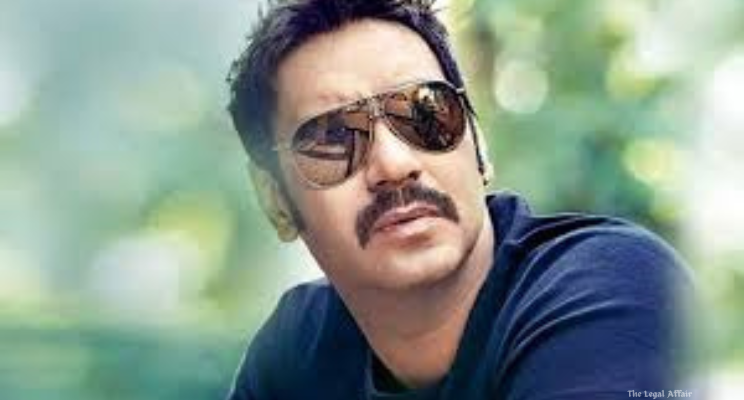
Introduction:
In Ajay alias Vishal Veeru Devgan v. The Artists Planet & Ors., the Delhi High Court was confronted with a pressing and evolving legal issue involving the intersection of celebrity rights, artificial intelligence, and deepfake technology, where Bollywood actor Ajay Devgn approached the Court seeking protection of his personality traits including his name, image, voice, likeness, gestures, and unique attributes which collectively form his public persona, alleging that the defendants were commercially exploiting his identity without his consent, thus infringing his personality rights and causing irreparable harm to his reputation, goodwill, and commercial standing.
Arguments:
The petitioner, represented by Advocate Pravin Anand, argued that the defendants were indulging in unauthorized usage of Devgn’s personality traits by manufacturing and selling commercial merchandise such as caps, stickers, posters and other items bearing Devgn’s image and persona, further alleging the misuse of artificial intelligence and deepfake technology to create manipulated visuals, doctored audio-visual content, and obscene fabrications portraying the actor in a distasteful, vulgar, and defamatory manner, which not only misled his audience but also resulted in tarnishing his reputation and confusing consumers regarding his association or endorsement of such merchandise; the petitioner submitted that these acts violated his inherent and legally recognized personality rights, which are an extension of Article 21 of the Constitution guaranteeing the right to privacy and dignity, and that the defendants’ unauthorized acts amounted to commercial exploitation, passing off, defamation, and violation of statutory and common law rights, causing great financial and reputational prejudice by capitalizing on his stardom, fan-following, and artistic identity without lawful justification; further, it was argued that the rapid growth of artificial intelligence has enabled individuals to replicate a celebrity’s identity with unprecedented precision, resulting in large-scale unauthorized impersonations that pose a grave threat to personality rights and public trust, and that if courts do not intervene at an early stage to curb misuse, it would lead to a dangerous precedent where celebrities, who heavily invest in cultivating their identity, are left vulnerable to exploitation at the hands of unscrupulous persons hiding behind digital anonymity; on the contrary, although the Court noted that the defendants were absent, the judicial scrutiny extended toward examining whether Devgn had lodged any protest with digital intermediaries like YouTube and Google before invoking judicial machinery
Judgement:
Justice Manmeet Pritam Singh Arora to observe that while Ajay Devgn’s plea merited urgent relief considering the rapid dissemination of digitally altered and harmful content, plaintiffs approaching the Court henceforth in similar matters would be required to first exhaust remedies available with such platforms by notifying them and seeking removal or blocking of objectionable content, thereby ensuring that judicial intervention is exercised judiciously and not in cases where statutory intermediaries could have timely acted; the Court was categorical that the misuse of AI-generated content, deepfake technology, and deceptive visuals risked dismantling an individual’s autonomy over their identity, and therefore, interim orders were not just desirable but necessary to forestall irreparable damage, especially when the content involved defamatory, obscene, vulgar, or pornographic imagery capable of altering public perception and maligning a public figure’s dignity; the Court referred to its earlier precedents wherein coordinate benches protected the personality rights of renowned individuals such as spiritual leader Sri Sri Ravi Shankar, Telugu actor Nagarjuna, Bollywood icons Aishwarya Rai Bachchan and Abhishek Bachchan, filmmaker Karan Johar, journalist Sudhir Chaudhary, and podcaster Raj Shamani, thereby indicating a judicial trend acknowledging that personality rights do not merely represent commercial value but are an integral facet of identity, respect, and informational autonomy in an era where technological advancements can dismantle personal integrity in seconds; after evaluating the gravity of allegations, the Court granted an interim injunction restraining the defendants from using Ajay Devgn’s photographs, voice, gestures, caricature, AI-generated versions, deepfake reproductions, or any other elements of his personality in any form, including online, physical merchandise, or digital content, without his express consent, while clarifying that obscene and profane content must be removed forthwith, whereas mere reproductions and non-defamatory content shall not be taken down without providing the concerned party an opportunity of hearing, thereby balancing the actor’s rights with procedural fairness and avoiding overbroad suppression of content; the Court reiterated that the right of publicity and personality rights vest exclusively in an individual and cannot be appropriated commercially or digitally without authorization, especially when technology can easily distort narratives, spread misinformation, and manipulate public perception, thus emphasizing that personality rights are proprietary rights necessitating judicial enforcement in the digital economy; thus, the interim relief granted to Ajay Devgn not only protected him from ongoing exploitation but also set a precedent strengthening personality rights jurisprudence in India by acknowledging that artificial intelligence and deepfake technology, although innovative, cannot be weaponized to harm identity, dignity, or reputation, marking a significant milestone in the legal evolution of celebrity protection against digital impersonation and content-based identity theft in the modern era.