


Introduction:
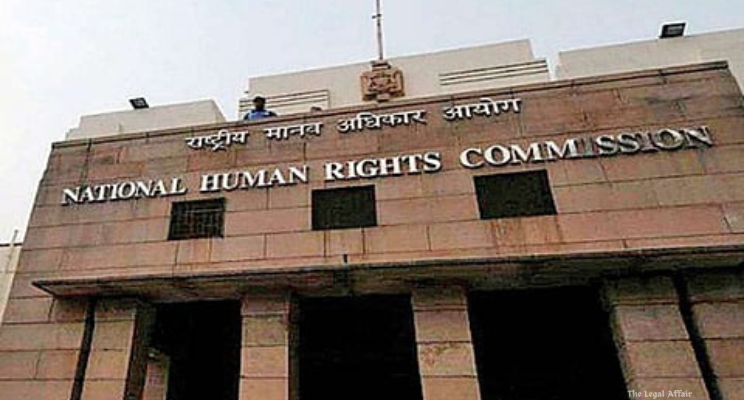
In the case of Kiran Singh v. National Human Rights Commission & Ors., the Delhi High Court ruled that the recommendations made by the State and National Human Rights Commissions (NHRC) are binding and must be treated with seriousness. The case arose from a plea filed by a father who alleged that his son died in a fake encounter by the Delhi Police’s Special Cell in 2006. The father sought a CBI inquiry into the deaths of the gang members and compensation for the legal heirs of the deceased. The petition was based on recommendations made by the District Magistrate (DM) and NHRC, which had called for a CBI inquiry and compensation for the families of the deceased, but the government had failed to implement these recommendations. The court, while allowing the father’s plea for compensation, emphasized the binding nature of the NHRC’s recommendations and rejected the Delhi Police’s argument that the NHRC must always approach the courts to enforce its decisions.
Arguments of Both Sides:
The petitioner, Kiran Singh, argued that his son’s death was a result of a fake encounter carried out by the Delhi Police’s Special Cell, which had been involved in a series of unlawful killings. He contended that there was a need for an impartial CBI investigation to determine the truth behind the deaths of the gang members and to provide compensation to the legal heirs of the deceased. Singh relied on the report of the District Magistrate, who had pointed out several lacunae in the police investigation and recommended a CBI inquiry. Singh also cited the NHRC’s recommendation, which called for compensation to be paid to the legal heirs of the deceased gang members. Despite these recommendations, the petitioner’s plea for justice remained unaddressed, prompting him to approach the High Court.
The respondents, represented by the Delhi Police and the Ministry of Home Affairs (MHA), defended their position by asserting that the National Human Rights Commission’s recommendations were not legally binding and that they were free to ignore such recommendations. They argued that the investigation conducted by the police was adequate and that the encounter was legitimate, dismissing the call for a CBI inquiry. The MHA had also argued that monetary compensation would not be an appropriate remedy and that the encounter had been a legitimate operation in line with the police’s duty to tackle criminal activities. The respondents also pointed out that the legal heirs of the deceased gang members had not received compensation due to the lack of corroborative evidence supporting the allegations.
Court’s Judgment:
The Delhi High Court, in its judgment, rejected the argument that the NHRC’s recommendations were not binding, affirming that the recommendations made by both the State and National Human Rights Commissions carry significant weight and cannot be ignored by the government. Justice Prathiba M Singh and Justice Amit Sharma, who heard the case, observed that if such recommendations were merely advisory, the purpose of enacting the Human Rights Act would be nullified, as it would render the Human Rights Commissions toothless. The Court emphasized the importance of upholding human rights and stated that the role of the Human Rights Commission is not limited to making non-binding suggestions but includes ensuring that basic human rights, such as the right to life with dignity, are protected. The Court observed that the Human Rights Commissions are meant to be “fierce defenders” of these rights, rather than “toothless tigers.”
In this case, the Court upheld the recommendation of the NHRC for compensation but did not find merit in the plea for a CBI inquiry. The Court noted that the Lieutenant Governor’s decision, which had rejected the call for a CBI inquiry, was based on a lack of corroborative evidence, and the Court found no grounds to overturn that decision. However, the Court emphasized that the NHRC’s recommendation for compensation was binding on the government. It directed the Ministry of Home Affairs to release ₹5 lakh as compensation, along with simple interest at 18% per annum, to the legal heirs of the deceased gang members within three months. The Court also awarded litigation costs of ₹1 lakh to the petitioners, pointing out that despite the NHRC’s recommendation made more than a decade ago, the compensation had not yet been paid.
The Court’s ruling is a significant development in the interpretation of the powers of Human Rights Commissions in India. It highlights the binding nature of their recommendations and reinforces the idea that human rights violations must be addressed promptly and seriously. The judgment also reiterates that the government cannot disregard the findings of human rights bodies and must ensure the protection of fundamental rights, particularly the right to life with dignity.