


Introduction:
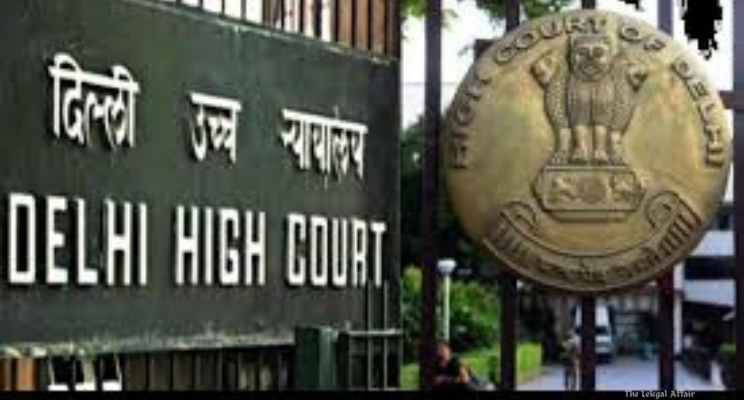
The Delhi High Court, in Mahesh Chand v. Govt of NCT of Delhi and Anr., examined the delicate balance between a business owner’s right to operate a licensed bar and the fundamental right of citizens, including children, to live in a peaceful and orderly environment. Justice Purushaindra Kumar Kaurav, while hearing the petition, underscored that in a constitutional democracy governed by the rule of law, grievances of citizens cannot be left unheard or unattended. The case arose from allegations regarding the functioning of Bunon Bar and Lounge situated at RK Ashram Marg Metro Station in Delhi. The petitioner, Mahesh Chand, approached the Court claiming that the establishment was operating beyond permissible hours and causing significant disturbance to nearby residents. He further alleged irregularities in billing practices and inaction on part of the concerned authorities despite repeated complaints. The Court’s ruling did not directly adjudicate upon the merits of the allegations but issued important directions to ensure that the grievance is examined by competent authorities in accordance with the statutory framework.
Factual Background:
The petitioner, Mahesh Chand, filed the writ petition raising concerns about what he described as unregulated and unlawful functioning of Bunon Bar and Lounge. According to him, the establishment frequently remained open beyond the hours prescribed under applicable excise regulations, at times operating until early morning. This, he contended, caused persistent noise disturbances and inconvenience to residents in the vicinity, as well as to the general public using the metro station area. He also alleged that the bar was issuing handwritten slips instead of proper GST bills, thereby raising concerns about compliance with tax laws. Mahesh Chand asserted that he had submitted multiple complaints to various authorities, including excise officials and local administration, but no effective action had been taken. Feeling remediless and aggrieved by official inaction, he invoked the writ jurisdiction of the High Court seeking intervention and enforcement of regulatory norms.
Legal Framework Considered by the Court Justice Kaurav examined the statutory scheme governing such establishments. The regulation of bars and liquor-serving establishments in Delhi falls under the Delhi Excise Act, 2009, which prescribes licensing conditions, operational hours, and compliance requirements. Any deviation from these norms may invite administrative action including suspension or cancellation of license. Additionally, complaints relating to public nuisance, including noise disturbance, are subject to lawful consideration by the District Magistrate under Sections 152 to 162 of the Bharatiya Nagarik Suraksha Sanhita, 2023. These provisions empower authorities to address situations affecting public order, safety, and tranquility. The Court recognized that these statutory mechanisms are designed to ensure that commercial activity does not transgress into infringement of public rights.
Arguments of the Petitioner:
The petitioner argued that the continued operation of the bar beyond permissible hours amounted to a violation of both excise laws and the residents’ right to peaceful living. He contended that late-night loud music, crowd noise, and vehicular movement disrupted sleep and daily life of nearby inhabitants. Emphasizing constitutional principles, he submitted that while businesses have a right to carry on trade under Article 19(1)(g) of the Constitution, such right is subject to reasonable restrictions in the interest of public order and morality. He further argued that failure to issue proper GST invoices indicated regulatory non-compliance that warranted investigation. A central plank of his argument was administrative inaction. Despite repeated representations, he claimed, authorities had failed to discharge their duty to examine and decide upon his complaints. He urged the Court to direct strict enforcement of the law and ensure accountability.
Stand of the Respondents and Authorities:
Though the detailed submissions of the respondents are not elaborated in the order, the Court’s observations suggest that authorities had not taken conclusive action on the complaints. The case did not revolve around a direct contest between the petitioner and the bar owner but primarily concerned the alleged inertia of public authorities. The State and its instrumentalities were expected to enforce the regulatory framework under the Delhi Excise Act, 2009 and address nuisance complaints through the District Magistrate’s office. The absence of decisive administrative response formed the crux of the matter.
Court’s Observations:
On Rule of Law and Administrative Duty Justice Kaurav made significant observations on governance and the role of public authorities in a constitutional democracy. Quoting the age-old proverb, “don’t take the law into your own hand,” the Court remarked that citizens are repeatedly advised to rely on authorities to enforce the law. The rationale behind this principle, the Court noted, is that the “proverbial stick of the law” must be wielded by designated authorities, not private individuals. However, when authorities remain inert in the face of genuine grievances, public confidence in governance is eroded. The Court emphasized that in a civilized society governed by rule of law, a citizen’s complaint must not remain unattended. Authorities are under a legal obligation to consider and decide upon complaints in accordance with applicable rules and regulations. The failure to do so not only undermines constitutional governance but leaves ordinary citizens feeling helpless. Justice Kaurav poignantly observed that not everyone has easy access to courts; for many, public authorities effectively function as the primary forum for grievance redressal.
Balancing Commercial Rights and Public Peace A key aspect of the judgment is its recognition of competing rights. The Court acknowledged that operating a bar or pub is a legitimate business activity. However, such right cannot override the fundamental entitlement of citizens and children to a noise-free, peaceful, and orderly environment. The right to carry on trade must be balanced against the right to life under Article 21, which encompasses the right to live with dignity and tranquility. The Court did not make factual findings on whether the bar had indeed violated licensing conditions but underscored that if such violations exist, authorities must act decisively.
Directions Issued by the Court Rather than directly adjudicating on factual disputes, the High Court adopted a pragmatic approach. It directed that the writ petition be treated as a representation. The Excise Commissioner was instructed to examine the petitioner’s grievance and pass appropriate orders within two months. Furthermore, the Court directed coordination with the District Magistrate if required, to ensure comprehensive resolution of the complaint. By doing so, the Court reinforced the statutory process and placed responsibility squarely on administrative authorities to act in accordance with law.
Significance of the Judgment:
The ruling reiterates that courts are not substitutes for administrative machinery but guardians ensuring that such machinery functions lawfully and effectively. It highlights the judiciary’s role in compelling executive accountability while respecting statutory processes. The decision also reinforces the broader principle that economic activities must coexist harmoniously with community welfare. In urban settings where commercial establishments and residential areas often overlap, regulatory vigilance becomes essential to prevent conflict and preserve quality of life. The judgment serves as a reminder that governance requires responsiveness, and that public complaints cannot be brushed aside casually.