


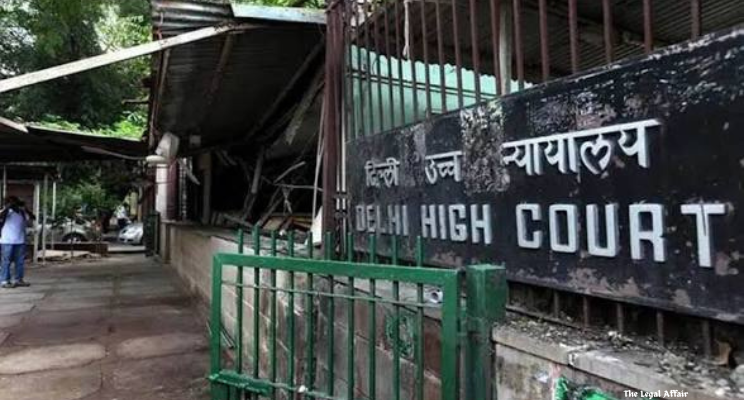
Introduction:
The Delhi High Court, in Ram Chander @ Chhotu v. State, reported as 2026 LiveLaw (Del) 686, delivered an important judgment reiterating the cardinal principle of criminal jurisprudence that an accused can be convicted only when the prosecution establishes guilt beyond reasonable doubt. Justice Vimal Kumar Yadav allowed the appeal filed by the appellant, who had been convicted by the Trial Court in 2008 for offences under Sections 363 (kidnapping) and 376 (rape) of the Indian Penal Code. The Trial Court had sentenced him to seven years’ rigorous imprisonment for the offence of rape and one year of simple imprisonment for kidnapping.
The prosecution case originated from an incident in April 2006 when a young girl was reported missing by her family. According to the prosecution, she was later recovered in the company of the appellant, who was accused of kidnapping her from the lawful guardianship of her parents and committing rape during the period she remained with him. Based on the victim’s allegations and the evidence collected during investigation, charges under Sections 363 and 376 IPC were framed against the appellant, culminating in his conviction by the Trial Court.
The appellant challenged the conviction before the Delhi High Court, contending that the prosecutrix had voluntarily accompanied him and that she was a major at the time of the alleged occurrence. During the pendency of the appeal, the prosecutrix herself appeared before the Court and stated that she had willingly accompanied the appellant and did not desire any further action against him. This development, coupled with the evidence already available on record, required the High Court to re-evaluate whether the prosecution had succeeded in proving the essential ingredients of kidnapping and rape beyond reasonable doubt.
The appeal raised important questions regarding appreciation of evidence in criminal trials, particularly where the prosecutrix’s conduct, medical evidence, forensic material and age determination do not consistently support the prosecution’s version. It also required the Court to examine whether inconsistencies in the prosecution case, viewed cumulatively, created a reasonable doubt entitling the accused to acquittal.
At the outset of the judgment, Justice Vimal Kumar Yadav made certain philosophical observations regarding human conduct and individual responsibility. Referring to the writings of William Shakespeare, the teachings of Saint Kabir and the philosophy of Karmyog contained in the Bhagavad Gita, the Court observed that a person’s name cannot determine his character or conduct. The Court remarked that although many individuals are named after revered religious figures with the hope that they would emulate their virtues, it is ultimately one’s actions rather than one’s name that define an individual’s personality.
Arguments of the Parties:
The prosecution maintained that the prosecutrix, who was stated to be approximately thirteen years of age at the relevant time, had been kidnapped by the appellant from the lawful custody of her parents. It was alleged that after taking her away, the appellant subjected her to sexual assault, thereby committing offences punishable under Sections 363 and 376 of the Indian Penal Code.
The prosecution relied upon the testimony of the prosecutrix, her recovery in the company of the appellant, the medical examination conducted during investigation and the surrounding circumstances to establish that she had been forcibly taken away and sexually assaulted. It was argued that the Trial Court had correctly appreciated the evidence and rightly convicted the appellant.
The appellant challenged both the factual and legal foundations of the prosecution case. It was contended that the prosecutrix had voluntarily accompanied him and that there was no element of force, coercion or inducement involved in their travelling together. The defence highlighted the conduct of the prosecutrix throughout the relevant period, pointing out that she had travelled with the appellant through public transport, visited crowded public places including the Kalkaji Temple during Navratri, and had several opportunities to seek assistance or raise an alarm but chose not to do so.
The appellant further questioned the prosecution’s assertion regarding the age of the prosecutrix. It was argued that the medical evidence, particularly the ossification test, did not conclusively establish that she was below eighteen years of age. Since ossification tests are subject to a recognised margin of error, it was submitted that the benefit of such uncertainty should go to the accused.
The defence also relied upon the prosecutrix’s statement made before the High Court during the pendency of the appeal, wherein she expressed that she had voluntarily accompanied the appellant and did not wish any legal action to continue against him. It was submitted that this statement, coupled with the inconsistencies emerging from the prosecution evidence, substantially weakened the prosecution’s case.
With regard to the allegation of rape, the appellant argued that although sexual intercourse may have occurred, the prosecution had failed to establish that it was without the consent of the prosecutrix. It was further submitted that the forensic evidence did not conclusively corroborate the prosecution’s allegations, thereby creating substantial doubt regarding the prosecution version.
Court’s Judgment:
Allowing the appeal, Justice Vimal Kumar Yadav held that the prosecution had failed to establish the guilt of the appellant beyond reasonable doubt. The Court observed that criminal conviction cannot rest upon conjectures or probabilities where the evidence itself leaves room for serious doubt.
The Court first examined the allegation of kidnapping. It noted that the prosecutrix herself admitted during cross-examination that she travelled with the appellant in public transport without making any attempt to seek help. She also accompanied him to the Kalkaji Temple during the Navratri festivities, where large numbers of devotees were present. Despite having repeated opportunities to approach members of the public, temple authorities or law enforcement personnel, she neither raised any alarm nor attempted to escape.
According to the Court, such conduct did not comfortably align with the prosecution’s allegation that she had been forcibly taken away against her will. While the Court recognised that victim behaviour may differ from case to case, it nevertheless observed that the surrounding circumstances in the present matter considerably weakened the prosecution’s version of forcible kidnapping.
The Court next addressed the crucial question regarding the age of the prosecutrix. It examined the medical evidence relating to the ossification test conducted during investigation. The Court observed that medical jurisprudence recognises a margin of error of approximately two years in age determination through ossification tests.
Applying this accepted principle, the Court found that the prosecutrix’s age could reasonably be assessed at approximately 18.4 years. Since the medical evidence itself admitted a possible margin of error, the prosecution failed to conclusively establish that the prosecutrix was a minor at the relevant time. Consequently, the essential ingredient of kidnapping from lawful guardianship remained unproved.
The High Court emphasised that where two views are reasonably possible regarding the age of the prosecutrix, the benefit must necessarily accrue to the accused in accordance with settled principles governing criminal trials.
Turning to the allegation of rape, the Court carefully analysed the medical, circumstantial and forensic evidence placed on record. It observed that while certain medical findings suggested that sexual intercourse had taken place, the scientific evidence did not conclusively establish the prosecution’s case.
The Court found that the forensic material suffered from significant deficiencies and failed to provide reliable corroboration to the allegations levelled against the appellant. The absence of conclusive scientific evidence assumed particular importance because the prosecutrix’s own conduct and subsequent statements introduced substantial uncertainty into the prosecution narrative.
Justice Yadav noted that during the pendency of the appeal, the prosecutrix had personally appeared before the Court and categorically stated that she had accompanied the appellant voluntarily and did not desire any further action against him. Although such subsequent statements cannot automatically determine criminal liability, the Court held that they formed part of the overall circumstances requiring judicial evaluation.
The Court observed that the conduct of the prosecutrix before, during and after the alleged occurrence appeared inconsistent with the prosecution’s version of forcible kidnapping and sexual assault. When these inconsistencies were considered alongside the inconclusive forensic evidence and the uncertainty surrounding her age, sustaining the conviction became legally unsafe.
The Court reiterated that in criminal jurisprudence the burden of proof always remains upon the prosecution. Suspicion, however strong, can never substitute legal proof. Every accused enjoys the presumption of innocence until guilt is established beyond reasonable doubt through reliable and convincing evidence.
Justice Yadav emphasised that courts must exercise great caution before upholding convictions carrying serious penal consequences, particularly where the evidence leaves substantial scope for doubt. The criminal justice system requires proof that inspires confidence rather than evidence marked by inconsistencies, improbabilities and incomplete corroboration.
The Court further observed that on the scale of probabilities and improbabilities, the version presented by the prosecutrix did not appear consistent with ordinary human conduct in the factual circumstances established during trial. While each case must necessarily be decided upon its own facts, the cumulative effect of the evidence in the present matter created serious doubts regarding the prosecution story.
The High Court concluded that acting solely upon such testimony, unsupported by conclusive scientific evidence and weakened by material inconsistencies, would be unsafe in law. Accordingly, the appellant became entitled to the benefit of doubt.
Allowing the appeal, the Court set aside the conviction and sentence imposed by the Trial Court under Sections 363 and 376 of the Indian Penal Code and acquitted the appellant of all charges.
The judgment reinforces one of the most fundamental principles of criminal law—that every conviction must be founded upon reliable, cogent and convincing evidence establishing guilt beyond reasonable doubt. It also reiterates that where material inconsistencies exist in the prosecution case, age determination remains uncertain, forensic evidence is inconclusive and the overall circumstances render the prosecution version improbable, courts must extend the benefit of doubt to the accused. The decision serves as an important reminder that the constitutional guarantee of a fair trial requires courts to carefully scrutinise every piece of evidence before depriving an individual of liberty, ensuring that convictions rest upon proof rather than presumption.