


Introduction:
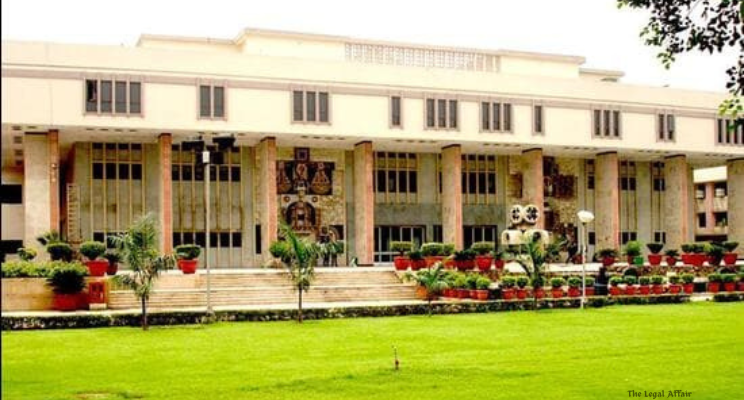
In the case titled SAGIR v. State (NCT of Delhi) & Ors., the Delhi High Court was called upon to adjudicate a writ petition filed by a life convict who had spent over 24 years in prison for the rape and murder of an 8-year-old girl. The convict challenged the Sentence Review Board’s (SRB) decision that had rejected his plea for premature release, contending that the rejection was mechanical, unreasoned, and devoid of application of mind. The Court, presided by Justice Girish Kathpalia, noted that while the crime was undoubtedly heinous, the convict had already endured prolonged incarceration and that the penal system must aim towards reformation rather than inflict purposeless, endless punishment. The Court set aside the SRB’s impugned decision dated December 4, 2024, and directed the authorities to reconsider the convict’s case afresh within four months, applying the 2004 policy guidelines in a fair and transparent manner.
Arguments of the Petitioner (Convict):
The petitioner, Sagir, who was convicted in 2003 for a gruesome offence of rape and murder of a minor child, contended that he had undergone over 20 years and 8 months of imprisonment without remission and over 24 years including remission. The plea emphasized that while his crime was severe, he had served a substantially long sentence, which, under the 2004 premature release policy, made him eligible for consideration. Sagir argued that the SRB’s decision rejecting his plea was arbitrary and lacked any rationale. He submitted that the board had failed to disclose the contents or gist of the reports submitted by the police or the Social Welfare Department, which were purportedly relied upon during the meetings dated August 30 and September 18, 2024.
The convict also highlighted that the SRB had not addressed or referred to the parameters laid down under the 2004 policy, which mandates a consideration of several factors including the convict’s conduct in jail, nature of the crime, possibility of reformation, and the overall impact of incarceration. He emphasized that in the absence of any detailed reasoning, the decision was not only in violation of the policy but also ran contrary to the principles of fairness and natural justice. Sagir urged the Court to quash the SRB’s order and direct a reconsideration of his plea in accordance with the law.
Submissions of the Respondents and State:
Interestingly, the prosecution did not strongly contest the plea. It fairly submitted that the SRB’s impugned decision dated December 4, 2024, was indefensible as it lacked the necessary reasoning and did not reflect consideration of the relevant factors. The State counsel acknowledged that while the SRB had considered reports from the police and social welfare department, those documents were neither placed on record nor discussed in the order. Furthermore, the prosecution submitted that if the impugned order was set aside, the State would be willing to place Sagir’s case for fresh consideration in the next SRB meeting scheduled within the next four months. This fair stand taken by the prosecution allowed the Court to examine the legality of the SRB’s decision without adversarial obstructions.
Court’s Analysis and Judgment:
Justice Girish Kathpalia undertook a detailed examination of the procedural fairness and substantive legality of the SRB’s decision. The Court acknowledged that the offence for which Sagir was convicted was one of extreme depravity. However, it emphasized that the convict had already spent over 24 years in incarceration, and punishment for any crime must have a definitive objective. In a noteworthy observation, the Court stated: “The punishment for a crime also must have its limits, lest the punishment in itself became wrong, being non-productive. Purpose of punishment has to be reformation of the criminal and not an endless, meaningless incarceration.”
The Court found merit in Sagir’s contention that the SRB’s decision did not disclose whether the statutory parameters under the 2004 premature release policy were applied. The Court expressed its disapproval of the opaque manner in which the SRB had operated. Despite citing consideration of reports, no attempt was made to outline the nature or content of those reports, leaving the convict in the dark about the rationale behind the rejection. The Court stressed that such opacity violates the basic tenets of administrative law and Article 21 of the Constitution, which guarantees fair procedure.
Justice Kathpalia ruled that the SRB is not vested with absolute discretion, and its actions must align with constitutional mandates and policy frameworks. Importantly, the Court underlined that a convict’s right to have his case considered for premature release cannot be rendered illusory through non-speaking and mechanical orders. It found that the impugned order did not reveal application of mind, nor did it fulfill the legal obligation to weigh relevant considerations such as conduct, duration of imprisonment, and possibility of rehabilitation.
The Court then addressed the fair stance of the prosecution and took note of the State’s willingness to reprocess Sagir’s case. It accepted the submission that a new SRB meeting was likely within the next four months and, therefore, allowed for a re-evaluation of the petitioner’s plea. In light of the deficiencies highlighted, the Court quashed the SRB’s decision and directed the State government to place Sagir’s case for reconsideration in the forthcoming SRB meeting.
Final Order:
The Court ordered: “In view of the above circumstances, the impugned order dated 04.12.2024 accepting the recommendations of meetings dated 30.08.2024 and 18.09.2024 of SRB qua the petitioner is set aside and respondent no.1 is directed to reconsider the case of the petitioner by convening SRB meeting within four months from today.”
The judgment underscores the constitutional imperative of fair procedure, the necessity of reasoned decision-making by statutory bodies, and the reaffirmation of reformation as the cornerstone of penal jurisprudence. It also serves as a precedent to ensure that SRB decisions, which significantly impact an individual’s liberty, are transparent, reasoned, and in conformity with constitutional values.