


Introduction:
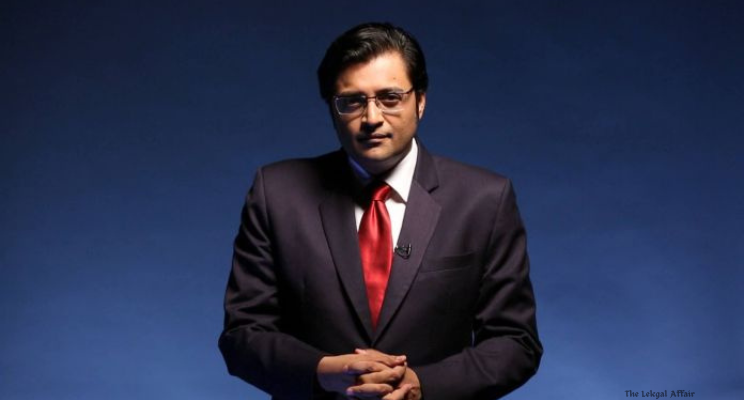
The Delhi High Court, on November 4, 2025, delivered a significant judgment in a matter concerning the freedom of the press and the limits of defamation law in media reportage. The case revolved around a criminal defamation complaint filed by lawyer Vikram Singh Chauhan against senior journalist Arnab Goswami and two former executives of the Times Now channel, Shrijeet Ramakant Mishra and Samir Jain. The complaint arose from a 2016 episode of The NewsHour, a popular primetime debate show, which discussed the widely publicized incident of violence at the Patiala House Court premises during the hearing of former JNU student leader Kanhaiya Kumar’s sedition case. Chauhan alleged that the remarks made during the broadcast were defamatory and intended to tarnish his reputation. The High Court bench, presided over by Justice Neena Bansal Krishna, after carefully analyzing the facts, the scope of journalistic privilege, and the law of defamation under Sections 499 and 500 of the Indian Penal Code, quashed the summons issued by the trial court and set aside the entire criminal complaint. The Court’s decision underscores the judiciary’s consistent stance on protecting journalistic freedom from unwarranted criminal prosecution, while maintaining that the right to reputation must coexist with the constitutional right to free speech.
Arguments of the Petitioner:
Arnab Goswami and the co-petitioners, represented by their counsels, argued that the trial court’s order issuing summons was unsustainable in law as it failed to consider the basic ingredients of criminal defamation. It was contended that the broadcast in question was a news debate concerning a matter of significant public interest — the alleged assault on JNU student Kanhaiya Kumar and journalists within the court premises. The debate, they argued, was conducted in the legitimate exercise of journalistic duty to inform the public and did not carry any intention to defame the complainant. The remarks made during the show were part of an ongoing national conversation about freedom of speech, nationalism, and law and order in court premises. The petitioners further submitted that statements made in good faith for public information and comment on public conduct are protected under Exceptions 1 and 2 to Section 499 of the IPC.
It was also argued that the trial court had issued summons in a mechanical manner without proper application of mind and had not examined whether the alleged statements fulfilled the criteria of “defamatory imputation” as defined under law. The petitioners maintained that Chauhan, being a lawyer who had voluntarily entered a public controversy, could not claim defamation for fair comments made in relation to his public conduct. They asserted that journalistic expression must be afforded a wide latitude, especially in a democracy where freedom of speech and press are foundational rights under Article 19(1)(a) of the Constitution. The petitioners also referred to precedents such as Subramanian Swamy v. Union of India (2016) and Jeffrey J. Diermeier v. State of West Bengal (2010), to argue that criminal prosecution should not be used to stifle public debate or intimidate the media.
They pointed out that the statements attributed to Goswami were not personal attacks but part of a debate format that included multiple viewpoints. Moreover, the complainant had not demonstrated any direct injury to his reputation or loss of professional standing. The entire complaint, they argued, was motivated and an abuse of the process of law intended to harass journalists performing their duty. The petitioners thus urged the High Court to exercise its inherent powers under Section 482 of the Code of Criminal Procedure to quash the complaint and the summoning order.
Arguments of the Respondent:
On the other hand, the complainant Vikram Singh Chauhan, represented by his counsel, contended that the broadcast aired on February 19, 2016, went beyond fair journalistic reporting and instead portrayed him in a derogatory and humiliating manner. He alleged that the anchor had made sweeping and false allegations accusing him of being involved in the assault on Kanhaiya Kumar and journalists at the Patiala House Court. Chauhan submitted that the remarks were made with the malicious intent to destroy his reputation and credibility as an advocate. He further argued that the imputations were not made in good faith or in the interest of public discussion but were designed to sensationalize the incident and vilify him in the eyes of the public.
The complainant emphasized that freedom of the press is not absolute and must operate within the bounds of reason and respect for individual reputation. He relied on Section 499 IPC, which makes it an offence to make or publish any imputation concerning a person, intending to harm, or knowing or having reason to believe that such imputation will harm, the reputation of such person. Chauhan submitted that the trial court, after carefully examining the complaint, witness statements, and the transcript of the broadcast, had found prima facie material showing that the imputations were defamatory. Thus, the issuance of summons was proper and in accordance with law. He argued that the High Court should not interfere at the threshold stage by evaluating the merits of the case, as the question of whether the statements were defamatory could only be determined during trial.
He further contended that journalists are not above the law and cannot invoke press freedom as a blanket defense for defamatory remarks. Chauhan maintained that he had suffered considerable mental agony and professional damage due to the baseless allegations telecast to millions of viewers nationwide. He also emphasized that the intent behind the show was to provoke outrage and tarnish his public image rather than to present a balanced discussion. On these grounds, the complainant requested the Court to uphold the summons and allow the trial to proceed.
Court’s Judgment:
After hearing detailed arguments and perusing the record, Justice Neena Bansal Krishna observed that the complaint failed to disclose a prima facie case of defamation under Section 499 IPC. The Court noted that for an act to constitute defamation, it must be shown that the imputation was made with an intention to harm the complainant’s reputation or with knowledge that it would likely do so. Mere critical remarks or expressions of opinion, particularly in the context of public discourse on matters of national importance, do not attract criminal liability.
The Court held that the broadcast in question pertained to an event of significant public concern — the alleged assault on students and journalists within court premises. Such incidents invite widespread scrutiny and debate, and journalists have a legitimate duty to report and comment on them. The Court observed that there was no material on record to show that the statements made by Goswami or others were actuated by malice or a personal vendetta against the complainant. On the contrary, they were made in the course of a discussion on an event that was already in the public domain.
Justice Krishna emphasized that criminal defamation proceedings must not be used as instruments of harassment or intimidation against members of the press who are performing their professional duties. Citing earlier precedents, the Court reiterated that free speech includes the right to express critical or even unpopular opinions, provided they are made without malice and in the public interest. The judgment underscored that the courts must exercise caution in summoning journalists and media professionals in defamation cases, as such actions have a chilling effect on free expression and investigative journalism.
The bench found that the trial court had issued the summons mechanically without satisfying itself about the existence of a prima facie case. The summoning order lacked reasoning and failed to demonstrate how the alleged statements met the elements of defamation. The Court further noted that the complainant had not produced any specific evidence to show that his reputation had suffered or that the petitioners acted with an intention to defame him. Accordingly, Justice Krishna quashed the criminal complaint and set aside the summoning orders issued against Arnab Goswami, Shrijeet Ramakant Mishra, and Samir Jain. The petitions filed in 2018 and 2019 thus stood allowed.
While quashing the proceedings, the Court reaffirmed that the right to reputation is a valuable right but must coexist with the equally important right of free speech. It concluded that in this case, the statements complained of did not constitute defamation and fell within the ambit of fair comment on matters of public interest. The ruling serves as a reminder of the delicate balance the judiciary must maintain between individual rights and the broader public interest in a free press.