


Introduction:
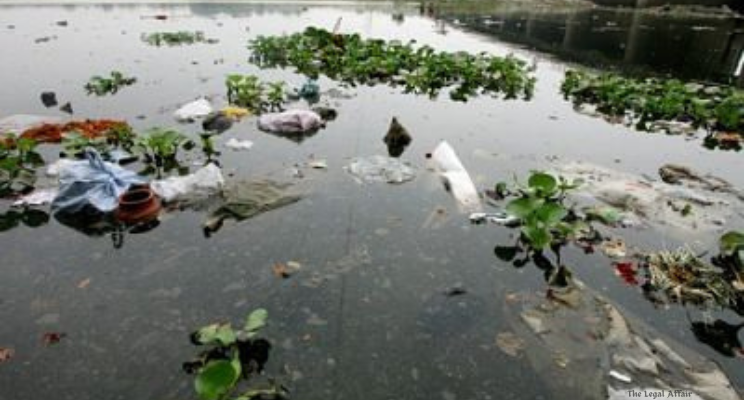
In the matter of Court on its Own Motion v. Government of NCT of Delhi & Ors., W.P.(C) 7594/2018 and W.P.(C) 9617/2022, the Delhi High Court on September 11, 2025, came down heavily on the civic authorities for their failure to effectively curb untreated waste and sewage flowing into the Yamuna River. A division bench of Justice Prathiba Singh and Justice Manmeet Pritam Singh Arora passed a significant order directing the Delhi Pollution Control Committee (DPCC) to present a complete chart of all industrial areas and explain what steps are being taken on a regular basis to monitor treatment of industrial effluents and waste discharged by factories. The bench also directed DPCC to make submissions on the report of the special committee constituted by the court, which inspected Sewage Treatment Plants (STPs) in the city. The inspection revealed an alarming scenario—most factories are discharging untreated sewage directly into drains, and treated water from STPs and Common Effluent Treatment Plants (CETPs) often gets mixed with untreated sewage before entering the Yamuna, rendering the entire treatment process futile. The case arose out of a suo motu PIL initiated after the court took note of an article published in the Times of India on June 18, 2022, highlighting waterlogging and sewage mismanagement issues in Delhi. In earlier stages, the court had already expressed serious concerns and had in May 2024 constituted a special committee of court-appointed local commissioners to conduct onsite inspections of all STPs in the capital. Later in July 2024, it directed the Delhi Jal Board (DJB) and the Municipal Corporation of Delhi (MCD) to file a joint action plan addressing the shortcomings highlighted in the special committee’s findings.
Arguments and Submissions on Behalf of the Petition (Court’s Own Motion):
Since this was a suo motu proceeding, the case was driven by judicial concern rather than a private petition. The reports submitted by the court-appointed local commissioners acted as evidence of systemic failure. The reports categorically exposed that across the city there was rampant mixing of domestic sewage with industrial effluents, and that most industries were discharging untreated waste directly into drains. These reports also revealed structural and operational deficiencies in both STPs and CETPs: underutilization of treatment facilities, corroded and broken pipelines, lack of live relay systems for electric meters and flow meters, and absence of integrated monitoring. The petition, therefore, rested on the premise that the constitutional and statutory obligations of the government and its agencies to ensure clean water, public health, and environmental sustainability were being violated. The fact that treated water from STPs was being mixed with untreated sewage before entering the Yamuna highlighted a gross systemic failure, neutralizing the entire purpose of investment in wastewater treatment. The argument, essentially articulated through expert reports and commissioners’ findings, was that unless immediate comprehensive corrective measures were taken, the Yamuna would continue to be a dumping ground for untreated sewage and toxic industrial waste, thereby aggravating public health hazards and ecological collapse.
Arguments and Submissions by Respondents:
On behalf of the respondents, including the Government of NCT of Delhi (GNCTD), Delhi Jal Board (DJB), Municipal Corporation of Delhi (MCD), and Delhi State Industrial and Infrastructure Development Corporation Ltd. (DSIDC), certain submissions were made that attempted to counterbalance the grim findings of the local commissioners. The GNCTD, through its counsel, filed an action taken report claiming that the functioning of STPs and CETPs was generally satisfactory. However, this report stood in stark contrast with the independent findings of the commissioners, raising questions of credibility and consistency. The DJB, through its counsel, informed the court that meetings under the Chief Engineer were underway and that three meetings had already been held. They claimed that a comprehensive action plan was being prepared to address the highlighted issues. The DSIDC official present in court submitted that upgradation work of 11 CETPs had already been initiated in coordination with the Department of Industries, and that work was in progress. The State argued that although deficiencies existed, significant efforts were being made to address them, and the implementation of pending projects would eventually improve the situation. They also pointed to drainage master plans prepared earlier, including one by IIT Delhi in 2018, which could be updated to strengthen the existing infrastructure. The State requested the court to appreciate ongoing efforts and allow time for proper execution of upgradation and corrective measures, while also pointing to the practical complexities of urban sewage and industrial effluent management in a city as vast as Delhi.
The Court’s Judgment and Directions:
The division bench of Justice Prathiba Singh and Justice Manmeet Pritam Singh Arora, after considering the submissions and reports, noted that three separate reports on STPs and CETPs revealed an “extremely disturbing situation” with “startling facts.” The court observed the following critical points:
- Domestic sewage and industrial waste were being indiscriminately mixed across the city.
- Most industrial units were dumping untreated waste straight into drains without any form of treatment.
- Treated water coming out of STPs and CETPs was being mixed with untreated sewage before reaching the Yamuna, thereby defeating the purpose of treatment.
- CETPs were underutilized, outdated, and suffering from corrosion and infrastructural breakages.
- There was a lack of live relay systems for electric meters and flow meters, preventing real-time monitoring.
The court held that the action taken report of GNCTD was unsatisfactory and contradicted the independent expert reports. Without indulging in blame games, the bench stressed that an integrated and comprehensive approach was essential to resolve the problem. It directed the following:
- The DPCC was impleaded as a respondent and directed to place on record a complete chart of all industrial areas, details of steps taken for monitoring waste treatment, and information on how many factories were connected to CETPs. The DPCC was also directed to make submissions on the final report of local commissioners.
- The Chief Secretary of GNCTD was directed to retrieve and update the drainage master plan prepared by IIT Delhi in 2018, and to ensure that an expert-reviewed plan for parallel stormwater and sewage drains was prepared.
- The DSIDC was directed to file a status report on 13 CETPs and provide detailed charts of industries in Bawana and Narela along with the functioning of their treatment plants.
- The Chief Secretary was instructed to hold meetings with consultants who had submitted detailed project reports, and the government’s decisions on these reports were to be placed before the court. However, the court made it clear that no tenders would be issued without its permission.
- The DJB was directed to continue its meetings under the Chief Engineer and place before the court a comprehensive action plan for all STPs.
- The official from the Integrated Drain Management Cell of the Delhi government was directed to remain present in court at the next hearing.
The bench emphasized that only a multi-pronged approach involving mapping, expert planning, infrastructural upgradation, and strict monitoring could prevent untreated sewage and waste from flowing into the Yamuna. The matter was scheduled for further hearing on September 19, 2025, with the court keeping close supervisory control over the entire process.