


Introduction:
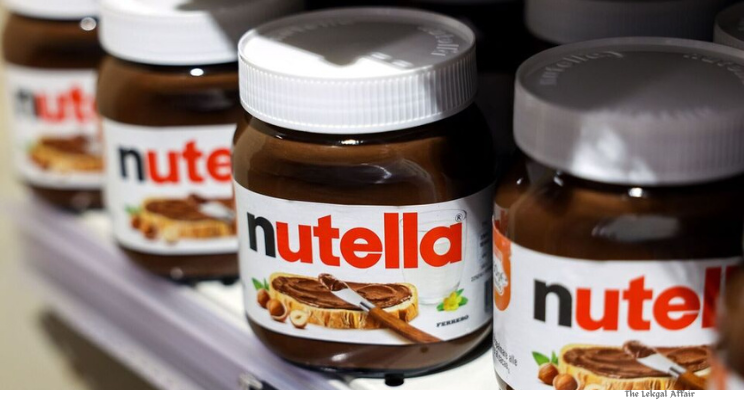
In Ferrero Spa & Ors. v. Abhimanyu Prakash & Ors. (2025 LiveLaw (Del) 1572, CS(COMM) 65/2023, judgment dated 19.11.2025), the Delhi High Court, presided over by Justice Manmeet Pritam Singh Arora, delivered a significant ruling on shape mark protection, counterfeit deterrence, and the liabilities of manufacturers who knowingly facilitate infringement. The dispute arose when Ferrero Spa, the globally known maker of Nutella spreads, discovered in 2022 that certain Firozabad-based manufacturers were producing empty glass jars that were nearly identical to the registered Nutella jar shape. These jars, advertised on the manufacturers’ website and IndiaMart as “Nutella glass jars,” were found to closely replicate Ferrero’s distinctive shape mark. Ferrero alleged that these jars were being widely used by third parties to package counterfeit Nutella products and that the embossing on many seized jars matched counterfeit products seized in earlier cases. Acting on the Court’s commission orders, Local Commissioners seized 3.05 lakh empty jars from three locations. While the manufacturers denied involvement in the sale of counterfeit Nutella and claimed the jars were generic, Ferrero asserted that the defendants had actual and constructive knowledge of its proprietary rights, strengthened by emails, drawings, and brochures titled “Nutella jars/choco jars.” The Court ultimately held that the defendants had knowingly infringed Ferrero’s registered shape mark and permanently restrained them from producing or selling such jars. It also awarded costs of ₹10 lakh and ordered that all 3.05 lakh seized jars be handed over to Ferrero.
Arguments:
Ferrero Spa, represented by Advocates Pravin Anand, Vaishali Mittal, and Shivang Sharma, argued that the defendants had blatantly copied their globally recognized Nutella jar shape mark. The plaintiff explained that Nutella products had been sold in India since 2009, giving them substantial goodwill and distinctiveness in the market. Ferrero submitted evidence showing that in 2022, the defendant manufacturers had been promoting empty jars online explicitly as “Nutella glass jars” on their website and on IndiaMart, which established clear intent to bank on the plaintiff’s brand recognition. They further relied on Local Commissioners’ reports that uncovered 3.05 lakh jars in 350 ml and 650 ml variants, brochures titled “Nutella jar/choco jars,” and cartons bearing the Nutella mark—demonstrating both manufacturing and promotional activities linked directly to the Nutella trademark and shape mark. Ferrero emphasized that the embossing found on the seized jars matched embossing previously seen on counterfeit Nutella products in other cases, showing that the defendants’ jars were being used in the counterfeit market even if the defendants themselves were not involved in filling the jars. Ferrero argued that the defendants’ emails and design drawings labeling the jars as “Nutella cocoa jar” proved conscious knowledge of Ferrero’s proprietary rights, which defeated any claim of innocent infringement. The company sought over ₹53 crore in damages, arguing the scale of production, the likelihood of enabling counterfeit operations, and the harm caused to brand integrity justified a strong financial penalty.
On the other hand, the defendants, represented by Advocate Samrat Nigam along with Akshay Srivastava, Krati Tiwari, Arpita Rawat, Pradeep Routela, and Ishan Sanghi, defended themselves by stating that they only manufactured generic jars as per the design specifications of a UAE-based client. They claimed that the term “Nutella jar” was colloquially used in the glass manufacturing industry to denote a particular shape and was not intended to infringe Ferrero’s rights. They denied any connection with counterfeiters and insisted that they merely supplied empty jars to third parties, without controlling how buyers used them. The defendants further stated that they had no objection to a permanent injunction, showing their willingness to end the dispute, but opposed the heavy damages claimed by Ferrero. They argued that there was no concrete evidence that the defendants participated in the sale of counterfeit Nutella products and urged the Court not to impose crushing monetary penalties given that this was their first alleged infringement. They contended that the brochures and drawings referred to by the plaintiff did not establish malicious intent but reflected common industry jargon. The defendants submitted that, having consented to an injunction, a long trial was unnecessary and that punitive damages were unwarranted.
Judgment:
Justice Manmeet Pritam Singh Arora delivered a detailed judgment holding that the defendants had indeed infringed Ferrero’s registered shape mark knowingly, even though this was their first detected instance of infringement. The Court found overwhelming evidence that the defendants were aware of Ferrero’s proprietary rights, pointing to emails and jar drawings labeled as “Nutella cocoa jar,” brochures titled “Nutella jar/choco jars,” and cartons bearing the Nutella mark. The Court rejected the defense that the term “Nutella jar” was used generically in the industry, stating that the plaintiffs’ products had been sold in India since 2009, giving them significant market presence, and therefore the defendants’ claim of ignorance was not believable. While the Court accepted that there was no established link between the manufacturers and the actual sale of counterfeit Nutella, it held that this did not absolve them from liability for creating the foundational material—jars—that enabled such counterfeit trade. The Court emphasized that the defendants’ voluntary consent to a permanent injunction confirmed that they could not rebut the allegations of infringement.
However, the Court declined Ferrero’s request for damages exceeding ₹53 crore, stating that although the infringement was knowing, it was a first-time infringement, and the absence of proof of counterfeit sales by the defendants themselves justified a moderated remedy. Relying on principles in Koninklijke Philips & Ors. v. Amazestore & Ors., the Court held that compensation should balance deterrence with fairness. Thus, instead of punitive damages, the Court awarded ₹10 lakh as litigation costs, covering court fees, commissioner fees, and other expenses. Importantly, the Court ordered that all 3.05 lakh seized jars be handed over to Ferrero, which could use them for its own products or fill them and distribute them through CSR activities. The Court observed that Ferrero had valued the seized stock at ₹62.84 lakh and that surrendering the entire stock would itself cause financial loss to the defendants, serving as a strong deterrent against future infringement. All packaging material seized during the raids—brochures, cartons, and related items—was ordered to be destroyed. The judgment thus reinforced strict protection for shape marks, underscored the responsibility of manufacturers supplying products that facilitate counterfeit trade, and emphasized that consent to injunctions does not erase “knowing” infringement.