


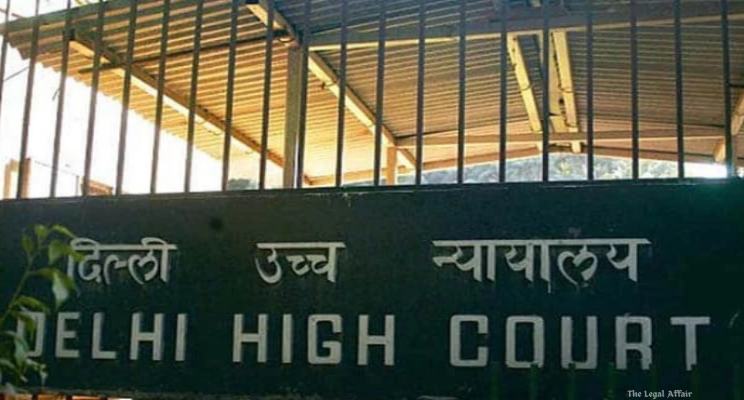
Introduction:
In a landmark decision, the Delhi High Court has reaffirmed the constitutional right to education by directing a private unaided school to admit a child under the Economically Weaker Section (EWS) category. The case involved a young boy, Master Jai Kumar, who was denied admission despite being allotted a seat through a draw of lots conducted by the Directorate of Education (DoE). The court, underlining the importance of the Right to Education (RTE) Act, criticized the school’s actions as a violation of the Act’s objectives and directed immediate admission of the child, stressing that procedural delays cannot override the fundamental rights guaranteed by the Constitution.
Background of the Case:
The petitioner, Master Jai Kumar, represented by his father Manish Kumar, filed a writ petition against Aadharshila Vidya Peeth, a private unaided school in Delhi, after being denied admission despite being selected through a transparent process. The child had applied for admission to Class I under the EWS category, a provision under the RTE Act aimed at ensuring educational access to children from economically disadvantaged backgrounds.
On May 31, 2023, the DoE conducted a draw of lots, and Jai Kumar was selected and allotted a seat at Aadharshila Vidya Peeth. However, when his father visited the school multiple times to complete the admission formalities, they were denied entry by the school’s security staff. Despite repeated attempts to secure the admission, the school refused to allow the boy to enter its premises, leading to the filing of the present petition.
Arguments of Both Sides:
Petitioner’s Arguments:
Represented by Advocates Kotla Harshavardhan and Rishabh Arora, the petitioner argued that the denial of admission was a clear violation of the RTE Act, which guarantees education as a fundamental right. They contended that once a child is allotted a seat by the DoE, the school has an obligation to admit the child without creating unnecessary procedural hurdles.
The petitioner further asserted that the actions of the school were discriminatory and arbitrary, particularly since the child belonged to the EWS category. They emphasized that the school’s refusal to admit the child not only violated the statutory mandate but also created a sense of helplessness and exclusion in the child and his family, which runs counter to the very principles of the RTE Act.
The petitioner also pointed out that the RTE Act is designed to provide equal educational opportunities to all children, irrespective of their economic background, and any action that undermines this goal is unconstitutional. The petitioner sought the court’s intervention to ensure that the child’s right to education was upheld and that the school was held accountable for its actions.
Respondent’s Arguments (School and DoE):
The school, represented by Advocate Jyoti Taneja, attempted to justify the denial of admission by citing procedural issues. However, the school’s response failed to provide a satisfactory explanation for why the child was repeatedly denied entry into the school premises despite being allotted a seat. The school did not present any compelling evidence or reasons to support its refusal to admit the child, which led to the court’s dismay.
The Delhi Government’s Department of Education (DoE), represented by Mr. Divyam Nandrajog, submitted that the child had indeed been allotted a seat in the school following a proper and lawful process. The DoE maintained that the school was bound to comply with the allotment and admit the child as per the RTE Act. The DoE also highlighted the importance of private unaided schools in fulfilling their public duty under the RTE Act and ensuring that children from disadvantaged backgrounds receive their rightful access to education.
Court’s Judgment:
After thoroughly reviewing the arguments and evidence presented by both sides, Justice Purushaindra Kumar Kaurav delivered a judgment that reinforced the fundamental rights enshrined in the Constitution. The court emphasized that the denial of admission to any child, especially under the EWS category, once a seat has been allotted by the DoE, is a violation of the RTE Act’s objectives. The court stated that the RTE Act is a “remarkable feat” that embodies India’s commitment to equality of opportunity in education and that any deviation from this mandate must be addressed with utmost seriousness.
The court observed that once a legitimate expectation of admission is created in the minds of the students and their families, it is the duty of the Constitutional Courts to protect their interests and ensure that they are not subjected to unnecessary procedural delays or discriminatory practices. The court also noted that private unaided schools, despite their autonomous status, perform a public duty when they provide education, and any breach of this duty must be redressed under the court’s writ jurisdiction.
Justice Kaurav expressed dismay at the school’s lack of a satisfactory explanation for denying the child entry and noted that such actions create an impression of discriminatory treatment, particularly against children from economically weaker sections. The court held that the right to education, especially for children in the EWS category, flows directly from the Constitution and cannot be denied on procedural or administrative grounds.
In its ruling, the court directed Aadharshila Vidya Peeth to allow the petitioner boy to complete the admission formalities by August 27, 2024. The court warned that any non-compliance by the school would be met with stern action. Additionally, the court instructed the Secretary of Delhi Government’s Department of Education to conduct an inquiry to determine how such an anomaly occurred, where a child was allotted a seat but denied admission. The court also called for the department to provide sensitization training to the teaching and non-teaching staff of private unaided schools to ensure the proper implementation of the RTE Act.
The case was adjourned for further hearing on September 9, 2024, by which time the DoE was expected to submit a report detailing the actions taken to prevent such incidents in the future.
Conclusion:
The Delhi High Court’s ruling in this case underscores the critical importance of upholding the right to education as a fundamental right, particularly for children from economically disadvantaged backgrounds. By directing the immediate admission of the child and ordering an inquiry into the school’s actions, the court has sent a clear message that procedural hurdles and discriminatory practices will not be tolerated when it comes to providing education to all children, as mandated by the RTE Act. This judgment reinforces the principle that education is a public good and that all stakeholders, including private unaided schools, have a duty to ensure equal access to it.