


Introduction:
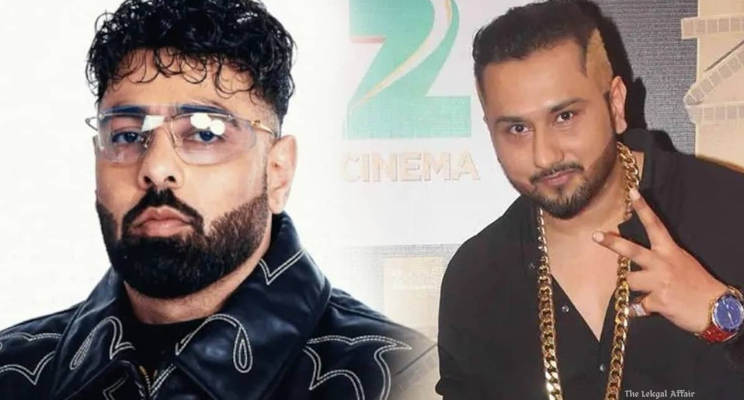
The case of Hindu Shakti Dal & Anr. v. Union of India & Ors. came before the Delhi High Court in a petition raising serious concerns about obscenity, misogyny, and the limits of artistic freedom in the digital age. The matter revolved around a controversial song titled “Volume 1,” allegedly performed by popular singers Honey Singh and Badshah during their association with the group “Mafia Mundeer” in the early 2000s. The petitioners approached the Court seeking immediate removal of the song from all online platforms, contending that its lyrics were grossly vulgar, demeaning to women, and wholly unfit for public dissemination.
The case gained urgency after it was alleged that Honey Singh had recently performed portions of the song at a public concert, thereby reviving its circulation and popularity among audiences, including minors. The petitioners argued that the continued availability of such content on widely accessible digital platforms like YouTube, Google, and Spotify posed a serious threat to societal morality and dignity, particularly of women.
Justice Purushaindra Kaurav, while hearing the matter, took strong exception to the nature of the lyrics. The Court noted that the title itself was so offensive that it could not even be reproduced in the judicial order. After reviewing the content in chambers, the Court observed that the song was not merely inappropriate but crossed the threshold into gross obscenity and dehumanisation.
The central issue before the Court was whether such content could continue to exist on public platforms under the protection of freedom of speech and expression, or whether it warranted immediate judicial intervention in the interest of decency, dignity, and public morality.
Arguments of the Petitioners:
The petitioners, Hindu Shakti Dal and another, advanced a strong case emphasizing the harmful impact of the song and the urgent need for its removal from all digital platforms.
At the outset, it was contended that the lyrics of the song were not merely suggestive or inappropriate but were explicitly vulgar, obscene, and derogatory towards women. The petitioners argued that the content portrayed women in a deeply demeaning and objectifying manner, reducing them to subjects of ridicule and disrespect. Such portrayal, they submitted, was in direct violation of the constitutional values of dignity and equality.
The petitioners further argued that the widespread availability of the song on digital platforms exacerbated its harmful impact. Platforms like YouTube, Spotify, and Google are accessible to individuals of all age groups, including minors. The petitioners contended that exposure to such content at a young age could have detrimental effects on impressionable minds, normalizing misogyny and disrespect towards women.
Another key contention raised was that the song lacked any artistic, literary, or social value that could justify its protection under the right to freedom of speech and expression. The petitioners emphasized that not all expression is protected under Article 19(1)(a) of the Constitution, particularly when it falls within the reasonable restrictions under Article 19(2), including decency and morality.
The petitioners also pointed to the recent concert performance by Honey Singh as evidence that the song continued to be promoted and circulated, thereby increasing its reach and impact. They argued that allowing such content to remain online would effectively endorse and legitimize vulgarity and misogyny in the name of entertainment.
Additionally, the petitioners sought directions to ensure that not only the original version but also any remixes, adaptations, or alternate versions of the song be removed. They highlighted the difficulty in tracking such content across multiple platforms and requested the Court to empower authorities to take proactive steps in identifying and removing all instances of the song.
Arguments of the Respondents:
On the other side, the respondents, including the Union of India and potentially the singers and platform intermediaries, were expected to raise arguments grounded in constitutional protections, procedural safeguards, and the practical challenges of content regulation.
A primary argument likely advanced was the protection of freedom of speech and expression under Article 19(1)(a) of the Constitution. The respondents could contend that artistic expression, even if controversial or offensive to some, falls within the ambit of this fundamental right. They may argue that censorship should be exercised sparingly and only in clear cases of illegality.
The respondents might also argue that the song in question was produced in a different era and cultural context, and that retrospective moral scrutiny should be approached with caution. They could contend that artistic works must be evaluated in their historical and social context rather than being judged solely by contemporary standards.
Another argument could relate to the role of intermediaries such as YouTube, Google, and Spotify. These platforms may assert that they function as neutral intermediaries and are not responsible for user-generated content unless specifically notified. They may emphasize the need for a structured mechanism for identifying and removing content, rather than imposing blanket liability.
The respondents could also raise concerns about overreach and the potential chilling effect on artistic freedom. They might argue that allowing courts to determine the acceptability of artistic content could lead to excessive censorship and stifle creativity.
Additionally, practical challenges in implementing the Court’s directions could be highlighted. Given the vast and decentralized nature of the internet, identifying and removing all instances of a particular song, including remixes and re-uploads, may pose significant logistical difficulties.
Judgment of the Delhi High Court:
The Delhi High Court, after carefully considering the matter, delivered a strong and unequivocal order directing the immediate takedown of the song from all digital platforms.
Justice Purushaindra Kaurav, in his observations, expressed deep concern over the nature of the content. The Court noted that the lyrics were “grossly vulgar, obscene, and derogatory towards women,” and that they failed to meet even the minimum standards of decency expected in a civilized society. The Court went so far as to state that the title of the song itself was so offensive that it could not be reproduced in the judicial order.
After reviewing the song and its lyrics in chambers, the Court described the case as one of the rare instances where its conscience was “shaken to the core.” It emphasized that the content was not only offensive but also devoid of any artistic or social value that could justify its existence on public platforms.
The Court categorically rejected the argument that such content could be protected under the guise of artistic expression or freedom of speech. It held that the right to freedom of speech is not absolute and is subject to reasonable restrictions, including those related to decency and morality. Dissemination of content that is dehumanizing and derogatory towards women cannot be permitted in a society governed by the rule of law.
Accordingly, the Court issued directions for the immediate removal of all URLs containing the song from social media platforms, music streaming services, and any other online locations. This included not only the original version but also any remixes or alternate versions of the song.
The Court also granted liberty to the petitioners to compile a list of additional links containing the song and submit the same to the Union Government, which would then issue directions to the relevant platforms for takedown. Furthermore, the petitioners were allowed to use publicly accessible grievance redressal mechanisms provided by intermediaries to report newly discovered links.
The Union of India, through its counsel, assured the Court that appropriate action would be taken upon receiving such grievances. The Court also permitted intermediaries to seek clarification from the government in case of any ambiguity.
Importantly, the Court issued notice to the singers and any other parties claiming rights in the song, thereby ensuring that they are given an opportunity to present their case in subsequent proceedings.
The matter has been listed for further hearing on May 7, indicating that the Court may continue to monitor compliance and address any additional issues that may arise.
Through this judgment, the Delhi High Court has sent a clear message that the digital space is not beyond the reach of law and that content violating basic standards of decency and dignity will not be tolerated.