


Introduction:
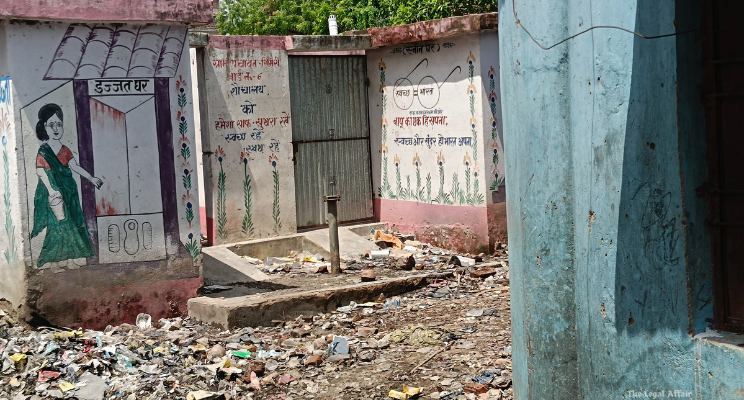
In Rachit Gupta v. Government of NCT of Delhi and Ors., the Delhi High Court delivered a significant judgment reinforcing the constitutional guarantee of a clean and healthy environment as an essential facet of the right to life under Article 21 of the Constitution of India. Justice Amit Bansal was seized of a petition filed by Rachit Gupta, an advocate by profession, who approached the Court seeking demolition of a “kudadaan” and a public urinal allegedly constructed unauthorisedly on the eastern wall of his residential property. The petitioner asserted that nearly 150 residents in the locality were using the open garbage bin to dump waste and the urinal for relieving themselves, resulting in unbearable stench and unhygienic living conditions. Despite repeated representations to the concerned municipal and governmental authorities seeking maintenance of sanitary conditions and removal of the nuisance, no effective action was taken. The Court, after examining the material placed on record including photographs depicting the deplorable state of affairs, held that the existence of an open garbage bin and a public urinal immediately adjacent to an individual’s residence violates the fundamental right to live with dignity in a clean and healthy environment. The judgment stands as a reaffirmation that Article 21 encompasses not merely survival but the right to live in conditions consistent with human dignity.
Arguments of the Petitioner:
Appearing before the Court, the petitioner contended that the open garbage bin and public urinal had been constructed adjacent to his house without due authorisation and in blatant disregard of sanitation norms. He submitted that the presence of these facilities right next to his residential boundary had caused persistent foul smell, unhygienic conditions, and serious inconvenience not only to him but also to other residents of the locality. The petitioner emphasised that approximately 150 individuals from the neighbourhood regularly used the garbage bin to dispose of waste and the urinal for public convenience, thereby aggravating the nuisance. He argued that such conditions infringed his right to live in a clean and healthy environment and adversely affected his physical and mental well being. The petitioner further submitted that he had made several representations and requests to the concerned officials of the respondent authorities, urging them to either relocate or demolish the structures and to maintain proper sanitary conditions. However, according to him, the authorities failed to take meaningful action, compelling him to approach the High Court. He placed on record photographs that demonstrated accumulation of garbage, unhygienic surroundings, and the proximity of the urinal to his residence. It was argued that the continued presence of these structures constituted a public nuisance and a violation of his fundamental rights under Article 21. The petitioner sought directions for demolition of the open garbage bin and the urinal and for restoration of sanitary conditions in the area.
Arguments of the Respondents:
The respondent authorities, representing the Government of NCT of Delhi and municipal bodies, were called upon to justify the placement of the public urinal and garbage bin at the disputed location. While the detailed counter submissions are not elaborated in the record, it was implied that the facilities were installed for public convenience and waste management purposes. The authorities may have contended that such public utilities serve the larger community and are essential for maintaining sanitation infrastructure in densely populated areas. However, the petitioner’s grievance centered on the specific location of these facilities, immediately adjoining his residence, which allegedly resulted in disproportionate hardship and nuisance. The Court examined whether the public interest in providing sanitation facilities could override the constitutional rights of an individual to live in hygienic surroundings. The absence of effective remedial measures by the authorities, despite repeated complaints, weighed heavily against them.
Court’s Analysis and Judgment:
Justice Amit Bansal undertook a constitutional analysis grounded in Article 21 of the Constitution of India, which guarantees the right to life and personal liberty. The Court reiterated that the right to life is not confined to mere animal existence but encompasses the right to live with dignity. One of the integral aspects of a dignified life, the Court observed, is the availability of a hygienic and healthy environment. The absence of sanitation and cleanliness directly affects an individual’s quality of life and well being. The Court noted that the photographs filed by the petitioner clearly demonstrated the deplorable condition prevailing outside his residence. The presence of an open garbage bin and a public urinal inevitably led to foul odour, accumulation of waste, and unsanitary surroundings. The Court empathised with the petitioner and other residents, observing that they were constrained to live in such adverse conditions. It held that the existence of these structures right next to the petitioner’s house amounted to a nuisance and a clear violation of his right to live with dignity in a clean and healthy environment. The Court categorically stated that the presence of a public urinal and an open garbage bin adjacent to the petitioner’s residence infringed his fundamental right under Article 21. Balancing public convenience with individual rights, the Court concluded that while sanitation facilities are necessary, they must not be placed in a manner that infringes constitutional guarantees. Accordingly, the High Court allowed the petition and directed the concerned authorities to demolish the open dustbin and the public urinal within four weeks. The judgment underscores the judiciary’s commitment to ensuring that governmental actions and public utilities do not compromise fundamental rights. It also reinforces the principle that administrative convenience cannot justify conditions that undermine human dignity and health. By granting relief, the Court reaffirmed that clean surroundings are not a luxury but a constitutional entitlement integral to the right to life.