


Introduction:
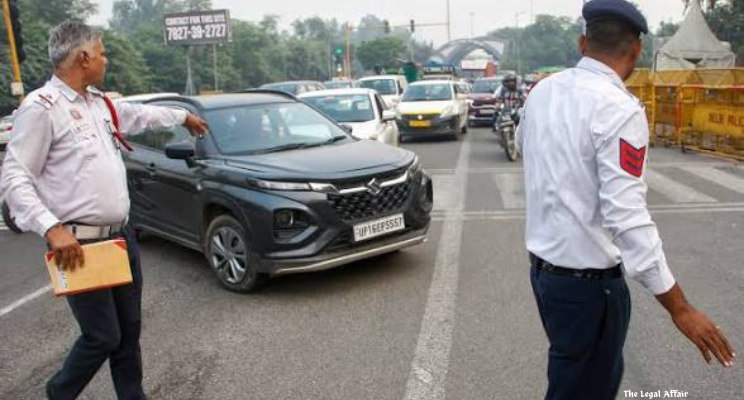
The Delhi High Court has granted a limited exemption to lawyers and court staff from the winter vehicle-entry restrictions imposed on vehicles registered outside the national capital that do not comply with the BS-VI emission standards. The Court clarified that such vehicles would be permitted to enter Delhi on court working days during the restricted period from November 1, 2026, to January 31, 2027.
Justice Amit Mahajan passed the order while hearing a petition filed by the Delhi High Court Bar Association (DHCBA), which sought relief for advocates residing in different parts of the National Capital Region (NCR), including Gurugram, Faridabad, Noida and Ghaziabad. The Association was represented by Senior Advocate N. Hariharan, while the petition was filed through Advocate Amit Choudhary.
The petition challenged the restrictions imposed under a notification dated June 23, 2026, issued by the Department of Environment and Forests, Government of the National Capital Territory of Delhi. Under the notification, vehicles registered outside Delhi and having emission standards below BS-VI were prohibited from plying within the national capital during the winter period between November 1 and January 31.
The restriction was introduced as part of the broader measures aimed at addressing the deterioration of air quality in Delhi during the winter months. The capital regularly experiences severe pollution levels during this period due to a combination of factors, including vehicular emissions, construction activities, industrial pollution, weather conditions and other environmental contributors. Consequently, authorities have adopted seasonal restrictions and other pollution-control measures to reduce emissions and improve air quality.
The June 23 notification prohibited the entry and operation of specified categories of vehicles registered outside Delhi, while also empowering the Environment Department to grant exemptions to particular categories of vehicles.
The DHCBA approached the High Court seeking permission for advocates residing in neighbouring NCR cities to use their vehicles for travelling to Delhi to discharge their professional responsibilities during the restricted period. The Association pointed out that lawyers regularly appear before courts and tribunals in Delhi and are required to attend hearings, conferences, chambers and other professional engagements.
It argued that restricting their ability to enter Delhi could create practical difficulties, particularly when advocates are required to appear in matters listed before courts at specific times. Since court proceedings are governed by judicial schedules and directions, an advocate’s inability to reach the courtroom when a matter is called could adversely affect the interests of the litigants represented by them.
The Association sought a regulated exemption rather than a general relaxation of environmental restrictions. It also requested the Court to direct the Delhi Government’s Environment Department to decide its representation dated October 27 through a reasoned order within a time-frame prescribed by the Court.
The petition specifically clarified that the lawyers’ body was not seeking immunity from environmental regulations or exemption from stricter restrictions imposed under the Graded Response Action Plan (GRAP) or binding judicial orders.
After considering the request, the High Court granted a limited exemption, making it clear that the benefit would be available only on days when the courts are functioning. The decision seeks to balance the professional requirements of advocates and court staff with the continuing need to enforce pollution-control measures in the national capital.
Arguments of the Parties:
The Delhi High Court Bar Association, as the petitioner, challenged the restrictions imposed through the June 23, 2026 notification insofar as they affected advocates residing outside Delhi but required to travel to the national capital for professional purposes.
The Association’s principal contention was that a substantial number of advocates practising before the Delhi High Court and other courts and tribunals in Delhi reside in neighbouring NCR cities such as Gurugram, Faridabad, Noida and Ghaziabad. Their residential location outside Delhi did not reduce their professional obligations towards the courts in the national capital.
According to the Association, the winter vehicle restrictions could create considerable hardship for such advocates because their professional responsibilities frequently required them to travel to Delhi at fixed times. Court proceedings are conducted according to daily cause lists, judicial schedules and specific directions issued by judges. Advocates are expected to remain available when their matters are taken up, and delays in reaching court may have consequences for the litigants whose interests they represent.
The Association argued that an advocate’s inability to attend a scheduled hearing because of restrictions on the entry of their vehicle could potentially prejudice the client’s case. Such circumstances could also create difficulties in complying with directions issued by the Court, particularly where an advocate is required to be physically present for arguments, evidence, conferences or other proceedings.
It further pointed out that the notification itself contained a provision empowering the Environment Department to grant exemptions to specified categories of vehicles. Therefore, the Association maintained that the authorities possessed the necessary administrative power to consider a separate and regulated exemption for advocates who were required to travel to Delhi for court-related duties.
The Association did not seek an unrestricted right for all vehicles registered outside Delhi and below BS-VI emission standards to enter the capital. Instead, its request was limited to advocates travelling for professional obligations during the period from November 1, 2026, to January 31, 2027.
It submitted that the exemption could be regulated in a manner that ensured that the relief was confined to genuine court-related requirements. Such an arrangement would enable advocates to discharge their professional responsibilities without unnecessarily weakening the broader environmental restrictions introduced by the Delhi Government.
The petitioner also highlighted that its request was not intended to challenge the legitimacy of pollution-control measures. It expressly clarified that it was not seeking any blanket exemption from environmental regulations, including stricter restrictions imposed under the Graded Response Action Plan or directions issued by constitutional courts.
This clarification was important because the Association sought only a limited accommodation within the existing regulatory framework rather than a complete suspension of the winter vehicle restrictions for its members.
Apart from seeking a direct exemption, the DHCBA requested an alternative direction requiring the Environment Department of the Delhi Government to consider and decide its representation dated October 27. It sought a reasoned decision within a time-frame fixed by the High Court so that the concerns of advocates could be addressed before the restrictions became fully operational.
The Association’s request was therefore based on the need to reconcile two important considerations: the effective enforcement of environmental restrictions and the uninterrupted functioning of the judicial system.
The respondents, representing the Delhi Government and the concerned authorities, were required to address the petitioner’s request within the framework of the June 23 notification. The notification prohibited the specified category of vehicles during the winter period but also provided the Environment Department with the power to exempt particular categories.
The available case summary does not set out any specific counterarguments or detailed submissions advanced by the respondents. Accordingly, the dispute principally concerned the scope of the exemption sought by the DHCBA and whether a limited accommodation could be granted without undermining the objectives of the pollution-control notification.
The High Court was consequently required to consider whether the professional requirements of advocates and court staff justified a narrowly tailored exemption and, if so, what limitations should govern its operation.
Court’s Judgment:
The Delhi High Court considered the request made by the Delhi High Court Bar Association in the context of the winter vehicle-entry restrictions imposed through the June 23, 2026 notification.
Justice Amit Mahajan granted relief by directing that court staff and lawyers would be exempted from the restrictions on vehicles registered outside Delhi and below BS-VI emission standards. However, the Court imposed an important limitation by clarifying that the exemption would operate only on court working days.
The restriction under challenge was applicable between November 1, 2026, and January 31, 2027. During this period, vehicles registered outside the national capital and not meeting BS-VI emission standards were prohibited from plying in Delhi.
The notification, however, empowered the Environment Department to specifically exempt other categories of vehicles. The DHCBA relied upon this provision to seek a limited exemption for advocates whose professional obligations required them to travel to Delhi from neighbouring NCR areas.
The Court’s order provided relief to lawyers and court staff who would otherwise face difficulties accessing the national capital during the restricted period.
An important aspect of the decision was the limitation imposed on the exemption. The Court did not grant an unrestricted relaxation throughout the entire three-month period. Instead, it specifically confined the benefit to court working days.
This condition ensures that the exemption remains connected to the professional necessity identified by the petitioner. Lawyers and court staff are permitted to use the relevant vehicles when they need to attend court, while the restriction continues to operate on days when the courts are not functioning.
The limitation is particularly significant because the petitioner’s request arose from the practical difficulties associated with attending scheduled judicial proceedings. Court working days provide an identifiable basis for determining when the exemption is required.
The order therefore creates a distinction between travel undertaken for court-related professional responsibilities and ordinary movement during the restricted winter period.
The decision also reflects the importance of ensuring that environmental regulations are implemented in a manner that takes account of essential institutional functions. While controlling vehicular emissions is an important public objective, the enforcement of restrictions must also consider situations in which a narrowly defined exemption may be necessary to prevent disruption of essential public services and professional responsibilities.
The Association had specifically argued that advocates’ attendance is frequently governed by judicial listings and directions. Unlike ordinary travel, court appearances are often time-sensitive, and an advocate may be required to remain present when a matter is called.
Failure to attend a scheduled hearing may have consequences for the litigant concerned. In certain situations, the absence of counsel could affect the progress of proceedings or create difficulties in complying with judicial directions.
By granting the exemption on court working days, the High Court recognised the practical importance of maintaining access to judicial institutions for lawyers and court personnel.
The ruling is also relevant from the perspective of the administration of justice. Courts depend upon the regular participation of advocates, litigants, court staff and other stakeholders for the effective conduct of proceedings. Restrictions that prevent essential participants from reaching court may affect the smooth functioning of judicial institutions.
At the same time, the Court’s order does not amount to a general suspension of the environmental notification. The exemption is limited to the identified categories of persons and the days on which courts are working.
It is equally important to understand the distinction between the relief granted by the High Court and the more extensive exemption that the Association had sought. The DHCBA had requested permission for advocates residing in the NCR to travel to Delhi in their vehicles for professional duties throughout the restricted period. The Court, however, expressly limited the exemption to court working days.
This means that the order should not be understood as granting a general right to use non-BS-VI vehicles registered outside Delhi for unrestricted travel within the capital throughout November, December and January.
The Association had also clarified that it was not seeking exemption from stricter restrictions imposed under the Graded Response Action Plan or binding judicial orders. This distinction is important because the winter vehicle-entry notification operates within a wider environmental regulatory framework.
The Graded Response Action Plan provides for progressively stricter measures depending upon the severity of air pollution in the National Capital Region. These measures may include additional restrictions on vehicular movement and other activities contributing to pollution.
The exemption granted in the present proceedings must therefore be understood within the limited scope of the relief recorded by the High Court. It does not confer immunity from separate restrictions or overriding directions that may independently apply to particular categories of vehicles.
The judgment also raises an important question concerning the balance between environmental protection and the functioning of essential public institutions.
The constitutional framework recognises the importance of environmental protection, particularly through Article 48A, which directs the State to endeavour to protect and improve the environment and safeguard forests and wildlife. Article 51A(g) also places a fundamental duty upon citizens to protect and improve the natural environment.
At the same time, access to justice and the effective functioning of courts are essential components of the constitutional system. The administration of justice cannot function effectively if advocates and necessary court personnel are unable to reach judicial institutions to perform their duties.
The High Court’s limited exemption represents an accommodation between these competing considerations. Rather than completely relaxing the restrictions, the Court confined the relief to the days on which judicial proceedings are conducted.
It is important, however, not to interpret the order as laying down a general constitutional exception to environmental restrictions. The relief was granted in the specific circumstances of the petition filed by the DHCBA and was limited by the condition expressly imposed by the Court.
The Court’s decision also highlights the importance of considering representations made by professional institutions where the implementation of a regulatory measure creates practical difficulties for their members. The June 23 notification itself contemplated the possibility of exemptions for specified categories of vehicles, providing an administrative basis for considering such requests.
The DHCBA had approached the Court after submitting its representation dated October 27 to the Environment Department. Its alternative request was for a reasoned decision on that representation within a time-frame fixed by the Court.
The High Court ultimately granted the limited relief sought in relation to court attendance by exempting lawyers and court staff on court working days.
The order is significant for advocates residing in Gurugram, Faridabad, Noida, Ghaziabad and other neighbouring areas who regularly travel to Delhi for professional engagements. It provides a measure of certainty regarding their ability to reach courts during the winter restriction period.
For the legal profession, the decision recognises that the ability of advocates to attend scheduled proceedings is closely connected with the effective representation of litigants. A regulatory restriction intended to address environmental concerns should not unnecessarily obstruct access to courts where a limited and controlled accommodation can address the difficulty.
At the same time, the ruling preserves the broader objective of pollution control by maintaining the restrictions outside the limited exemption granted by the Court.
Ultimately, Justice Amit Mahajan’s order seeks to strike a practical balance between environmental regulation and the uninterrupted administration of justice. By confining the exemption to court working days, the Delhi High Court ensured that lawyers and court staff can perform their essential professional duties without converting the relief into a blanket relaxation of the winter vehicle-entry restrictions.
The decision demonstrates that environmental protection and the administration of justice need not necessarily operate in conflict. Carefully limited exemptions, where legally permissible, can accommodate essential institutional requirements while preserving the underlying purpose of regulatory measures.