


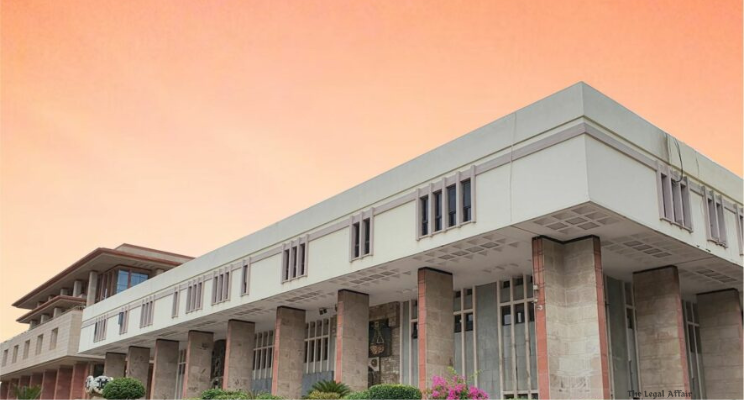
Introduction:
The Delhi High Court recently dismissed a writ petition due to a six-year delay in filing the case, disapproving the litigant’s attempt to shift the blame for the delay onto his counsel. The case, titled Rahul Mavai v. Union of India & Ors., was heard by a division bench comprising Justice C. Hari Shankar and Justice Anoop Kumar Mendiratta. The petitioner, Rahul Mavai, sought the court’s indulgence to condone the delay in filing the writ petition, claiming that his counsel, engaged in Gurgaon, was negligent in handling his case. According to the petitioner, the counsel had misled him by providing false dates and submitting incomplete documents, leading to the failure to file the petition before the High Court. The petitioner’s explanation was found insufficient to justify such a prolonged delay, and the court made it clear that litigants cannot abdicate their responsibility for tracking the progress of their cases after hiring counsel.
Arguments of Both Sides:
The petitioner, Rahul Mavai, argued that he engaged a counsel practising at the District Court in Gurgaon to file the writ petition. According to him, the counsel had given him incorrect dates and failed to file the proper documents, thus misleading him into believing the petition was being processed. As a result, Mavai claimed that he was not aware that no case had been filed before the High Court until much later. Given this, he requested the court to condone the six-year delay and allow his writ petition to be heard.
On the other hand, the Union of India and other respondents argued that the delay of six years in filing the writ petition was excessive and unexplained. They contended that the petitioner should not be allowed to shift the responsibility for the delay solely onto his counsel. The respondents further pointed out that the petitioner had failed to provide adequate evidence that the counsel’s negligence was the sole cause of the delay. They argued that if the petitioner was genuinely misled, he should have shown that he was in regular contact with the counsel during the period of delay and that the counsel had intentionally misled him.
Court’s Judgment:
In its judgment, the Delhi High Court reiterated the principle that litigants must take responsibility for their cases even after engaging counsel. The court emphasized that it disapproved of the common practice of shifting blame onto counsel for inordinate delays. Justice Shankar and Justice Mendiratta remarked that it is not acceptable for a litigant to claim negligence by the counsel as an excuse for prolonged delays in approaching the court. They emphasized that a litigant cannot abandon all responsibility in tracking the progress of their case once a counsel is hired.
The court referred to the Supreme Court’s decision in Mrinmoy Maity vs. Chhanda Koley & Ors. (2024 LiveLaw (SC) 318), which stated that courts should not grant relief under Article 226 of the Constitution if a petitioner approaches the court belatedly or sleeps over their rights for an extended period. The bench pointed out that while a litigant can seek condonation of delay if they can prove that the delay was caused by their counsel’s negligence, such claims must be supported by convincing material.
The court observed that if the counsel had indeed been negligent, the petitioner needed to provide credible evidence showing that he had been in continuous contact with the counsel during the delay and that the counsel had intentionally misled him. The evidence should be convincing enough to satisfy the court that the counsel’s actions were responsible for the delay and that the petitioner was misled.
However, in this case, the court found the petitioner’s explanation inadequate to justify the six-year delay. The court stated that the explanation offered did not meet the necessary standard of convincing evidence to prove that the counsel’s negligence was the sole cause of the delay. Therefore, the court dismissed the petition, emphasizing that it would not condone such a significant delay without sufficient and satisfactory explanation.