


Introduction:
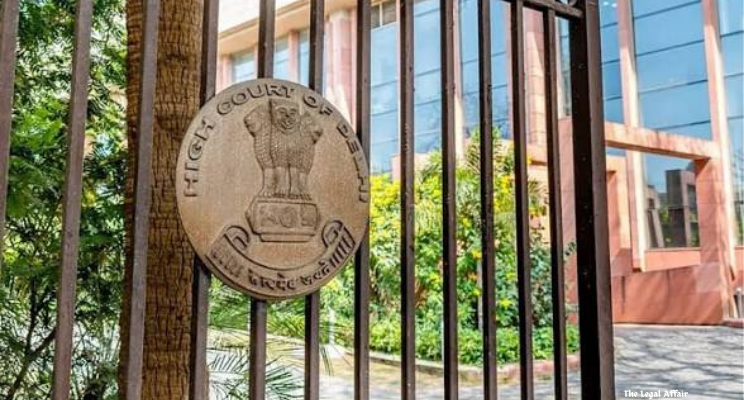
The Delhi High Court recently dealt with an important public interest litigation concerning the evaluation process adopted by the Central Board of Secondary Education (CBSE) for the Class XII Board Examinations. The case, titled National Students’ Union of India v. Union of India & Anr., raised significant concerns regarding the newly introduced On-Screen Marking (OSM) system used by CBSE for evaluating answer sheets.
The matter came before a Vacation Bench comprising Justice Neena Bansal Krishna and Justice Madhu Jain. The petition was filed by the National Students’ Union of India (NSUI) through its President Vinod Jhakhar, alleging widespread irregularities, technical deficiencies, and lack of transparency in the implementation of the digital evaluation mechanism adopted by CBSE.
The OSM system was introduced as a technology-driven method for assessment of answer books. Under this process, physical answer sheets are scanned and uploaded digitally, enabling evaluators to assess them electronically rather than through conventional manual methods. The initiative was aimed at improving efficiency, reducing human errors, and accelerating the declaration of results. However, following the announcement of the Class XII examination results, numerous students, parents, and teachers expressed dissatisfaction with the functioning of the system.
Several complaints surfaced regarding allegedly blurred scanned copies, missing pages, incomplete uploads, mismatched answer sheets, and unexpectedly low scores awarded to students. These grievances led to a substantial number of students seeking access to scanned copies of their answer sheets and subsequently applying for re-evaluation.
Against this backdrop, NSUI approached the Delhi High Court through a public interest litigation, contending that the existing grievance redressal mechanism was inadequate and failed to provide students with a meaningful opportunity to challenge potential errors in evaluation. The petitioner sought judicial intervention for reopening the verification portal, allowing manual verification of disputed answer books, and directing an independent inquiry into the alleged shortcomings of the OSM system.
The litigation raised broader questions regarding fairness, transparency, and accountability in technologically driven educational assessment systems. It also highlighted the delicate balance that courts must maintain between addressing individual grievances and ensuring that administrative processes affecting millions of students are not disrupted.
Arguments of the Parties:
The petitioner, National Students’ Union of India, argued that the newly implemented On-Screen Marking system had generated widespread dissatisfaction among students and had given rise to serious concerns regarding the accuracy and reliability of the evaluation process. According to the petitioner, the number of students seeking scanned copies of their answer sheets demonstrated an unprecedented level of apprehension and lack of confidence in the system.
NSUI contended that the problems experienced by students were not isolated incidents but reflected systemic deficiencies in the digital evaluation mechanism. It was alleged that many students had received scanned copies that were blurred, incomplete, or contained missing pages. In certain instances, students reportedly found discrepancies between their actual answer sheets and the scanned versions uploaded by the authorities. Such irregularities, according to the petitioner, undermined the credibility of the entire evaluation process.
The petitioner further submitted that the grievance redressal framework established by CBSE was inadequate. Students who suspected errors in evaluation allegedly had access only to limited online remedies without any meaningful opportunity for physical verification or manual rechecking of answer sheets. This, according to the petitioner, violated principles of fairness and transparency that are expected to govern public examinations.
NSUI emphasized that a substantial number of students had sought scanned copies immediately after the declaration of results. According to the plea, such a large volume of requests could not be dismissed as a routine post-result exercise. Instead, it indicated widespread concern among students regarding the accuracy of the assessment process.
The petitioner also highlighted the practical consequences of erroneous evaluations. Since undergraduate admission processes were progressing simultaneously, students affected by alleged errors in marking could suffer irreparable academic prejudice if timely corrective measures were not introduced. The absence of an effective mechanism for rectifying mistakes could adversely impact their future educational opportunities.
Accordingly, NSUI sought several directions from the Court. It requested reopening of the verification and re-evaluation portal for at least one month to allow students who had not yet applied to seek re-evaluation. The petitioner also sought permission for manual rechecking and physical verification of answer sheets in disputed cases. Additionally, it requested the Court to direct an independent inquiry into the functioning of the OSM system and to ensure governmental oversight in framing safeguards for future digital evaluation processes.
On the other hand, the Union of India and CBSE strongly opposed the relief sought by the petitioner. Appearing on behalf of the respondents, Solicitor General of India Tushar Mehta argued that the CBSE had already established a comprehensive and time-bound mechanism for students seeking verification and re-evaluation.
The Solicitor General placed before the Court detailed statistics relating to the examination process. He informed the Bench that approximately 17.80 lakh students had appeared for the Class XII examinations and that CBSE had processed around 98.66 lakh answer sheets. According to him, the board had adopted a structured procedure for addressing grievances.
He explained that CBSE had opened a window from May 19 to May 25 for students seeking scanned copies of their evaluated answer sheets. More than four lakh students had availed themselves of this opportunity, resulting in requests for over eleven lakh answer sheets. CBSE had supplied all requested copies to the students concerned.
Subsequently, a separate re-evaluation portal was made available from June 2 to June 6, with an additional extension granted until June 7. During this period, approximately 1.67 lakh students submitted applications for re-evaluation, covering nearly 3.8 lakh answer sheets. According to the Solicitor General, the process had functioned effectively and had provided sufficient opportunity to students who wished to challenge their marks.
The respondents argued that the petition was based largely on generalized allegations rather than concrete evidence of widespread malpractice or systemic failure. They contended that administrative mechanisms were already in place to address individual grievances and that students who genuinely encountered difficulties could pursue remedies available under existing procedures.
A central argument advanced by the Solicitor General concerned the larger public interest. He submitted that reopening the verification portal would significantly disrupt the examination and admission process affecting approximately 17.8 lakh students. Extending deadlines would not merely involve granting additional time for applications but would also necessitate subsequent administrative stages, including scrutiny, re-evaluation, result revisions, and issuance of updated mark sheets.
According to the respondents, such delays could adversely affect undergraduate admission schedules across the country. Since final examination results are crucial for admissions into colleges and universities, postponing the completion of the evaluation process could create uncertainty and inconvenience for a vast number of students whose results had already been finalized.
The respondents therefore urged the Court to refrain from issuing directions that would interfere with an ongoing administrative process affecting millions of students and potentially jeopardize the academic calendar.
Court’s Judgment:
After considering the submissions of both sides, the Delhi High Court declined to grant any immediate interim relief directing the reopening of CBSE’s verification and re-evaluation portal.
The Bench observed that while the concerns raised by students deserved attention, the Court was required to consider the broader consequences of granting the relief sought. The judges noted that extending the portal was not merely a matter of allowing an additional week for submission of applications. Such an extension would trigger a chain of subsequent procedural steps that would inevitably delay the finalization of results.
The Court specifically recognized the practical realities associated with large-scale examination administration. It accepted the respondents’ contention that reopening the process could affect the academic interests of millions of students who were awaiting finality of their results for the purpose of undergraduate admissions.
Addressing the petitioner’s request for immediate intervention, the Bench remarked that what appeared to be a simple extension of one week would, in reality, result in a considerably longer delay in the overall process. The Court observed that after applications are received, multiple additional stages must be completed before final results can be revised and published.
The judges therefore expressed reluctance to interfere with the ongoing administrative mechanism at the interim stage. They emphasized that judicial directions affecting large-scale public examinations must be issued cautiously, particularly where such directions have the potential to impact the interests of a substantial student population.
The Court also took note of the submissions made on behalf of CBSE regarding the opportunities already provided to students. The statistics presented by the respondents indicated that a significant number of students had availed themselves of the existing facilities for obtaining scanned answer sheets and seeking re-evaluation. This suggested that the established mechanism had been operational and accessible to students during the prescribed period.
Importantly, the Bench observed that individual students who faced specific grievances could pursue appropriate remedies. This observation reflected a judicial preference for addressing concrete instances of alleged injustice rather than granting broad relief based on generalized concerns affecting an entire examination process.
At the same time, the Court did not dismiss the public interest litigation outright. Instead, it declined to issue immediate directions and indicated that the matter would be placed before the appropriate roster bench for further consideration. This approach ensured that the substantive issues raised regarding the OSM system and alleged irregularities would remain open for judicial examination at a later stage.
The decision demonstrates the judiciary’s effort to balance competing public interests. On one hand, the Court acknowledged the importance of transparency and accountability in educational assessments. On the other hand, it recognized the need to preserve administrative certainty and prevent disruptions that could adversely affect a far larger group of students.
The judgment is also consistent with the broader principle that courts generally exercise restraint in matters involving academic administration unless there is clear evidence of arbitrariness, illegality, or violation of fundamental rights. Educational authorities are ordinarily afforded a degree of autonomy in conducting examinations and managing evaluation procedures, subject to judicial review in cases of manifest unfairness.
Consequently, the Delhi High Court refused to grant the interim prayer for reopening the CBSE re-evaluation portal. The Court accepted the concern that such a direction could delay the completion of the examination process and affect undergraduate admissions across the country. However, it left open the possibility of further examination of the issues raised in the petition before the appropriate bench.
The case thus remains significant in the evolving discourse surrounding digital evaluation systems in public examinations. As educational institutions increasingly rely on technology-driven assessment methods, questions relating to transparency, procedural safeguards, and effective grievance redressal mechanisms are likely to assume greater importance. The eventual outcome of the litigation may contribute to shaping future standards governing digital evaluation practices in India.