


Introduction:
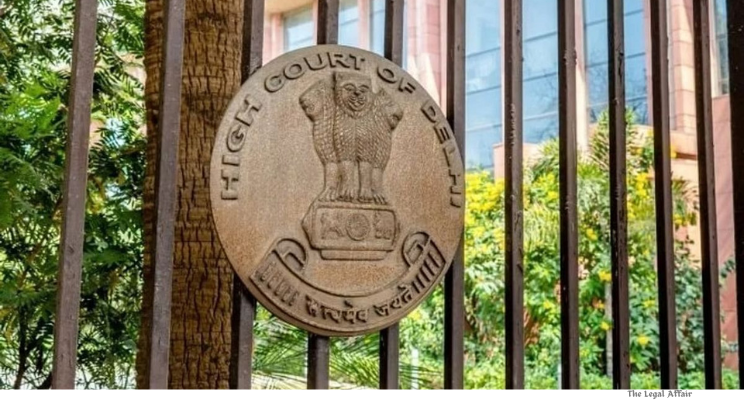
In a recent ruling, the Delhi High Court expressed strong displeasure with the Delhi Government for its failure to implement administrative instructions for the online registration of marriages solemnized under Muslim and Christian Personal Laws. This directive, issued nearly three years ago, was intended to facilitate the Compulsory Registration of Marriage Order, 2014. Justice Sanjeev Narula, highlighting this “systematic failure,” instructed the Delhi Government’s IT Department to take immediate steps to enable marriage registration on the government’s online portal.
The case, titled SH. REHAN ELAHI & ANR. v. GOVT OF NCT OF DELHI & ANR., involves a plea filed by a couple who were married under Muslim personal law in 1995. The couple needed to register their marriage to apply for a parental visa to Canada, where their children reside. They encountered difficulties as the existing online registration portal only supported marriages registered under the Hindu Marriage Act, 1955, and the Special Marriage Act, 1954.
Arguments from Both Sides:
Petitioners’ Arguments:
Represented by advocates Mr. Sumant Narang, Mr. Aditya Singh, and Ms. Bhavya Nakra, the petitioners argued that the lack of provisions for registering marriages solemnized under Muslim and Christian Personal Laws posed significant legal and practical challenges. They emphasized that this gap in the system impeded their ability to fulfill essential legal requirements, such as obtaining visas and asserting rights dependent on official marriage recognition. The petitioners highlighted the government’s failure to follow through on its assurance to address this issue within two months, an assurance given nearly three years ago.
Respondents’ Arguments:
Represented by Mr. Vishal Chanda, Advocate for Mr. Udit Malik, ASC for GNCTD, the respondents acknowledged the existing gaps in the online marriage registration system. However, they argued that efforts were underway to update the portal and expand its functionality to include marriages solemnized under Muslim and Christian Personal Laws. They requested additional time to complete these updates and assured the court of their commitment to resolving the issue promptly.
Court’s Judgment:
Justice Sanjeev Narula issued a scathing critique of the Delhi Government’s inaction, describing it as a “systematic failure.” He noted that despite a judicial order from October 4, 2021, promising appropriate administrative instructions within two months, no substantial progress had been made nearly three years later. The court observed that there was no established procedure, either online or offline, for the registration of marriages under the Compulsory Registration of Marriage Order, 2014, for those solemnized under Muslim or Christian Personal Laws.
Justice Narula underscored the significant implications of this failure, stating: “This lack of infrastructure perpetuates the difficulties faced by parties seeking to fulfill legal requirements, such as obtaining visas or asserting rights dependent on official marriage recognition.”
Directive to the Delhi Government:
In a decisive move, the court directed the IT Department/Marriage Branch of the Revenue Department, Government of NCT of Delhi, to take immediate steps to enable the registration of marriages under the Compulsory Registration of Marriage Order, 2014, on the Delhi government’s online portal. The court emphasized the urgency of this action to ensure similar issues do not recur and to facilitate smoother administrative processes for the public.
The court disposed of the plea, directing the authorities to consider the couple’s application for marriage registration under the 2014 Order and issue a marriage certificate, provided the application was in order and the couple fulfilled the eligibility criteria.
Conclusion:
This ruling by the Delhi High Court underscores the importance of administrative efficiency and the necessity for the government to provide inclusive services for all citizens. By addressing the long-standing issue of online marriage registration for Muslim and Christian marriages, the court aims to ensure that all citizens have equal access to essential legal services, thereby upholding the principles of fairness and justice.