


Introduction:
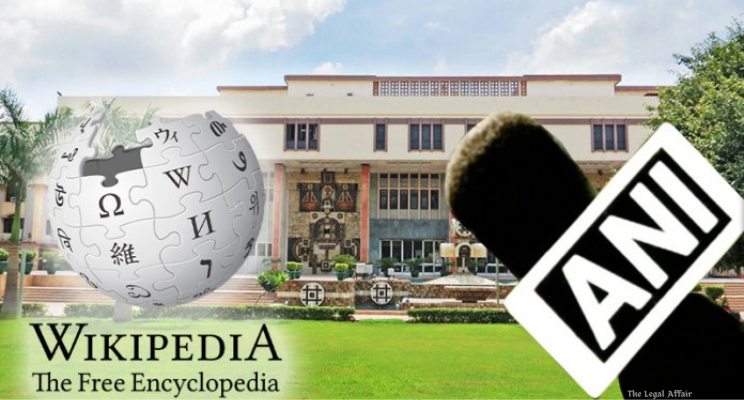
On November 11, the Delhi High Court concluded an appeal by the Wikimedia Foundation, host of the Wikipedia platform, contesting a previous order requiring it to disclose subscriber details of three individuals who edited the Wikipedia page for Asian News International (ANI). The appeal was closed after both parties, ANI and Wikimedia Foundation, reached a consent order, effectively resolving the matter on terms agreed upon by both sides. With the consent order in place, a division bench comprising Chief Justice Manmohan and Justice Tushar Rao Gedela noted that ANI’s ongoing defamation suit could proceed before a single-judge bench. This case centred on ANI’s claims of defamation against Wikipedia’s content, raises critical questions about content moderation, platform liability, and the boundaries of defamation laws for open-source platforms.
Arguments by ANI:
ANI’s legal representation argued that the content posted on Wikipedia had caused substantial reputational damage to the news agency. ANI claimed that Wikipedia had published defamatory statements on its page, describing ANI as a tool of government propaganda and linking it to fake news networks. ANI alleged that such statements were false, baseless, and intended to tarnish its reputation and credibility. ANI sought the removal of the content in question, subscriber information for the editors who added the statements, and substantial damages of Rs. 2 crores.
To support its claims, ANI contended that Wikipedia, as the host platform, had failed to take prompt action to prevent the spread of the allegedly defamatory content and that its refusal to disclose the identities of the editors hampered ANI’s ability to pursue legal recourse. ANI argued that by providing an open-access platform, Wikipedia held a responsibility to monitor or remove defamatory content that could harm individuals or organizations. ANI further accused Wikipedia of non-compliance with previous court orders by failing to remove the content promptly, leading it to file a contempt plea against Wikimedia.
Arguments by Wikimedia Foundation:
Wikimedia’s defence centred on the principle of user-generated content, emphasizing that Wikipedia operates as an open-source, community-driven platform where volunteers edit and contribute. Wikimedia, represented by Senior Advocate Akhil Sibal, argued that the platform did not directly publish or endorse content; rather, it provided a forum for users to participate freely in knowledge-sharing. Wikimedia emphasized that it does not control editorial decisions made by individual users and, therefore, should not be held liable for user-generated content.
Wikimedia also argued that the demand for disclosure of subscriber details raised concerns about user privacy and free expression. The organization maintained that enforcing such disclosure could create a chilling effect on contributors, deterring them from freely editing or sharing information. Wikimedia noted that, as a host platform, its primary responsibility was to moderate content through community guidelines and that ANI’s claim for damages was excessive given the platform’s nonprofit nature.
In an effort to avoid a prolonged legal battle, Wikimedia’s legal counsel expressed willingness to amicably resolve the issue. The foundation complied with the initial court order to remove the contentious content and engaged in consent negotiations, signalling its intent to address ANI’s concerns without admitting liability for the statements made by individual editors.
Court’s Judgment:
The Delhi High Court’s ruling came as a result of mutual consent between ANI and Wikimedia Foundation, which agreed upon certain terms regarding the release of subscriber information, the removal of contested content, and the continuation of ANI’s defamation case in accordance with the law. The division bench’s decision to close Wikimedia’s appeal reflects the resolution reached between the parties.
In dismissing the appeal, the Court highlighted the distinct responsibilities of platforms like Wikipedia that host user-generated content. By allowing Wikimedia to issue summons related to ANI’s defamation claims against the editors, the Court acknowledged ANI’s right to seek redress for reputational damage. However, it also emphasized the limited role of Wikimedia as an intermediary that should not be held directly accountable for content created by users unless there was a clear breach of guidelines or court orders.
Further, the Court clarified that the rights and claims of both parties remained open, allowing ANI’s case against Wikimedia and its users to continue in the single-judge bench. This ruling underscored the Court’s balance between protecting reputational interests and recognizing Wikimedia’s intermediary status under Indian law. It also signified that ANI’s substantive defamation claims could be examined in greater depth within the single-judge proceedings, allowing the factual context, motivations of the editors, and potential impact of the statements to be scrutinized comprehensively.
The Court’s consent order served as a mechanism to resolve disputes about disclosure, while also reminding platforms like Wikipedia of their responsibility to act promptly on orders related to defamatory content. By directing the Delhi Police Commissioner to issue summons to the implicated editors, the Court enabled ANI to pursue accountability against specific individuals responsible for the content. The Court’s judgment thus balanced the competing interests at stake—holding platforms responsible in cases of genuine harm while preserving the broader principles of free speech and content neutrality.
Ultimately, ANI’s demand for Rs. 2 crores in damages and full redress for reputational harm would be subject to findings in subsequent proceedings. The division bench emphasized that the single judge could proceed with ANI’s suit by establishing defamation law, ensuring that ANI’s interests were addressed without imposing a broad liability on the Wikimedia Foundation.