


Introduction:
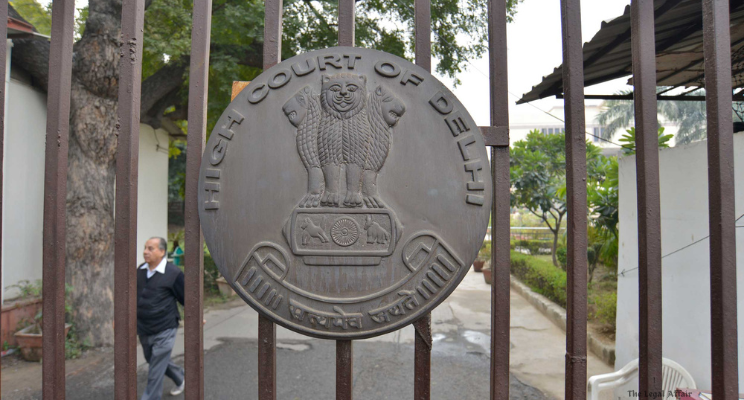
In a landmark decision, the Delhi High Court ruled that the role of a Magistrate or Special Court in supervising investigations is confined to providing judicial assistance and does not extend to questioning the validity of an FIR. The judgment, delivered by a division bench comprising Justice Prathiba M Singh and Justice Amit Sharma, emphasized that investigation is the sole prerogative of the police or investigative agencies. The Court also clarified that any challenge to the validity of an FIR must be addressed under Section 482 of the Cr. P.C or Articles 226/227 of the Constitution and cannot be entertained by Magistrates or Special Courts lacking inherent powers.
This ruling emerged from a suo motu criminal reference and a criminal writ petition filed by the Central Bureau of Investigation (CBI) concerning allegations of corruption involving several Public Sector Undertakings and Rolls Royce Plc. The case shed light on procedural aspects of judicial oversight during investigations and reinforced the boundaries between the judiciary and investigative agencies.
Arguments of Both Sides:
Petitioner’s Arguments:
The Central Bureau of Investigation (CBI), represented by Senior Public Prosecutor Anupam Sharma and his legal team, argued that the Special Court overstepped its jurisdiction by questioning the validity of the FIR during the investigation phase. The CBI contended that the role of the judiciary at this stage is strictly limited to ensuring that legal protocols are adhered to and providing assistance to the investigative agency when required. The agency also emphasized that preliminary inquiries or further investigation are within its discretion, subject to legal norms, and should not be influenced by judicial overreach.
The CBI further submitted procedural safeguards, such as filing a CSR report in cases of non-cognizable offences and following Section 155 of the Cr. P.C. is consistently followed. They asserted that inquiries or registrations of FIRs for cognizable offences are based on sufficient prima facie evidence, which should not be preemptively questioned by the judiciary.
Court-Appointed Amicus Curiae’s Arguments:
Amicus Curiae Vikas Padora, along with his team, argued that judicial intervention is essential in extraordinary circumstances to prevent procedural misuse or ensure fairness in investigations. While agreeing that routine investigations are the domain of the investigative agencies, the amicus highlighted instances where judicial oversight becomes necessary to uphold the principles of justice.
The amicus curiae also discussed Section 395(2) of the Cr. P.C., suggests that references to higher courts should be considered only in exceptional cases where a substantive question of law arises during proceedings. Such references, they argued, must be grounded in compelling reasons to avoid unnecessary delays or interference in investigations.
Court’s Judgment:
The Delhi High Court meticulously analyzed the legal framework governing the supervisory role of Magistrates and Special Courts during investigations. The bench concluded that Magistrates and Special Courts are expected to act as “silent spectators” until the filing of a final report under Section 173(2) of the Cr.P.C. Their role, the Court clarified, is limited to judicial assistance, and they should not interfere with the investigation or question the validity of the FIR.
- FIR Validity Cannot Be Questioned by Magistrates:
The Court held that Magistrates and Special Courts lack the inherent powers under the Cr. P.C. to question the validity of an FIR. It emphasized that challenges to an FIR must be made through appropriate remedies, such as invoking Section 482 of the Cr. P.C. or approaching the High Court under Articles 226/227 of the Constitution.
- Judicial Oversight During Investigation:
The Court reiterated that investigation is the exclusive prerogative of the police or investigative agencies. It underscored that while references to higher courts are permissible under Section 395(2) of the Cr. P.C., they should be made only for compelling reasons in extraordinary circumstances. References cannot be made arbitrarily or for trivial purposes and must arise from a substantive question of law.
- Procedures for Non-Cognizable Offenses:
The Court observed that in cases where information received does not disclose a cognizable offence, the investigative agency must follow the procedure prescribed under Section 155 of the Cr.P.C. This includes filing a CSR report and obtaining judicial approval before initiating an investigation. For cognizable offences, however, an FIR can be registered, and the investigation can proceed without additional permissions.
- Preliminary Enquiries by the CBI:
Addressing the CBI’s discretion to conduct preliminary inquiries, the Court affirmed that the agency is entitled to verify facts and determine whether sufficient information exists to justify the registration of an FIR or RC. This discretionary power, however, must align with established legal principles to prevent arbitrariness.
- Guidelines for References to Higher Courts:
The Court clarified that a valid reference under Section 395(2) of the Cr. P.C. requires the case to be pending before a Metropolitan Magistrate or Sessions Judge. Such references should be made only when substantive legal questions arise and not for routine or inconsequential issues.
Key Observations:
The judiciary’s supervisory role does not include interfering with investigations or questioning FIR validity.
Procedural safeguards, such as CSR reports for non-cognizable offences, must be strictly followed.
Preliminary inquiries are a legitimate tool for investigative agencies to assess the necessity of FIR registration.
References to higher courts must be made judiciously, based on substantive legal grounds.