


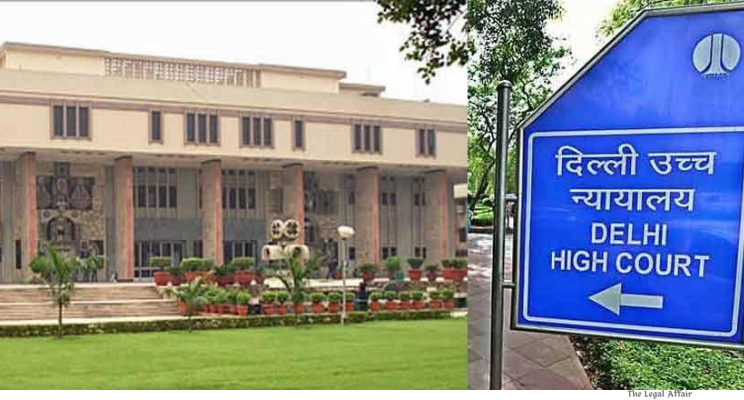
Introduction:
The Delhi High Court has recently directed the Union Government to establish a comprehensive national policy to manage foreign nationals who are facing criminal charges in India and whose visas have expired. A division bench, led by Justice Prathiba M. Singh and Justice Amit Sharma, emphasized the urgent need for national guidelines regarding the status of such foreigners, including questions of visa extension, bail, and detention.
This case brings up critical issues of national security, judicial consistency, and human rights. The High Court’s intervention could set a framework for how foreign nationals in legal trouble are treated within India’s legal and immigration systems. Representing the Union Government, counsel indicated that the matter is under consideration, but no concrete policy decision has been made, specifically concerning the detainment of bailed foreign nationals in detention centres and whether their visas should be extended to ensure their availability for trial.
Union Government’s Argument:
The Union Government, represented by counsel, presented that at a policy level, the issue is actively under consideration, reflecting the Government’s awareness of the complex legal and diplomatic implications. The primary concern is to find a balanced approach that would safeguard national security and ensure judicial processes while managing the practical aspects of detaining foreigners. However, the Government argued that current policies and regulations do not provide sufficient clarity on the specifics of handling foreign nationals who, after being granted bail, have no valid visa. The council explained that the Government has yet to decide whether it is feasible to place these individuals in detention centres or mandate visa extensions solely for legal proceedings.
Additionally, the Union Government’s counsel contended that the issue directly impacts judicial operations, particularly regarding how bail is granted to foreign nationals. The Government argued that a structured policy could provide the courts with a standardized framework that would facilitate consistency in bail and detention decisions. By creating comprehensive national guidelines, the Union argued, India could achieve a better alignment of judicial processes with immigration laws, and courts would be better equipped to handle cases of foreign nationals facing criminal charges. The absence of clear guidelines, counsel pointed out, poses challenges to the trial court’s decision-making, resulting in inconsistency and delays.
Delhi High Court’s Observations and Concerns:
The Delhi High Court bench, comprising Justice Prathiba M. Singh and Justice Amit Sharma, underscored the necessity of a uniform national policy, acknowledging the unique issues associated with foreign nationals involved in criminal cases in India. The Court pointed to the challenges that arise when these individuals are granted bail yet lack valid visas, often requiring them to either remain in detention or risk non-appearance in court proceedings. Notably, the Court expressed concern that such individuals, without the support of an extended visa, could easily leave the country, undermining the judicial process.
Furthermore, the High Court highlighted the pressing need for a transparent protocol on whether foreign nationals should be detained in detention centres post-bail. The Court stressed that prolonged detention without a standardized procedure could lead to potential human rights issues, particularly as these individuals are often left in a legal limbo between immigration and criminal proceedings. This complexity, the Court argued, must be addressed by framing guidelines that balance the protection of national security with respect for the rights of foreign detainees. It observed that such a policy would streamline judicial actions, ensuring that court rulings on bail and detention align with immigration regulations and the government’s broader policy objectives.
Potential Implications of the Court’s Direction:
The Court’s intervention, calling for policy development, reflects a broader shift towards structured handling of foreign nationals within the criminal justice system. A comprehensive policy would likely impact the Ministry of Home Affairs and Ministry of External Affairs, prompting coordination to establish a cohesive approach to cases where foreign nationals facing trial have no valid visa status. The Court’s order to notify the Ministry of Home Affairs and Ministry of External Affairs highlights its insistence on high-level governmental action.
In addition to potentially detaining foreign nationals with expired visas post-bail, the Court’s directive implies that visa extensions could become a tool for ensuring court appearances by foreign nationals throughout the trial process. The Court’s insistence on formal policy could also impact diplomatic relations, particularly for foreign nationals who find themselves under Indian jurisdiction. By ordering that these departments be notified of the directive, the Court has set a clear deadline, demanding an update on progress in policy formation before the December 16 hearing.
Court’s Judgment and Further Actions:
The Delhi High Court did not deliver a final verdict on the matter but set the stage for a major policy shift. The division bench directed the Union Government to conduct a thorough examination of the current procedures, seeking a balanced approach to address legal and human rights concerns. The Court’s order mandated the Union Government to present an update on its decision-making process regarding the handling of foreign nationals with expired visas who have been granted bail.
The Court emphasized that a cohesive policy should cover key issues, including the question of detention versus visa extension, addressing both security risks and the legal necessity of ensuring these individuals remain available for trial. By ordering the Government to consider these factors, the Court highlighted the importance of protecting national interests without compromising on humanitarian obligations.
As a significant part of its directive, the Court instructed that the present order be sent to the Secretary of the Ministry of Home Affairs and the Secretary of the Ministry of External Affairs. It further ordered that these instructions be communicated through counsel to ensure immediate attention. This directive underscores the Court’s insistence that policymakers prioritize the creation of clear, actionable guidelines and implement them promptly.
The bench scheduled a follow-up hearing for December 16, by which time it expects a substantial update from the Government on its policy considerations. The High Court’s call for this policy points to an evolving judicial approach that places equal emphasis on procedural efficiency, national security, and the humane treatment of foreign nationals within the criminal justice system.