


Introduction:
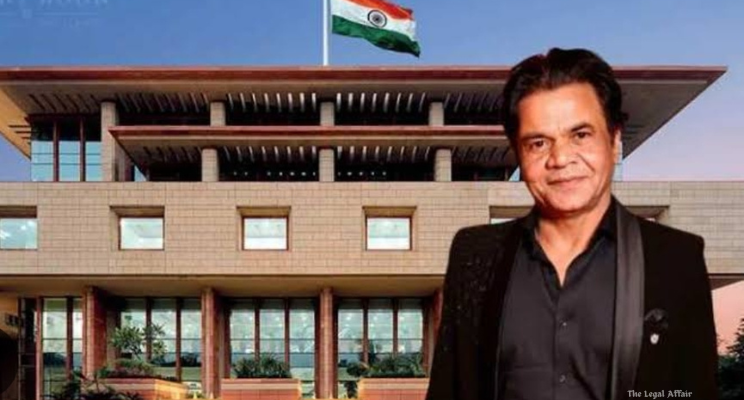
In a case involving the intersection of legal accountability and professional obligations in the entertainment industry, the Delhi High Court on June 24, 2025, permitted popular Bollywood actor Rajpal Naurang Yadav to travel abroad for promotional events related to his upcoming film “Mera Kale Rang Da Yaar”. The vacation bench of Justice Rajneesh Kumar Gupta allowed Yadav’s travel to Melbourne, Australia between June 27 and July 5, 2025, subject to specific conditions aimed at ensuring his compliance with judicial oversight. The matter stems from a criminal case under Section 138 of the Negotiable Instruments Act, 1881, concerning dishonour of cheques, in which Yadav and his wife are appealing against their conviction. The original sentence passed by the Trial Court had been suspended last year by a coordinate bench of the Delhi High Court, which noted that the accused were not hardened criminals and deserved an opportunity to settle the matter amicably. The case is presently pending before the Delhi High Court Mediation Centre. In this latest development, Yadav had sought the Court’s permission to travel overseas to fulfill professional commitments involving international promotional activities for a film project.
Arguments:
The application was supported by Ms. Nandita Rao, Senior Advocate, assisted by a battery of legal counsels including Mr. Piyush Sanghi and others, who submitted that Yadav’s presence in Australia was essential for the scheduled promotional campaign. It was further argued that the actor had previously complied with all court directions, including conditions set during earlier permissions to travel abroad. The legal team reiterated that the travel was not for leisure but a time-bound professional engagement, and thus, deserved judicial leniency in the form of conditional approval.
On behalf of the respondent, represented by Advocate Mr. Avneet Singh Sikka, there was no strong objection raised to the application, provided adequate safeguards were put in place to ensure the petitioner’s return and ongoing participation in the legal process.
Judgement:
The High Court, considering the balance between judicial discipline and the legitimate right of an individual to pursue professional obligations, allowed the application, subject to certain stringent conditions. The bench ordered Yadav to furnish a Fixed Deposit Receipt (FDR) worth ₹1 lakh, which must be deposited with the Registry of the Court before departure. In addition, Yadav was directed to provide his mobile number and email ID, both of which must remain operational at all times during his stay abroad. These measures were aimed at ensuring uninterrupted communication and traceability during the international visit. Further, the Court directed the Trial Court to release Yadav’s passport, which had earlier been deposited as part of judicial compliance, and instructed that the same must be returned immediately upon his arrival back in India. The matter has now been scheduled to be heard by the regular roster bench on July 8, 2025, upon Yadav’s return. This development comes against the backdrop of the actor’s pending appeal challenging his conviction under the Negotiable Instruments Act—a law that criminalizes the dishonour of cheques for insufficiency of funds or similar reasons. Notably, the sentence was previously suspended in June 2024 by another bench of the Delhi High Court, which had not only granted the petitioners relief from imprisonment but also urged them to explore the possibility of resolving the matter amicably with the complainant, M/s. Murli Projects Pvt. Ltd., the entity that initiated the criminal proceedings. That direction led to the case being referred to the Delhi High Court Mediation Centre, where it continues to be under active consideration. Earlier permissions had also been granted to both Rajpal Yadav and his wife to travel overseas in similar professional contexts, and the actor had returned and complied with all directions, a fact which weighed heavily in the Court’s present ruling. The judgment strikes a fine balance between ensuring judicial integrity and recognizing the need for professionals—especially public figures like actors—to honor contractual obligations and appearances which are not only time-sensitive but also crucial to their careers. Justice Gupta’s order represents a measured approach in addressing bail conditions while facilitating limited, monitored liberty. It reinforces the judiciary’s willingness to accommodate genuine requests in special circumstances without compromising the sanctity of pending criminal proceedings. The Court’s emphasis on mandatory deposit of passport and financial surety via FDR highlights its focus on accountability. It also reflects the judiciary’s effort to avoid a blanket bar on movement while ensuring that procedural compliance is not diluted. The travel order thus becomes another example of how courts are increasingly taking a more humane, contextual, and responsibility-driven approach when dealing with high-profile petitioners whose livelihood depends on mobility, while simultaneously holding them accountable to the rule of law. The Court’s move aligns with the broader jurisprudence emerging in matters involving the Negotiable Instruments Act, where defaulting parties are often encouraged to resolve issues through settlement and mediation rather than prolonged incarceration. In this context, the Court’s willingness to permit travel without compromising the larger process of justice reflects a balanced judicial temperament. The case will now resume on July 8, and it remains to be seen whether the mediation process leads to an amicable resolution or whether the Court will proceed to rule on the merits of the appeal. Regardless, the current order underscores the fact that the legal system remains flexible when dealing with cooperative litigants who demonstrate seriousness in addressing pending legal obligations while engaging in professional commitments in good faith.