


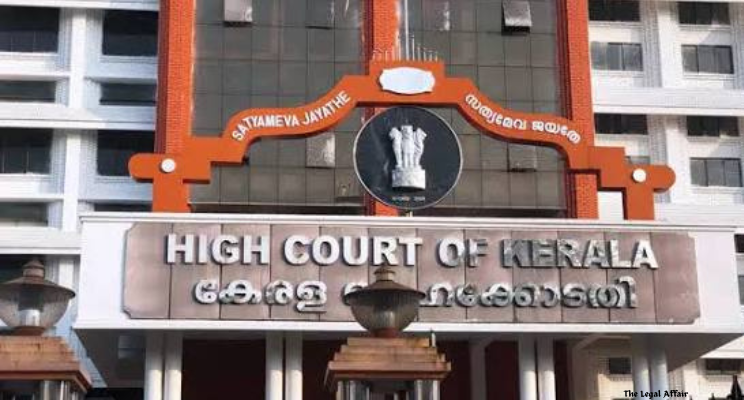
Introduction:
The Kerala High Court has reiterated the importance of timely challenges to matrimonial decrees, emphasizing that delays in questioning orders relating to dissolution of marriage can have far-reaching consequences, not only for the parties involved but also for third parties who may subsequently acquire rights based on a changed marital status. In Sujithra P.A. v. Anishkumar T.R., reported as 2026 LiveLaw (Ker) 308, a Division Bench comprising Dr. Justice A.K. Jayasankaran Nambiar and Justice Preeta A.K. examined the legality of an attempt to set aside an ex parte decree of divorce after a substantial delay.
The judgment arose from a matrimonial dispute in which the respondent-husband had approached the Family Court seeking dissolution of marriage. During the proceedings before the Family Court, the wife was set ex parte, and an ex parte decree of divorce was ultimately granted in favour of the husband. Subsequently, the wife sought to challenge the decree by filing an application for setting aside the ex parte order along with a petition seeking condonation of a delay of 160 days.
The primary explanation offered by the wife was that she had never received the registered notice issued by the Family Court and was therefore unaware of the proceedings. On the basis of this explanation, she requested the court to condone the delay and permit her to contest the divorce proceedings on merits.
Initially, the Family Court accepted her explanation and allowed the applications subject to payment of costs. However, this order was challenged by the husband before the High Court. In an earlier round of litigation, the High Court set aside the Family Court’s order and directed a fresh consideration of the matter after allowing both parties to adduce evidence regarding the alleged non-service of notice.
Pursuant to the remand, the Family Court conducted a detailed inquiry. Witnesses were examined, documentary evidence was produced, and the circumstances surrounding the service of notice were closely scrutinized. Upon evaluating the material, the Family Court concluded that notice had in fact been duly served upon the wife and that her explanation for the delay lacked credibility. Consequently, the applications for condonation of delay and for setting aside the ex parte decree were dismissed.
Aggrieved by this decision, the wife once again approached the Kerala High Court. The appeal presented important questions regarding the standard of proof required to challenge service of notice, the principles governing condonation of delay in matrimonial matters, and the degree of caution courts must exercise while reopening divorce decrees after the expiry of the statutory appeal period.
The case assumes significance because matrimonial disputes occupy a unique position in law. Unlike ordinary civil disputes involving property or monetary claims, decrees relating to marriage directly affect the legal status of individuals. Once a marriage stands dissolved through a judicial decree, parties may reorganize their personal lives, enter into fresh relationships, or even remarry. Therefore, courts have consistently recognized that extraordinary caution is required when dealing with applications seeking to unsettle such decrees after significant delay.
Arguments of the Parties:
The appellant-wife argued that the Family Court had erred in dismissing her applications and had failed to properly appreciate the circumstances that prevented her from participating in the original proceedings. According to her, the delay of 160 days was neither intentional nor deliberate. She maintained that she had no knowledge of the divorce proceedings because the registered notice issued by the Family Court had never been served upon her.
The wife contended that principles of natural justice required that she be afforded an opportunity to contest the matrimonial proceedings. She argued that an ex parte decree dissolving a marriage has serious consequences and that courts should ordinarily lean in favour of adjudicating disputes on merits rather than allowing technicalities to defeat substantive justice.
It was submitted that if she had been aware of the proceedings, she would have appeared before the Family Court and contested the divorce petition. Therefore, the ex parte decree, according to her, had been passed without giving her a fair opportunity of being heard.
The appellant further sought to challenge the findings regarding service of notice. She questioned the reliability of the evidence relied upon by the Family Court and contended that the court had drawn incorrect conclusions regarding acknowledgment of service. According to her, the evidence did not conclusively establish that she had personally received the notice.
The wife also argued that matrimonial disputes involve significant personal rights and that courts should adopt a liberal approach while considering applications for condonation of delay. She urged the High Court to take a sympathetic view and permit the matter to be decided after a full hearing on merits.
On the other hand, the respondent-husband strongly opposed the appeal and supported the findings recorded by the Family Court. He contended that the appellant had been duly served with notice and that the plea of non-service was an afterthought designed solely to reopen a validly concluded matrimonial proceeding.
The husband emphasized that after the earlier remand order passed by the High Court, the Family Court had conducted a thorough inquiry into the question of service of notice. Witnesses had been examined, documentary records had been scrutinized, and all relevant evidence had been carefully considered before arriving at its conclusions.
Particular reliance was placed on the testimony of the postman who had allegedly delivered the registered article. According to the respondent, the postman had clearly stated that the notice was personally served upon the appellant after verifying her identity card. This evidence, it was argued, directly contradicted the appellant’s claim that she had never received the notice.
The respondent further pointed out that documentary evidence had been produced to compare the appellant’s signatures. Certified copies of the marriage certificate and the vakalath executed by the appellant were placed on record to facilitate comparison with the signature appearing on the postal acknowledgment card.
According to the husband, the evidence overwhelmingly established due service of notice. Therefore, the delay could not be condoned merely on the basis of an unsubstantiated denial by the appellant.
The respondent also highlighted the special nature of matrimonial litigation. He argued that once a decree of divorce attains finality, parties may alter their legal and social status. Reopening such decrees after prolonged delays can adversely affect not only the parties but also third persons who may have acquired rights on the assumption that the decree is final.
The husband therefore urged the High Court to uphold the Family Court’s findings and dismiss the appeal.
Court’s Judgment:
After carefully examining the record and the evidence adduced before the Family Court, the Kerala High Court dismissed the matrimonial appeal and affirmed the findings recorded by the Family Court.
At the outset, the Division Bench emphasized the unique nature of matrimonial litigation and the importance of finality in proceedings relating to dissolution of marriage. The Court observed that matrimonial disputes stand on a different footing from ordinary civil disputes because they directly affect the legal status of individuals.
The Bench made a significant observation regarding delays in challenging decrees of divorce. It held that in matters relating to dissolution of marriage, delay in challenging the Family Court’s order can be fatal because parties may alter their status after the expiry of the appeal period.
The Court observed that once a decree of divorce becomes final, parties may reorganize their lives based on the legal assumption that the marital tie has been severed. In such circumstances, reopening the decree at a later stage may create uncertainty and prejudice not only to the original parties but also to third parties who may have acquired rights in the meantime.
The Court therefore stressed that applications seeking condonation of delay in matrimonial matters must be approached with great care and caution. According to the Bench, indiscriminate condonation of delay in such cases could undermine the certainty and stability that judicial decrees are intended to provide.
Turning to the facts of the case, the Court noted that the earlier remand order had specifically directed the Family Court to undertake a detailed inquiry into the question of service of notice. Pursuant to that direction, both parties were given full opportunity to adduce evidence.
The appellant examined the postmaster and the postman and produced documentary evidence. The respondent also led evidence and produced documents relevant to the issue of service.
Particularly important was the testimony of the postman who had allegedly delivered the registered notice. The witness stated that he had personally served the postal article upon the appellant after verifying her identity card. The Court found this testimony to be significant and reliable.
The respondent had also produced certified copies of documents bearing the appellant’s admitted signatures, including the marriage certificate and the vakalath filed by her. These documents were relied upon for comparison with the signature appearing on the acknowledgment card relating to service of notice.
The High Court noted that the Family Court had undertaken a comprehensive evaluation of the evidence and had reached the conclusion that the notice had in fact been served upon the appellant. The Bench found no reason to interfere with this finding.
The Court observed that the Family Court had appreciated the oral and documentary evidence in the correct perspective and had arrived at conclusions supported by the record. There was no perversity, illegality, or misreading of evidence that would justify appellate interference.
The Bench further held that the appellant had failed to establish sufficient cause for condonation of the delay. Since the plea of non-service was found to be unsustainable, the entire foundation of the delay condonation application collapsed.
The Court emphasized that the law of limitation serves an important purpose by ensuring certainty and finality in legal proceedings. While courts possess discretionary power to condone delay in appropriate cases, such discretion must be exercised judiciously and not mechanically.
In matrimonial matters, the need for caution is even greater because reopening concluded proceedings may affect rights that have already crystallized. The Court therefore reiterated that applications seeking to set aside ex parte divorce decrees after the appeal period require particularly careful scrutiny.
The Bench also underscored the possibility of prejudice to third parties. Once a decree of divorce attains finality, either spouse may remarry or otherwise alter their legal position. Allowing stale challenges to such decrees could potentially disturb rights and relationships that have emerged in reliance upon the decree.
Applying these principles, the Court concluded that the appellant had failed to establish either lack of service of notice or sufficient cause for the delay. The Family Court was therefore justified in dismissing the applications seeking condonation of delay and setting aside of the ex parte decree.
Accordingly, the matrimonial appeal was dismissed.
The judgment is significant because it reinforces the principle that finality assumes particular importance in matrimonial litigation. While courts remain committed to ensuring fairness and protecting the right to be heard, such considerations must be balanced against the need for certainty in matters affecting personal status. The decision serves as a reminder that parties seeking to challenge matrimonial decrees must act diligently and without undue delay, especially where the rights and future legal status of individuals may be affected by reopening concluded proceedings.