


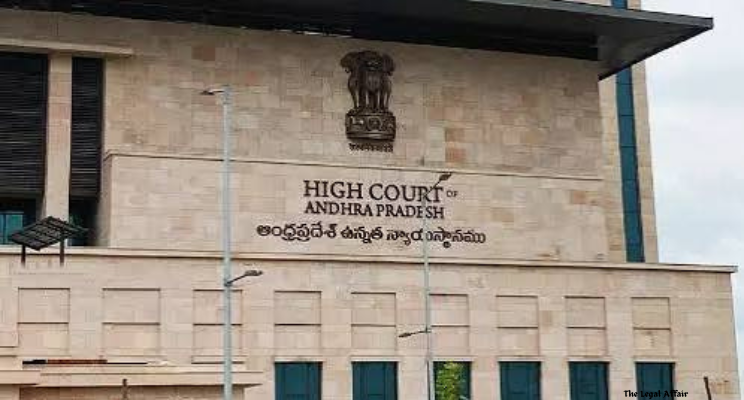
Introduction:
The Andhra Pradesh High Court has reaffirmed an important distinction under the Limitation Act, 1963 concerning declaratory claims relating to immovable property. The Court has held that where a dispute concerning immovable property is not a suit for declaration simpliciter, but involves the plaintiff’s title and consequential rights in the property, Article 65 of the Limitation Act, prescribing a twelve-year period, would govern rather than Article 58, which prescribes three years for “any other declaration.” The Court consequently upheld an amendment permitting the plaintiff to incorporate a prayer for declaration of title even though the application was filed approximately seven years after institution of the suit. (Live Law)
The ruling was delivered by Justice Subba Reddy Satti in Bethala Jaya Raju (Died) & Ors. v. Bethala Manikyal Rao, Civil Revision Petition No. 2455 of 2025. The High Court dismissed the defendants’ challenge to the Trial Court’s order allowing the amendment under Order VI Rule 17 of the Code of Civil Procedure, 1908, finding no illegality or material irregularity in the exercise of jurisdiction by the Trial Court. (Live Law)
The litigation arose out of a dispute concerning scheduled immovable property. The original proceedings were instituted seeking eviction of the defendants from the scheduled premises, vacant possession and recovery of arrears of rent. Thus, the controversy from the beginning concerned rights in and possession of immovable property. During the pendency of the suit, the first defendant died and his legal representatives were brought on record.
The plaintiff subsequently moved an application under Order VI Rule 17 CPC seeking amendment of the plaint. Through the proposed amendment, the plaintiff sought to introduce additional pleadings and specifically incorporate a relief seeking declaration of title over the scheduled property. The plaintiff’s case was that the property was ancestral in character and that his title could be traced to his grandfather, who had executed a Will in favour of the plaintiff’s father. Following the death of the plaintiff’s father, the property was partitioned, and the plaintiff claimed 8½ cents as his share. (Live Law)
The defendants resisted the amendment. Their case was that the deceased first defendant had asserted ownership on the basis of a possessory agreement of sale allegedly executed by the plaintiff’s father in 1994. They argued that the plaintiff was fully aware of the competing claim but nevertheless waited for approximately seven years before seeking to introduce a declaration of title.
The defendants therefore raised a limitation objection. Their principal submission was that a declaration was governed by Article 58 of the Limitation Act, under which a suit for “any other declaration” has to be instituted within three years from the date on which the right to sue first accrues. Since the plaintiff sought the declaratory relief only after several years, the defendants contended that the proposed amendment was barred by limitation. They further argued that the amendment application had been filed after commencement of trial and therefore did not satisfy the due-diligence requirement contained in the proviso to Order VI Rule 17 CPC. (Live Law)
The Trial Court nevertheless allowed the amendment. The defendants then approached the High Court in revision, contending that the Trial Court had committed an error in permitting a time-barred declaratory relief to be introduced into the pending proceedings.
The High Court was consequently required to consider two interconnected questions. The first was whether the proposed amendment was permissible under Order VI Rule 17 CPC, particularly when it was sought at a belated stage. The second, and more significant, question was whether the proposed declaration was governed by Article 58 or Article 65 of the Limitation Act.
The Court approached the issue by first examining the principles governing amendments and then analysing the statutory scheme of the Limitation Act. It found that the amendment did not introduce an entirely new dispute but was connected with the same immovable property already forming the subject matter of the suit. It further held that the limitation objection could not succeed because the nature of the property dispute attracted Article 65 rather than Article 58. (24Law)
The Court’s reasoning was consistent with the earlier jurisprudence of the composite Andhra Pradesh High Court. In Pavan Kumar v. K. Gopala Krishna, the Court had held that where a suit is essentially based on title and seeks declaration of title along with consequential possession, Article 65 applies and Article 58 has no application because Article 58 concerns declaration simpliciter. (CaseMine)
Similarly, in Surabhi Baburao v. Vullingala Suryanarayana, the High Court explained that Part III of the Schedule to the Limitation Act concerns declaratory suits, whereas Part V specifically deals with suits relating to immovable property. Where the subject matter is immovable property, the Court held that the specific provision governing such property disputes should apply. (Indian Kanoon)
The present decision therefore represents a continuation of that line of reasoning. The Court did not treat the word “declaration” in isolation. Instead, it examined the substantive character of the litigation and the statutory placement of Articles 58 and 65 within the Schedule to the Limitation Act.
Arguments of the Parties:
The petitioners, who were the defendants before the Trial Court, principally challenged the amendment on the ground of limitation. Their argument was that the plaintiff’s proposed relief was plainly declaratory and therefore fell within Article 58 of the Limitation Act. According to them, the statutory period of three years began when the plaintiff first acquired the right to sue for declaration, and the plaintiff could not circumvent that limitation period simply by introducing the relief through an amendment application.
The petitioners emphasised that the plaintiff had waited for approximately seven years before seeking declaration of title. Such a long delay, they argued, could not be ignored when the proposed relief itself was allegedly barred by limitation.
They further argued that the proposed amendment was not merely explanatory or consequential. A declaration of title would introduce a substantive claim which had not formed part of the original pleadings. In their submission, permitting such an amendment would materially alter the scope of the litigation and expose the defendants to a claim which, if instituted independently on the date of the amendment, would be liable to be rejected as time-barred.
The petitioners also relied upon the proviso to Order VI Rule 17 CPC. Since the amendment application had been filed after commencement of trial, the plaintiff was required to establish that, despite exercising due diligence, he could not have raised the matter before commencement of trial. The defendants contended that no satisfactory explanation had been offered for the seven-year delay.
Their argument was therefore that the Trial Court ought to have rejected the amendment both because the declaratory relief was allegedly time-barred and because the statutory requirement of due diligence had not been satisfied.
The petitioners also sought to rely upon the distinction between Article 58 and Article 65 in a manner favourable to their case. According to them, Article 65 applies to a suit for possession of immovable property based on title, whereas the amendment before the Court specifically sought a declaration. In their submission, once the plaintiff’s title was denied, the right to seek declaration accrued and Article 58 commenced to operate.
The respondent-plaintiff opposed the revision and supported the Trial Court’s order. The plaintiff’s central argument was that the defendants were attempting to characterise the claim merely by reference to the form of the amended prayer, without considering the actual nature of the litigation.
The plaintiff pointed out that the dispute was already concerned with the scheduled immovable property. The proposed declaration did not relate to an unrelated transaction or a separate property. Rather, it was intended to place before the Court the plaintiff’s claim of title to the very property that was already the subject matter of the proceedings.
The plaintiff further maintained that the amendment was necessary for effective adjudication. Without determination of title, the Court would not be in a position to completely resolve the competing rights asserted by the parties. Refusing the amendment could consequently lead to another round of litigation concerning the same property.
On limitation, the respondent relied upon Article 65. The plaintiff’s case was that the Limitation Act contains a specific part dealing with suits relating to immovable property and that Article 65 provides the applicable period where title to such property and possession are in dispute.
The respondent’s position found support in the earlier decision in Surabhi Baburao, where the Andhra Pradesh High Court held that Part V of the Limitation Act specifically deals with immovable property and that Article 65 should be applied rather than Article 58 where the declaration concerns title to such property. (Indian Kanoon)
The plaintiff also relied upon Pavan Kumar, in which the High Court had held that a suit essentially for possession based on title does not become subject to Article 58 merely because the plaintiff also seeks declaration of title. The relevant limitation provision remains Article 65 because the substantive relief is connected with possession and title to immovable property. (CaseMine)
The plaintiff further argued that the amendment principles recognised by the Supreme Court supported allowing the amendment. In Life Insurance Corporation of India v. Sanjeev Builders Pvt. Ltd., the Supreme Court explained that amendments necessary for determining the real controversy should ordinarily be permitted when they do not cause injustice or prejudice to the opposite party. The Court also cautioned against adopting a hyper-technical approach and recognised that an amendment may be allowed even after expiry of limitation where it does not introduce a time-barred cause of action. (Indian Kanoon)
The respondent therefore argued that the amendment did not create an entirely new cause of action. It merely provided the pleadings and relief necessary for the Court to adjudicate the existing dispute over the property.
Court’s Judgment:
The High Court first considered the principles governing amendment of pleadings under Order VI Rule 17 CPC. The provision gives the Court power to permit alteration or amendment of pleadings at any stage where such amendment is necessary for determining the real questions in controversy between the parties. The controlling consideration is therefore not merely the passage of time but whether the amendment is necessary for a complete and effective adjudication of the dispute.
In this context, the Court relied upon the Supreme Court’s decision in Life Insurance Corporation of India v. Sanjeev Builders Pvt. Ltd. The Supreme Court had summarised the governing principles by holding that amendments necessary for determining the real controversy should be allowed provided they do not cause injustice or prejudice to the opposite party. It further stated that courts should ordinarily avoid a hyper-technical approach and adopt a liberal approach where the opposite party can be compensated through costs. (Indian Kanoon)
The Supreme Court has also recognised that an amendment should ordinarily be permitted where it facilitates proper adjudication and avoids multiplicity of proceedings, unless it introduces a time-barred claim, changes the nature of the suit, is mala fide or deprives the opposite party of a valuable defence. Delay by itself is not an automatic ground for refusing an amendment. (Sci API)
Applying those principles, the High Court examined whether the proposed amendment in the present case would establish an entirely new case. It concluded that it would not. The scheduled property was already the subject matter of the litigation, and the plaintiff’s proposed declaration concerned his title to that same property.
The amendment was therefore considered necessary for effective adjudication of the controversy. Rather than creating an independent dispute, it placed the plaintiff’s claim of title directly before the Trial Court so that the competing claims of the parties could be determined in the same proceeding. The Court consequently rejected a hyper-technical objection based merely on the fact that the declaration had not appeared in the original prayer.
The Court then turned to the central limitation question.
Articles 58 and 65 prescribe materially different periods and starting points. Article 58 provides three years for obtaining “any other declaration,” commencing when the right to sue first accrues. Article 65 provides twelve years for possession of immovable property or any interest therein based on title, with limitation running from the point at which the defendant’s possession becomes adverse to the plaintiff. (Indian Kanoon)
The Court considered the statutory scheme of the Limitation Act rather than treating Article 58 as an all-encompassing provision for every declaratory relief. This approach has a substantial foundation in the earlier jurisprudence of the Andhra Pradesh High Court.
In Surabhi Baburao, the Court specifically considered a situation where a plaintiff had originally sued for recovery of rents and, after the defendants denied his title, sought to amend the plaint to add a declaration of title. The Court held that Article 65 governed because the declaration concerned immovable property. It observed that Part V of the Limitation Act specifically contains provisions applicable to suits relating to immovable property, whereas Part III deals with declarations. (Indian Kanoon)
The Court in that case also held that mere delay in seeking amendment was not sufficient to reject the application. Although the plaintiff ought ideally to have sought the declaration earlier, the delay did not justify throwing out the amendment altogether when the amendment was necessary to determine the real controversy. (Indian Kanoon)
The same reasoning was subsequently adopted in Parepalli Pallalayya v. Kasagani Ramulu. There, the plaintiff had originally filed a suit for permanent injunction and later sought to amend the plaint to incorporate a declaration of title after the defendants disputed his ownership. The Court held that Article 65 was applicable and reasoned that a decree for possession based on title necessarily involves determination of title. It further observed that Article 65 was not confined in a narrow sense to cases where possession alone was sought, but could govern claims protecting an interest in immovable property based on title. (CourtKutchehry)
The High Court’s jurisprudential analysis also finds support in Pavan Kumar v. K. Gopala Krishna. In that case, the Division Bench held that the relevant Article was Article 65 because the suit was essentially one for possession based on title. The mere fact that a declaration of title was also sought did not bring the suit within Article 58 or the residuary provisions. The Court emphasised that the substance of the suit, rather than the mere inclusion of a declaratory prayer, determines the applicable limitation provision. (CaseMine)
The Andhra Pradesh jurisprudence had, however, not always been completely uniform. N. Raghotham Rao v. MCH and Shaik Omer Bin Ali Umodi v. Syed Yousuf Ali had taken the view that Article 58 could apply to declaratory relief concerning immovable property. The later decision in Parepalli Pallalayya expressly differed from that approach, while the subsequent discussion in Mechineni Chokka Rao v. Sattu Sattamma examined the divergence and favoured the interpretation based upon the structure of the Limitation Act. (Indian Kanoon)
In Mechineni Chokka Rao, the Court undertook a detailed examination of the Schedule to the Limitation Act. It noted that the First Division of the Schedule is divided into parts dealing with different categories of suits. Part III concerns declarations, whereas Part V specifically concerns suits relating to immovable property. The Court reasoned that Article 58 is residuary among declaratory provisions and that the subject matter of the suit is an important consideration in deciding which Article applies. (Indian Kanoon)
That decision also emphasised that the Limitation Act generally bars the remedy rather than extinguishing the right, subject to the specific operation of provisions such as Section 27. In the context of immovable property, the consequence of adverse possession and the extinguishment of title therefore have to be understood alongside Article 65. (Indian Kanoon)
The Court in Mechineni Chokka Rao ultimately relied upon the reasoning in Pavan Kumar and Surabhi Baburao, while distinguishing the contrary line of decisions. It held that where the claim concerns title to immovable property, Article 65 provides the relevant limitation framework rather than automatically applying the three-year period under Article 58. (Indian Kanoon)
The present High Court decision follows that established line of reasoning. Justice Subba Reddy Satti held that the relevant inquiry was the nature of the existing suit and the property involved. Since the original proceedings themselves concerned immovable property, the proposed declaration could not be treated as a declaration simpliciter governed by Article 58.
The Court therefore held that Part V of the Limitation Act, and particularly Article 65, governed the controversy. The fact that the plaintiff had sought amendment after seven years did not convert the claim into a time-barred declaration under Article 58. (Live Law)
This conclusion also addressed the petitioners’ principal objection. Once Article 65 was found applicable, their argument that the plaintiff had only three years from the accrual of the right to sue lost its foundation. The limitation period applicable to the title-related claim was not the three-year period under Article 58 but the twelve-year period contemplated under Article 65.
The Court consequently held that the contention that the proposed amendment was barred by limitation “merits no consideration and falls to the ground.” (Live Law)
The Court also considered whether the amendment would prejudice the defendants. It found that the proposed amendment would not establish an entirely new case. The title claim arose from the same property and the same underlying controversy. The defendants would remain free to contest the plaintiff’s asserted ancestral title, the Will, the subsequent partition and the plaintiff’s claimed 8½ cents.
Similarly, the defendants could rely upon their alleged possessory agreement of sale of 1994 and place all relevant evidence before the Trial Court. Allowing the amendment therefore did not amount to accepting the plaintiff’s title. It merely permitted the Court to determine the title dispute on the basis of complete pleadings.
The High Court also recognised the practical consequence of refusing the amendment. If the plaintiff were forced to institute separate proceedings concerning title to the same property, the result could be multiplicity of litigation. Such an outcome would run contrary to the purpose of Order VI Rule 17, which seeks to enable the Court to determine the real controversy between the parties in the pending proceedings.
The Court therefore found no justifiction for interfering with the Trial Court’s exercise