


Introduction:
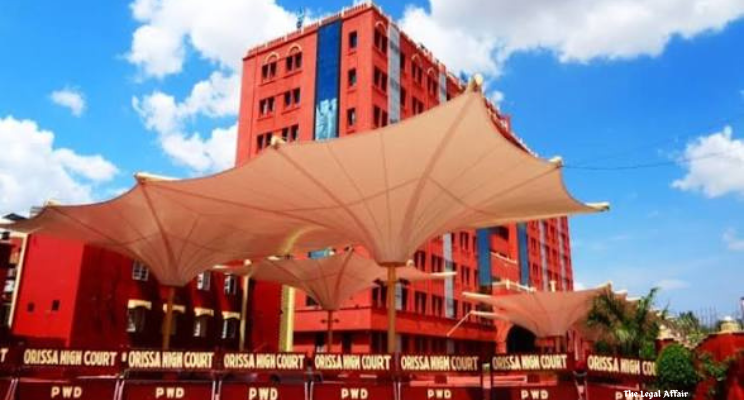
In a significant judgment reaffirming the judiciary’s role in ensuring a fair and complete criminal investigation, the Orissa High Court has held that a Magistrate or Special Judge possesses the authority to direct further investigation under Section 173(8) of the Code of Criminal Procedure, 1973, even in the absence of a formal request from either the investigating agency or the complainant. The Court clarified that the power to order further investigation is an important judicial tool intended to advance the cause of justice and cannot be curtailed merely because no party has specifically sought such a direction.
The ruling was delivered by Dr. Justice Sanjeeb Kumar Panigrahi in Akhaya Kumar Rout & Another v. State of Odisha (Vigilance), Criminal Miscellaneous Case (CRLMC) No. 1496 of 2025, reported as 2026 LiveLaw (Ori) 55. The case arose from a vigilance investigation concerning allegations of corruption against a serving Tahasildar and a private Amin. The judgment provides important clarity regarding the scope of judicial powers under Section 173(8) CrPC and reinforces the principle that courts are not passive spectators when confronted with an incomplete or inadequate investigation.
The dispute originated from a complaint alleging that a serving Tahasildar had demanded illegal gratification amounting to ₹4 lakh for performing official acts. According to the complainant, the first installment of the bribe, amounting to ₹50,000, was to be delivered through a private Amin acting on the instructions of the public servant. Acting on the complaint, the Vigilance Department organized a trap operation intended to catch the accused persons while accepting the illegal gratification.
As part of the trap proceedings, the complainant allegedly handed over tainted currency notes to the private Amin. The prosecution claimed that the acceptance of the money was established through scientific evidence, including a positive hand-wash test. However, before the vigilance officials could reach the location and recover the tainted currency, the money was allegedly passed on to another individual. Consequently, the tainted notes could not be recovered from the possession of either accused.
The inability to recover the tainted currency became the focal point of the investigation. Taking the view that the absence of physical recovery weakened the prosecution case and left insufficient evidence to establish the alleged offence, the Vigilance Department submitted a final report recommending closure of the case. In criminal procedure, a final report generally indicates the investigating agency’s conclusion that no sufficient material exists to proceed against the accused.
The matter then came before the Special Judge (Vigilance), Bhubaneswar. Upon examining the materials collected during the investigation, the Special Judge declined to accept the final report. Instead, the court formed the opinion that important aspects of the case had not been adequately investigated and directed further investigation under Section 173(8) CrPC.
Aggrieved by this direction, the accused persons approached the Orissa High Court under Section 482 CrPC, now corresponding to Section 528 of the Bharatiya Nagarik Suraksha Sanhita, 2023. They sought quashing of the Special Judge’s order and argued that the court had exceeded its jurisdiction by directing further investigation despite the absence of any request from either the Vigilance Department or the complainant.
The case therefore raised an important legal issue regarding the extent of judicial power to order further investigation and whether such power can be exercised suo motu when the court finds the investigation to be incomplete or inadequate.
Arguments of the Parties:
The petitioners, who were the accused persons in the vigilance case, strongly challenged the legality of the Special Judge’s order directing further investigation. Their principal contention was that once the investigating agency had completed its inquiry and submitted a final report citing lack of evidence, the trial court ought not to have directed further investigation in the absence of any formal request from the prosecution or the complainant.
The petitioners argued that criminal investigations are primarily within the domain of the investigating agency. According to them, the court’s role is limited to evaluating the report submitted before it and determining whether the material collected justifies proceeding against the accused. They contended that where neither the Vigilance Department nor the complainant sought further investigation, the court should not have independently initiated such a course of action.
A major component of the petitioners’ argument centered on the non-recovery of the tainted money. They submitted that recovery of the tainted currency constituted a critical element in establishing offences relating to illegal gratification. Since the vigilance officials had failed to recover the currency notes allegedly handed over during the trap operation, the investigating agency had rightly concluded that sufficient evidence was lacking.
The petitioners emphasized that the corpus delicti, namely the tainted notes, was never recovered. In their view, the absence of this crucial evidence substantially weakened the prosecution case and justified the filing of a final report. They argued that directing further investigation despite this fundamental deficiency amounted to an unwarranted prolongation of criminal proceedings.
The accused further contended that allowing courts to order further investigation without any request from the parties could result in unnecessary harassment and uncertainty for individuals who had already been subjected to investigation. According to them, the Special Judge’s order reflected an impermissible intrusion into the investigative domain.
On the other hand, the State Vigilance authorities defended the order of the Special Judge and supported the continuation of the investigation. The prosecution maintained that criminal cases involving allegations of corruption must be assessed on the basis of the entirety of evidence available rather than on the singular issue of recovery of tainted money.
The State argued that the investigation had produced other important incriminating circumstances, including allegations regarding the demand and acceptance of illegal gratification. It was submitted that corruption offences are often proved through a combination of direct and circumstantial evidence and that recovery of tainted money, although significant, is not invariably the sole determinant of culpability.
The prosecution further contended that the Special Judge had exercised powers expressly recognized under Section 173(8) CrPC. The provision empowers courts to ensure that investigations are complete and effective. According to the State, the direction for further investigation was based on legitimate concerns regarding gaps in the inquiry and was therefore consistent with the objectives of criminal justice.
The State emphasized that the purpose of further investigation is not to harass accused persons but to discover the truth. Where the court finds that relevant aspects of a case remain unexplored, it is entitled to direct additional investigation in order to ensure that justice is not defeated by an incomplete inquiry.
Thus, the central issue before the High Court was whether the Special Judge had lawfully exercised judicial powers in directing further investigation despite the absence of any formal application seeking such a direction.
Court’s Judgment:
Dr. Justice Sanjeeb Kumar Panigrahi dismissed the petition and upheld the order directing further investigation. The judgment contains a detailed analysis of the nature and scope of judicial powers under Section 173(8) CrPC and strongly reinforces the principle that courts play an active role in safeguarding the integrity of criminal investigations.
At the outset, the Court observed that the legal position regarding the power of a Magistrate or Special Judge to direct further investigation is no longer uncertain. The Court noted that judicial precedents have consistently recognized that such power exists to ensure that investigations are comprehensive, fair, and effective.
Justice Panigrahi emphasized that the criminal justice system is fundamentally concerned with discovering the truth. The purpose of an investigation is not merely to collect evidence supporting one conclusion or another but to ensure that all relevant facts are properly unearthed. Where the court finds that important aspects of a case have not been adequately examined, it is empowered to order further investigation in the interest of justice.
A significant aspect of the judgment was the Court’s rejection of the argument that a formal application is a prerequisite for directing further investigation. The Court categorically held that the absence of a request from either the investigating agency or the complainant does not deprive the court of its jurisdiction.
The Court observed that judicial powers under Section 173(8) are intended to serve the broader objective of ensuring justice. If the exercise of such powers were made dependent upon the initiative of investigating agencies or complainants, courts would be unable to address situations where investigations are demonstrably incomplete or inadequate.
Justice Panigrahi described the petitioners’ argument as possessing a “superficial allure” but lacking substance upon closer legal examination. According to the Court, acceptance of such a proposition would undermine the judiciary’s responsibility to ensure fairness and completeness in criminal proceedings.
The judgment carefully examined the reasons recorded by the Special Judge while refusing to accept the final report. The Court noted that the Special Judge had not acted arbitrarily or mechanically. Rather, the trial court had provided detailed reasons explaining why the investigation appeared deficient.
Particularly significant was the observation that the Investigating Officer had focused almost exclusively on the non-recovery of the tainted currency notes. In doing so, the investigation had allegedly overlooked other potentially incriminating circumstances relating to the demand and acceptance of illegal gratification.
The Court emphasized that corruption cases cannot always be reduced to the question of physical recovery of money. Demand and acceptance are critical elements in offences involving illegal gratification, and evidence relating to these aspects must be thoroughly examined. The Court observed that an investigation which concentrates solely on one evidentiary aspect while ignoring others may fail to present a complete picture.
Justice Panigrahi further highlighted that the Special Judge’s direction for further investigation was not based on speculation or conjecture. Rather, it was grounded in specific concerns regarding omissions and inadequacies in the investigation already conducted.
The Court reiterated that Section 173(8) CrPC is designed precisely for situations where additional inquiry becomes necessary after submission of a police report. The provision reflects the legislative recognition that investigations may sometimes require supplementation in order to achieve a fair and accurate outcome.
Another important principle emphasized by the Court was that judicial supervision of criminal investigations serves as a safeguard against premature closure of cases. If courts were bound to accept final reports despite apparent deficiencies, the administration of justice could be seriously compromised.
The judgment also reflects a broader constitutional commitment to fairness in criminal proceedings. A fair investigation is an essential component of a fair trial, and courts have a duty to ensure that investigations are conducted in a manner consistent with this principle. The power to direct further investigation is therefore not merely procedural but forms part of the judicial obligation to uphold the rule of law.
After examining the facts and legal principles, the Court concluded that the Special Judge’s order did not suffer from any jurisdictional error, illegality, arbitrariness, or perversity. The order was found to be a reasoned exercise of judicial discretion intended to ensure a more complete investigation of serious corruption allegations.
Accordingly, the High Court dismissed the petition and upheld the direction for further investigation. Recognizing the need for expeditious progress, the Court also directed the investigating agency to complete the exercise and submit a charge-sheet within eight weeks.
The judgment is significant because it reaffirms the judiciary’s proactive role in ensuring that criminal investigations are not prematurely terminated on narrow or incomplete grounds. It clarifies that courts possess independent authority to direct further investigation whenever the factual circumstances indicate that additional inquiry is necessary.
In essence, the ruling underscores that the search for truth remains the central objective of criminal justice. Investigative shortcomings cannot be permitted to obstruct that objective, and courts retain the power to intervene whenever a more thorough investigation is required. By upholding the Special Judge’s order, the Orissa High Court has reinforced the principle that procedural powers under Section 173(8) CrPC are meant to advance justice, not merely to regulate investigative formalities.