


Introduction:
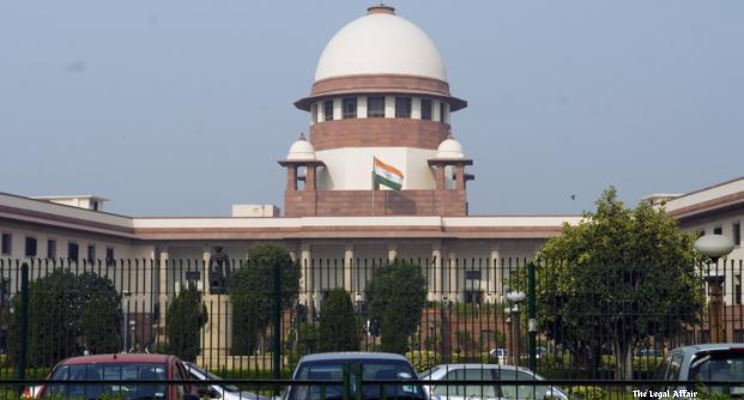
The Supreme Court of India, in two significant and contemporaneous judicial interventions, reaffirmed the primacy of constitutional guarantees while also expressing deep concern over systemic inertia in governance. In MC Mehta v. Union of India (WP (C) 13029/1985), the Court sharply criticised the Commission for Air Quality Management (CAQM) for its lackadaisical and “unserious” approach towards the persistent air pollution crisis in the Delhi National Capital Region (NCR), directing urgent expert-driven coordination and transparency. In a separate but equally important decision, Arvind Dham v. Directorate of Enforcement (2026 LiveLaw (SC) 7), the Supreme Court granted bail to an undertrial accused under the Prevention of Money Laundering Act, 2002, holding that the right to a speedy trial under Article 21 of the Constitution is not eclipsed by the seriousness or nature of the offence. Together, these rulings underscore the Court’s consistent emphasis on constitutional accountability, whether in protecting personal liberty against prolonged pre-trial incarceration or in compelling statutory authorities to act decisively in safeguarding public health and environmental rights.
Arguments on Behalf of the Petitioners/Appellants:
In the environmental matter, the petitioners, supported by the amicus curiae Senior Advocate Aparajita Singh, highlighted the persistent and worsening air quality in the Delhi NCR despite years of judicial monitoring and multiple policy interventions. It was argued that the CAQM, a statutory body created precisely to address air quality issues, had failed to discharge its mandate effectively. The petitioners pointed out that different expert bodies and technical institutions, including reputed entities such as the Indian Institutes of Technology, had presented widely divergent data on pollution sources, with estimates of vehicular and transport sector contributions ranging from 12% to as high as 41%. This lack of consensus, it was contended, reflected a failure of coordination and scientific clarity, resulting in fragmented and ineffective policy responses. The petitioners further argued that CAQM’s response to the Court’s earlier directions, particularly the order dated 17 December 2025 calling for a reassessment of long-term remedial measures, was wholly inadequate, amounting to a mere status note devoid of actionable strategy. Civic bodies, instead of proposing solutions, were accused of prioritising revenue considerations, such as defending toll plazas, over environmental and public health concerns.
In the criminal matter concerning pre-trial detention, the appellant argued that his continued incarceration since 9 July 2024, without commencement of trial or even cognizance being taken, constituted a clear violation of Article 21. It was submitted that despite the filing of prosecution complaints by the Directorate of Enforcement, the case remained stuck at the stage of document scrutiny, with as many as 210 prosecution witnesses cited, making any early conclusion of trial illusory. Relying on precedents such as Javed Gulam Nabi Shaikh v. State of Maharashtra, Manish Sisodia v. Directorate of Enforcement, Padam Chand Jain, and V. Senthil Balaji, the appellant contended that when the State or prosecuting agency lacks the wherewithal to ensure a speedy trial, it cannot oppose bail merely by invoking the gravity of the alleged offence. The defence also highlighted that the delay was substantially attributable to the Enforcement Directorate itself, which had challenged a procedural order before the High Court, resulting in an eight-month stay of proceedings. Allegations of witness tampering and dissipation of proceeds of crime were described as speculative and unsupported by material evidence, especially since the evidence was largely documentary and already in the custody of the prosecution.
Arguments on Behalf of the Respondents/Authorities:
In the air pollution case, the CAQM and various civic and statutory authorities sought to justify their positions by pointing to the complexity of the pollution problem and the multiplicity of contributing factors. The Municipal Corporation of Delhi emphasised the economic importance of toll plazas as a source of municipal revenue, while authorities such as the National Highways Authority of India and the Gurugram Metro Development Authority sought apportionment of environmental compensation liabilities. The respondents argued that measures were being taken incrementally and that divergent expert opinions were an inherent feature of complex environmental assessments. However, they stopped short of presenting a unified, data-driven action plan addressing long-term solutions.
In the bail matter, the Directorate of Enforcement opposed the grant of bail on the ground of the seriousness and gravity of economic offences, contending that money laundering has wide-ranging implications for the financial system and public interest. It was argued that offences under the PMLA constitute a distinct class warranting stricter scrutiny in bail matters and that the appellant’s release could lead to influencing witnesses or tampering with evidence. The ED also relied on statutory restrictions under the PMLA to argue that bail should not be granted lightly, especially at a stage when the prosecution case was yet to unfold fully.
Court’s Judgment:
In MC Mehta v. Union of India, the Bench comprising Chief Justice of India Surya Kant and Justice Joymalya Bagchi expressed strong dissatisfaction with the CAQM’s approach, characterising it as lacking seriousness and urgency. The Court noted that despite years of monitoring and repeated judicial interventions, air quality in the Delhi NCR remained persistently poor, if not aggravated. The Bench was particularly concerned by the absence of a uniform and authoritative identification of pollution sources, observing that expert bodies were at variance on fundamental data. Holding that CAQM could not remain passive, the Court directed it to urgently convene a coordinated meeting of shortlisted domain experts within two weeks, ensure continuous deliberations, and submit a comprehensive report identifying the major causes of air quality deterioration. The Court further mandated that the report be placed both on the judicial record and in the public domain to foster transparency, public awareness, and participatory accountability. Emphasising that long-term solutions must be examined simultaneously, the Court directed phased implementation of remedial measures, prioritising the highest contributing pollution sources, and clarified that issues such as toll plazas must be reconsidered independently, uninfluenced by revenue-centric positions of stakeholders. The Court also made it clear that it would not grant long adjournments and would monitor the matter on a continuous basis.
In Arvind Dham v. Directorate of Enforcement, a Bench of Justice Alok Aradhe and Justice Sanjay Kumar allowed the appeal and set aside the Delhi High Court’s order denying bail. The Court reaffirmed that the right to a speedy trial under Article 21 is not eclipsed by the nature of the offence and that prolonged incarceration of an undertrial, without commencement or reasonable progress of trial, effectively converts pre-trial detention into a form of punishment. Rejecting the argument that economic offences form a homogeneous class justifying blanket denial of bail, the Court held that under the PMLA, where the maximum punishment is seven years, statutory rigours cannot be interpreted to legitimise indefinite pre-trial detention. The Bench placed significant weight on the fact that cognizance had not been taken, the evidence was largely documentary, and delays were substantially attributable to the Enforcement Directorate itself. Allegations of witness influence and dissipation of proceeds of crime were found to be unsupported by material evidence. Reaffirming constitutional first principles, the Court held that if the justice system is unable to ensure a timely trial, continued incarceration cannot be justified by invoking the seriousness of allegations alone, and accordingly directed the appellant’s release on bail subject to conditions including surrender of passport and travel restrictions.