


Introduction:
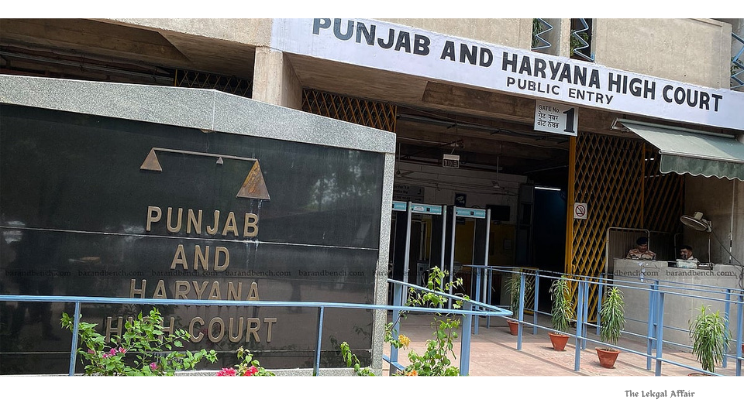
In a strongly worded and jurisprudentially significant decision, the High Court recalled an anticipatory bail order granted in 2022, holding that an accused cannot secure liberty on the strength of a compromise and thereafter resile from solemn undertakings made to the Court with impunity. Justice Sumeet Goel, while allowing an application filed by the complainant, observed that such conduct amounts to a misuse of judicial leniency, a breach of judicial trust, and a calculated manipulation of the criminal justice system. The Court took judicial notice of a growing and deeply concerning trend where accused persons strategically invoke the possibility of settlement to obtain anticipatory bail, only to abandon their commitments once liberty is secured. Emphasising that the equitable jurisdiction of the Court cannot be converted into a sanctuary for litigation opportunism, the Court held that when bail is granted solely on the basis of a compromise, the compromise ceases to be a private arrangement and assumes the character of a judicial undertaking. Any breach thereof, the Court held, is not merely a civil wrong but an affront to the dignity and authority of the Court itself. Recalling the bail order, the Court directed the accused to surrender within 15 days, while leaving it open for him to apply for regular bail, and imposed exemplary costs of ₹25,000 payable to the Punjab State Legal Services Authority.
Arguments of the Complainant / Applicant Seeking Recall:
The complainant approached the High Court by way of an application seeking recall of the anticipatory bail order dated 17.01.2022, contending that the order had been obtained by fraud and abuse of the judicial process. It was argued that the anticipatory bail was granted solely on the basis of a settlement arrived at during mediation, without any adjudication on the merits of the allegations under Section 420 IPC. According to the complainant, the accused had never intended to honour the settlement and had used the compromise merely as a stratagem to evade custodial interrogation and arrest. The complainant submitted that despite clear and binding terms in the settlement agreement dated 25.11.2021, the accused had willfully failed to comply with his obligations, neither delivering possession of the flat nor refunding the substantial amounts received. It was argued that once the accused invited the Court to grant him liberty based on a settlement, the compromise acquired the sanctity of a judicial undertaking, and breach thereof amounted to playing fraud on the Court. The complainant further contended that permitting the accused to enjoy anticipatory bail despite deliberate non-compliance would render the Court’s orders meaningless, erode public confidence in the administration of justice, and leave victims remediless. It was submitted that the plea that the complainant should seek civil remedies was wholly misconceived, as the accused’s liberty itself was secured by invoking the Court’s equitable jurisdiction on the basis of the compromise. The complainant thus urged the Court to recall the bail order and send a clear message that judicial indulgence cannot be exploited for private gain.
Arguments of the Accused / Petitioner Opposing Recall:
Opposing the recall application, the accused contended that there was no provision under the Code of Criminal Procedure to recall an order granting anticipatory bail. It was argued that once bail had been granted, it could be cancelled only on well-recognised grounds such as misuse of liberty, interference with investigation, or commission of a subsequent offence, none of which were alleged in the present case. The accused sought to characterise the dispute as essentially civil in nature, arising out of an agreement to sell, and submitted that the complainant had adequate civil remedies available for enforcement of the settlement. It was further contended that non-compliance with the settlement terms, even if assumed, could not automatically result in cancellation of bail, as that would amount to converting the criminal court into an executing forum for private contracts. The accused also relied upon the Supreme Court’s decision in Gajanan Dattatray Gore v. State of Maharashtra (2025), to argue that courts should be cautious in granting or cancelling bail on the basis of settlements, and that criminal proceedings should not be used to enforce civil obligations. On these grounds, the accused prayed for dismissal of the recall application.
Court’s Judgment and Reasoning:
Justice Sumeet Goel, after hearing the parties at length, rejected the objections raised by the accused and allowed the recall application, delivering a judgment marked by doctrinal clarity and strong institutional concern. At the outset, the Court noted that the anticipatory bail granted on 17.01.2022 was not based on an assessment of the merits of the allegations but was founded entirely on the compromise arrived at during mediation. The Court held that where liberty is granted exclusively on the basis of a settlement, the settlement becomes the very foundation of the bail order. The Court categorically held that when an accused invites the Court to act upon a compromise, the compromise transcends the realm of a private contract and becomes a solemn assurance to the Court. Any breach of such assurance, the Court held, is not merely a civil wrong but a direct affront to the dignity and authority of the judiciary. The Court took judicial notice of what it described as a “burgeoning and distressing trend” of accused persons using settlement as a tactical artifice to procure discretionary relief, only to later repudiate their commitments once liberty is secured. Justice Goel observed that such conduct leaves the complainant in a state of precarious vulnerability and reduces the machinery of justice to a state of “suspended animation”. The Court strongly deprecated this practice, holding that it amounts to a flagrant manipulation of judicial leniency and a calculated misuse of equitable jurisdiction. Addressing the argument that there is no provision to recall a bail order, the Court held that where bail is obtained by playing fraud on the Court or by abusing its process, the Court is not powerless to recall its own order. The Court clarified that viewing such breaches as mere civil disputes would allow the judicial machinery to be weaponised for private gain, a consequence wholly incompatible with the rule of law. On the reliance placed on the Supreme Court’s decision in Gajanan Dattatray Gore, the Court clarified that the said ruling was prospective and merely cautioned courts against granting bail on the basis of settlements; it did not dilute the power of courts to cancel or recall bail where the conditions or undertakings forming the basis of liberty are breached. Examining the factual matrix, the Court found serious allegations of cheating and fraud, noting that despite receipt of over ₹37 lakhs, neither possession of the flat was delivered nor the money refunded. The Court concluded that the accused’s conduct demonstrated that the promise of compliance was a deceptive artifice, intended solely to circumvent custody without any bona fide intent to honour commitments. Characterising the conduct as “shopping for liberty through hollow undertakings”, the Court held that such behaviour undermines the majesty of law and brings the administration of justice into disrepute. Consequently, the Court recalled the anticipatory bail order dated 17.01.2022, dismissed the main anticipatory bail petition, directed the accused to surrender within 15 days with liberty to apply for regular bail, and imposed exemplary costs of ₹25,000 payable to the Punjab State Legal Services Authority.