


Introduction:
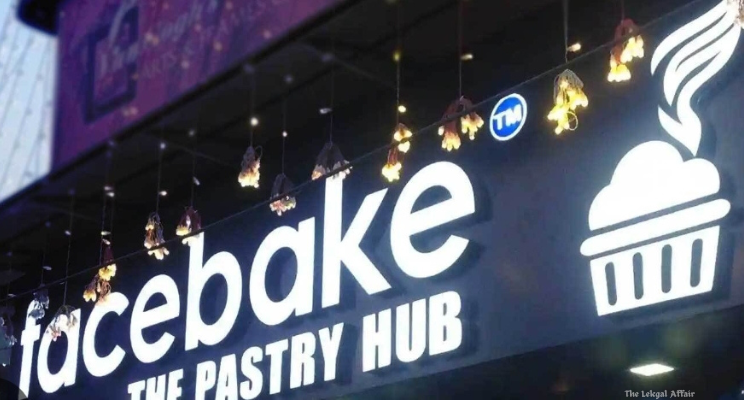
In a noteworthy decision reinforcing the balance between enforcement of intellectual property rights and practical compliance by restrained parties, the Delhi High Court disposed of an execution petition filed by Meta Platforms Inc. (formerly Facebook) after being satisfied that the operators of bakery outlets previously using the marks “FACEBAKE” and “FACECAKE” had substantially complied with an earlier decree restraining infringement of Meta’s well-known “FACEBOOK” trademark. The order was passed on 24 December 2025 by Justice Manmeet Pritam Singh Arora, while examining whether the judgment and decree dated 6 July 2022—which permanently restrained the use of deceptively similar marks, related domain names and email addresses, and awarded nominal damages of ₹50,000 along with costs—had been duly complied with. The execution proceedings arose from Meta’s grievance that despite the injunction, the defendants had continued using infringing marks and had delayed payment of damages and costs. On the other hand, the bakery operators asserted that they had undertaken a complete rebranding exercise, renaming all their outlets as “BUNCAKE,” removing infringing signboards, and ceasing all use of the impugned marks. The case thus presented the Court with the task of determining whether the execution petition warranted coercive enforcement or whether substantial compliance with the decree had rendered further proceedings unnecessary.
Arguments of Both Sides:
On behalf of Meta Platforms Inc., it was contended that the execution petition had been necessitated due to continued non-compliance with the permanent injunction granted in July 2022. Meta argued that despite clear judicial directions restraining the use of the marks “FACEBAKE” and “FACECAKE,” along with associated domain names and email addresses, the defendants had allegedly persisted in using deceptively similar marks, thereby diluting Meta’s globally recognized “FACEBOOK” trademark. Meta also raised serious concerns regarding the delay of nearly three years in receiving the decretal amount towards damages and costs, asserting that such delay amounted to willful disobedience of the court’s decree. According to Meta, execution proceedings were essential not only to secure compliance but also to uphold the sanctity of intellectual property rights and deter infringers from adopting evasive tactics post-decree.
Conversely, the bakery operators, represented before the Court, categorically denied any willful non-compliance. They submitted that all bakery outlets earlier operating under the names “FACEBAKE” and “FACECAKE” had been fully rebranded as “BUNCAKE,” with infringing signage removed and no further use of the restrained marks in trade, advertising, or online presence. They emphasized that any residual instances of infringement pointed out during the execution proceedings had been promptly remedied. On the issue of damages and costs, the defendants argued that there was no deliberate delay on their part; rather, they had repeatedly sought Meta’s bank account details to facilitate payment of the decretal amount. It was contended that the eventual payment made on 16 September 2025 demonstrated bona fide intent to comply with the decree, and that the execution petition had become infructuous in light of full compliance.
Court’s Judgment:
After carefully examining the pleadings, submissions, and compliance status placed on record, the Delhi High Court concluded that the execution petition did not warrant continuation. Justice Manmeet Pritam Singh Arora noted that Meta itself had subsequently confirmed that the remaining instances of infringement pointed out during the execution proceedings had been addressed and remedied by the bakery operators. This acknowledgment, in the Court’s view, significantly weakened the case for coercive execution, as the core objective of the injunction—cessation of infringing use—had been achieved.
On the issue of damages and costs, the Court undertook a nuanced assessment of the delay. While recording Meta’s grievance regarding the three-year delay in receiving the decretal amount, the Court also took note of documentary material demonstrating that the judgment-debtors had repeatedly sought Meta’s bank details to effect payment. The Court observed that the payment was eventually made on 16 September 2025 and held that, in the circumstances, it was in fact the decree holder—Meta—that had “exhibited a lack of initiative in accepting the monies awarded under the decree dated 06.07.2022.” This observation underscored the Court’s unwillingness to permit execution proceedings to be used punitively when compliance had substantially occurred and delays were not solely attributable to the judgment-debtors.
In light of these findings, the Court held that the decree relating to damages and costs stood fully satisfied and that the permanent injunction restraining the use of deceptively similar marks had been complied with to Meta’s satisfaction. Accordingly, the execution petition was disposed of. However, the Court clarified that the injunction would continue to operate, and Meta would remain at liberty to seek fresh relief in the event of any future violation. This clarification ensured that while the present execution proceedings were closed, the protective umbrella of the original decree remained intact to safeguard Meta’s trademark rights going forward.