


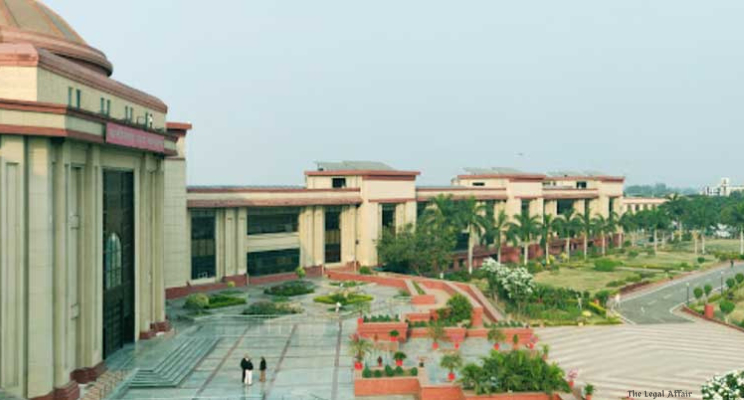
Introduction:
In a recent judgment, the Chhattisgarh High Court, in the case of M/s Hira Carbonics Private Limited v. Kunwar Virendra Singh Patel & Anr., delivered an important ruling on the admissibility of additional evidence in the proceedings under Section 34 of the Arbitration and Conciliation Act, 1996. The petitioners challenged an order passed by the Commercial Court which allowed the respondent to submit additional evidence under Section 65 of the Indian Evidence Act. The crux of the case revolved around whether additional documents not forming part of the arbitral record could be admitted during the challenge to the arbitral award under Section 34. This issue raised significant questions about the procedural scope of arbitration proceedings, particularly the constraints on introducing new evidence in a challenge under Section 34.
Arguments of Both Sides:
The petitioner, M/s Hira Carbonics Private Limited, contended that the challenge to an arbitral award under Section 34 should be based solely on the arbitral record, without the inclusion of additional documents or evidence. They argued that the submission of new evidence under Section 65 of the Indian Evidence Act was not justified, as the law provided clear restrictions on what could be considered in such challenges. They placed reliance on the judgment in Alpine Housing Development Corporation Pvt. Ltd. v. Ashok S. Dhariwal (2023), which established that, except in exceptional circumstances, additional evidence could not be allowed in challenges to an arbitral award under Section 34. The petitioner asserted that the intention of Section 34 was to expedite the process of disposing of the petitions and allowing new evidence would undermine this purpose by introducing unnecessary delays. They further emphasized that if new documents were admitted, it would open the door to endless legal wrangling, defeating the efficiency of the arbitration process.
On the other hand, the respondent, Kunwar Virendra Singh Patel, argued that the document in question was submitted in compliance with Section 65 of the Indian Evidence Act, which allows a document to be presented if it is not part of the original record but needs to be proved in a court of law. The respondent contended that the document was crucial for the court to examine the case fully and that the law permits such a document to be introduced if it is relevant and necessary to the proceedings. The respondent further highlighted that the court had applied the law in Alpine Housing Development Corporation Pvt. Ltd. (supra) and therefore, the current petition should be dismissed, as the procedure was correctly followed.
Court’s Judgment:
The Chhattisgarh High Court, under the bench of Justice Rakesh Mohan Pandey, examined the arguments put forth by both sides, particularly focusing on the precedent set by the Supreme Court in Alpine Housing Development Corporation Pvt. Ltd. v. Ashok S. Dhariwal. The Court noted that Section 34 of the Arbitration and Conciliation Act mandates that petitions challenging an arbitral award should be based on the existing arbitral record. The proceedings under Section 34 are designed to be summary in nature, aiming for quick resolution. Introducing additional evidence, the Court held, would be a deviation from the summary nature of the process and would lead to prolonged litigation, which was not the intent of the legislature.
The Court observed that additional evidence could only be allowed in “exceptional circumstances” as a limited exception, not the rule. The Court reiterated that, according to the Alpine Housing case, setting aside an arbitral award should not require new evidence beyond what was presented during the arbitration proceedings. However, it noted that if matters were not adequately captured in the arbitral record and were necessary for resolving issues under Section 34(2)(a), such matters could be introduced through affidavits. The Court emphasized that cross-examination of the persons swearing to these affidavits should be allowed only in rare cases when necessary.
In this case, the Court pointed out that the respondent did not provide an affidavit to demonstrate the exceptional circumstances required for the introduction of additional evidence. Therefore, the Court concluded that the application under Section 65 of the Indian Evidence Act was not maintainable. The order of the Commercial Court allowing the additional evidence was set aside, reinforcing the principle that the integrity and efficiency of the arbitration process must be maintained by adhering strictly to the arbitral record.