


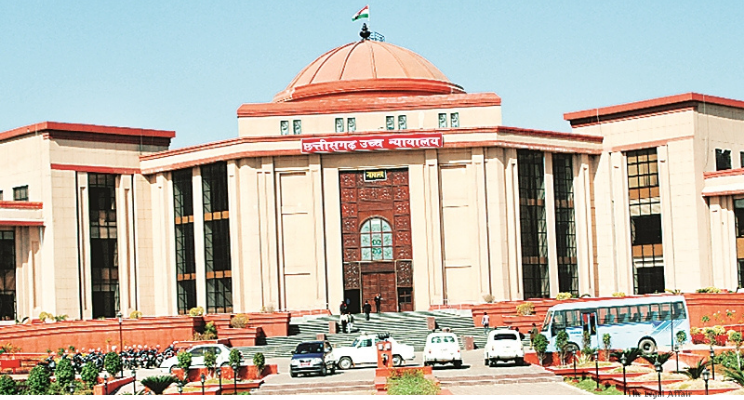
Introduction:
In a significant judgment, the Chhattisgarh High Court in Gorakhnath Sharma v. State of Chhattisgarh (CRA No. 891 of 2019) ruled that a husband cannot be prosecuted for rape under Section 376 or unnatural sex under Section 377 of the Indian Penal Code (IPC) for engaging in any sexual intercourse, including unnatural acts, with his major wife, even without her consent. The Single Bench of Justice Narendra Kumar Vyas emphasised that consent in such cases is rendered insignificant due to the marital exception under Section 375 of the IPC. The case arose from an incident on December 11, 2017, where the appellant, the husband of the deceased victim, allegedly committed unnatural sex against her will, resulting in severe injuries that led to her death. The trial court convicted the appellant under Sections 376, 377, and 304 of the IPC, sentencing him to ten years of rigorous imprisonment. However, upon appeal, the High Court overturned the conviction, holding that no offence was made out under Sections 376 and 377 due to the marital exception and terming the conviction under Section 304 as perverse and legally unsustainable. The judgment has sparked debates on marital rape laws in India, raising concerns about the legal recognition of consent within marriage.
Arguments of Both Sides:
The prosecution, represented by Deputy Government Advocate Pramod Shrivastava, argued that the accused had subjected the victim to forced, unnatural sex, causing grievous injuries that ultimately led to her death. The prosecution relied on the victim’s dying declaration recorded by an Executive Magistrate, in which she stated that her husband’s forceful sexual act had caused her illness. Additionally, medical evidence established that the victim suffered rectal perforation, leading to peritonitis, which was declared the cause of death. The prosecution contended that the brutal nature of the act and its fatal consequences justified the appellant’s conviction under Sections 376, 377, and 304 of the IPC. It emphasised that the absence of consent should be considered a key factor, even in a marital relationship, given the severity of the injuries inflicted on the victim.
On the other hand, the defence, led by Advocate Raj Kumar Patil, argued that the charges under Sections 376 and 377 were legally untenable due to the marital exception in Section 375 IPC, which states that sexual intercourse by a husband with his wife, provided she is not under 15 years of age, does not constitute rape. The defence maintained that this exception also extended to unnatural sex under Section 377 IPC, making the charge legally unsustainable. Additionally, the defence challenged the conviction under Section 304 IPC, asserting that the trial court had failed to establish the necessary ingredients of culpable homicide not amounting to murder. It contended that there was no evidence to prove that the accused had the intention or knowledge that his act would cause the victim’s death. The defence also highlighted inconsistencies in the prosecution’s case, arguing that the dying declaration lacked specificity regarding the accused’s intention, and the medical evidence, while proving injury, did not conclusively establish a causal link between the alleged act and the victim’s death beyond a reasonable doubt.
Court’s Judgment:
Justice Narendra Kumar Vyas framed two key questions for consideration: (1) whether the offences under Sections 376 and 377 of the IPC were attracted when the accused and victim were husband and wife, and (2) whether the conviction under Section 304 IPC was legally sustainable. Addressing the first question, the Court examined the text of Sections 375, 376, and 377 of the IPC and emphasised the significance of Exception 2 to Section 375, which categorically excludes marital intercourse from the definition of rape, provided the wife is not below 15 years of age. The Court held that since the appellant was legally married to the victim and there was no dispute regarding her age being above 15, the charge of rape was not legally tenable. The judgment further reasoned that Section 377, which criminalises unnatural sex, did not apply in the case of a husband and wife due to the overarching marital exception. The Court observed that while Section 377 criminalises carnal intercourse against the order of nature, its application within a marriage remains subject to the same exemption provided in Section 375. As a result, the Court concluded that any unnatural sex within marriage, even without the wife’s consent, does not constitute an offense under the IPC.
Regarding the conviction under Section 304 IPC, the Court found the trial court’s decision to be legally flawed. It noted that the prosecution had failed to establish the essential ingredients of culpable homicide not amounting to murder, particularly the requirement of proving that the accused had knowledge or intent to cause death. The Court criticised the trial court for convicting the appellant without providing a clear finding on how the offence was made out. It emphasised that while the medical evidence confirmed the victim’s injuries, it did not conclusively establish that the accused had acted with the knowledge that his actions would lead to the victim’s death. The Court ruled that in the absence of a direct causal link between the act and the death, the conviction under Section 304 IPC was legally unsustainable. The judgment categorically stated that convicting the appellant under Section 304 without a well-reasoned basis amounted to “perversity and patent illegality,” warranting interference by the appellate court. Consequently, the Court acquitted the appellant of all charges, ordering his immediate release from custody.
The ruling has stirred significant legal and social discourse, particularly regarding the interpretation of marital rape and unnatural sex within marriage. The Court’s reliance on the marital exception under Section 375 IPC underscores the continued legal immunity granted to husbands in India despite growing calls for reform. Critics argue that the judgment reinforces an outdated legal framework that disregards a woman’s autonomy and bodily integrity within marriage. On the other hand, proponents of the judgment emphasise that the ruling is in line with the existing statutory provisions and that any change to marital rape laws should be undertaken by the legislature rather than the judiciary.
The case also brings attention to the broader debate on criminalising marital rape in India. While several petitions challenging the constitutionality of the marital rape exception are pending before the Supreme Court, this judgment reflects the judiciary’s current stance on the matter. The ruling reiterates that, under existing laws, a husband cannot be prosecuted for rape or unnatural sex with his wife, regardless of her consent, unless she is under 15 years of age.
Additionally, the judgment raises concerns regarding the legal treatment of violence within marriage. While the court acknowledged the severe injuries suffered by the victim, it found that the prosecution had failed to establish a clear link between the accused’s act and the victim’s death beyond reasonable doubt. The case highlights the challenges in prosecuting cases involving sexual violence within marriage, especially in the absence of explicit legal recognition of marital rape.
Furthermore, the ruling may have implications for ongoing legal discussions on the scope of Section 377 IPC post the landmark Navtej Singh Johar v. Union of India case, where the Supreme Court decriminalised consensual same-sex relations but retained the provision for non-consensual acts. The Chhattisgarh High Court’s interpretation that Section 377 does not apply within marriage due to the marital exception raises questions about the consistency of legal protections against sexual violence for married and unmarried individuals.
Ultimately, the acquittal of the appellant underscores the limitations of the current legal framework in addressing sexual violence within marriage. While the Court strictly adhered to the letter of the law, the judgment has reignited debates on the need for legislative intervention to recognise and criminalise marital rape. As discussions on gender justice and legal reform continue, this case serves as a crucial reference point in understanding the legal and societal perspectives on consent and bodily autonomy within marriage in India.