


Introduction:
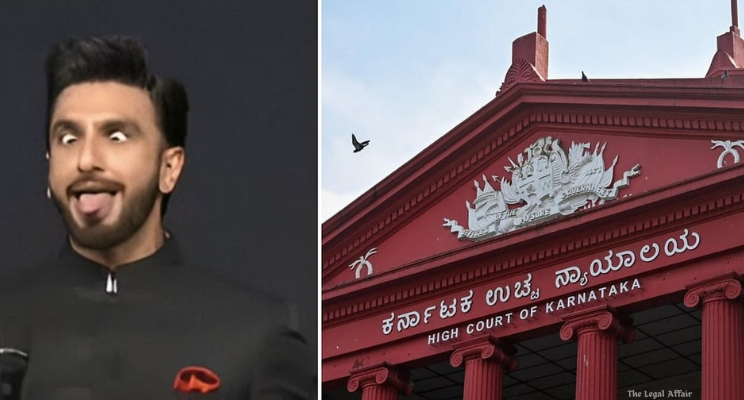
In Ranveer Singh v. State of Karnataka and Another, Criminal Petition No. 3024 of 2026, the Karnataka High Court considered a plea seeking quashing of an FIR registered against Bollywood actor Ranveer Singh for allegedly hurting religious sentiments during a public event. The matter was heard by Justice M Nagaprasanna, who orally observed that celebrity status does not grant immunity to make statements that may wound religious feelings. The petition arose from an FIR lodged following the actor’s mimicry of a character from the film Kantara: Chapter 1 at the 56th International Film Festival of India organized by the Government of Goa. During the event, Singh allegedly mimicked the role portrayed by actor Rishab Shetty and referred to the deity associated with the sacred Daiva tradition as a female ghost. The complaint alleged that such remarks insulted and mocked the revered Bhoota Kola tradition and hurt the religious sentiments of a community. The FIR invoked Sections 196, 299 and 302 of the Bharatiya Nyaya Sanhita 2023. The plea also challenged an order of the Additional Chief Judicial Magistrate passed under Section 175(3) of the Bharatiya Nagarik Suraksha Sanhita 2023 directing investigation into the complaint. While granting interim protection from coercive action, the High Court made strong observations about the responsibility accompanying public influence.
Arguments:
Senior Advocate Sajan Poovayya, appearing for the petitioner, candidly submitted at the outset that the statement made by the actor was completely insensitive. He argued that the petitioner had been reckless in his expression and had tendered an unconditional apology upon realizing the cultural and religious significance of the Chamundi Daiva tradition which he had mimicked. Counsel emphasized that there was no deliberate or malicious intent to outrage religious feelings. He contended that careless or ignorant statements, however unfortunate, do not automatically satisfy the ingredients of deliberate and malicious intent required under Sections 299 and 302 of the Bharatiya Nyaya Sanhita 2023. It was argued that the FIR failed to disclose the essential element of mens rea and that the Magistrate’s order directing investigation was a one line order lacking proper reasoning. The petitioner sought quashing of both the FIR and the Magistrate’s order, submitting that the continuation of investigation would amount to abuse of process of law. In the alternative, interim protection from coercive action was sought on the ground that the petitioner was willing to cooperate fully with the investigation and had already expressed regret for his remarks. Counsel maintained that the mimicry was not aimed at insulting the deity but was part of a stage performance without understanding the sacred context of the tradition.
On the other hand, the complainant’s counsel contended that the remarks were not a mere slip of tongue but constituted a serious affront to a sacred regional practice. It was submitted that the Daiva or Bhoota Kola tradition is deeply revered and forms an integral part of the cultural and religious identity of the region. Referring to reports, it was argued that the petitioner was allegedly cautioned during the event yet continued with the mimicry. The State supported the registration of the FIR, submitting that the investigation was at a preliminary stage and that the allegations warranted thorough examination. It was contended that whether the act was deliberate or malicious could only be determined after investigation and that the High Court should not prematurely interfere with the process. The State further argued that freedom of speech does not extend to acts that insult religious beliefs or disturb communal harmony, and that the statutory provisions invoked in the FIR were attracted on the facts alleged.
Judgment:
Justice M Nagaprasanna, while not entering into a final adjudication on merits at this stage, made pointed observations regarding the responsibilities of public figures. The Court orally remarked that a person with immense influence over the public must exercise heightened responsibility in speech and conduct. It observed that while artistic expression and mimicry are permissible, no individual has the right to hurt the religious sentiments of others. The Court emphasized that celebrity status does not grant a license to speak loosely on matters involving faith and sacred traditions. At the same time, the Court clarified that it was not concluding whether the statement was deliberate but noted that it appeared to reflect gross ignorance of a sacred act of the region. The Court recorded that an apology, though relevant, cannot erase the impact of words once spoken, particularly in an era where digital content remains permanently accessible. Recognizing the need to balance individual liberty with the interests of investigation, the Court restrained the State from taking coercive steps against the petitioner until March 2, subject to his cooperation with the investigation. It directed the complainant and the State to file objections to the plea for quashing. The order thus reflects a calibrated judicial approach, granting interim protection while underscoring accountability and respect for religious sentiments. The Court’s remarks signal that influence and fame carry corresponding duties, especially when public speech intersects with matters of faith and cultural identity.