


Introduction:
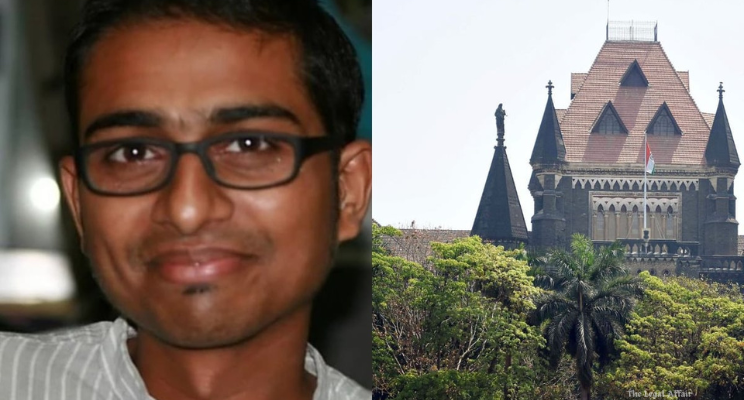
In a significant ruling, the Bombay High Court recently affirmed that imprisonment does not strip an individual of their fundamental right to education. The Court’s decision followed a petition filed by Mahesh Raut, one of the accused in the Bhima-Koregaon case, who sought admission to an LLB program at Siddharth Law College, Mumbai. The division bench, comprising Justices Ajay Gadkari and Dr. Neela Gokhale, ruled that denying education to an imprisoned individual is a violation of fundamental rights and ordered the college to admit Raut for the 2024-2027 academic session.
Mahesh Raut, currently incarcerated at Taloja Jail, Navi Mumbai, had earlier been granted permission by a special court to appear for the Common Entrance Test (CET) for law school admissions. Raut successfully cleared the exam and secured the 95th rank on the merit list, leading to his seat allotment at Siddharth Law College. Despite fulfilling the procedural requirements, including fee payment, Raut was denied admission by the college and the University of Mumbai on the grounds of his inability to meet the mandatory attendance requirements due to his incarceration.
The University of Mumbai and Siddharth Law College opposed Raut’s petition, arguing that the LLB program, as a professional course, necessitates 75% attendance, which he would be unable to fulfill while in jail. However, Raut argued that his right to education, a fundamental right under Article 21 of the Constitution, should be upheld, especially since he had lawfully appeared for and passed the CET.
The High Court, acknowledging the legitimacy of Raut’s aspirations for education, emphasized that incarceration should not act as a barrier to pursuing further education. By directing Siddharth Law College to admit Raut, the Court made an important statement about the right to education, even in challenging circumstances like imprisonment.
Arguments from the Petitioner’s Side:
Representing Mahesh Raut, Senior Advocate Mihir Desai, along with Advocates Pritha Paul and Rishika Agarwal, argued that denying Raut admission to the LLB course violated his fundamental right to education. The petition emphasized the following points:
- Right to Education:
The petitioner underscored the right to education as a fundamental right under Article 21 of the Indian Constitution. While acknowledging his imprisonment in connection with the Bhima-Koregaon case, Raut’s legal team highlighted that education is essential for rehabilitation and personal growth. Denying him admission, despite being allotted a seat after passing the CET, was a violation of this right.
- CET Success and Seat Allotment:
Raut appeared for the Maharashtra Common Entrance Test (CET) in law after securing permission from a special court earlier in 2024. Upon successfully clearing the test and securing the 95th rank on the merit list, he was allotted a seat at Siddharth Law College, Mumbai. The petitioner argued that, having fulfilled all the procedural requirements, including payment of fees, he was entitled to the seat and admission to the college.
- Special Court’s Permission:
The petitioner’s counsel highlighted that the special court had earlier permitted Raut to take the CET examination. This approval should extend to his subsequent admission into the law course. The legal team argued that once a student clears the CET and is allotted a seat based on merit, denying them admission without a legitimate reason is unlawful and arbitrary.
- Attendance Concerns Are Premature:
Regarding the argument that Raut would not be able to meet the mandatory 75% attendance requirement, the petitioner argued that this concern was speculative and premature. Since the academic session had not yet commenced, it was impossible to predict Raut’s attendance. Moreover, the petitioner suggested that alternative arrangements, such as remote learning or periodic court permissions, could be explored to ensure compliance with the attendance requirement.
- Educational Rehabilitation:
Raut’s legal team argued that education should be seen as a path to rehabilitation, even for individuals currently in custody. Denying the opportunity to pursue further education could hinder Raut’s chances of personal development, rehabilitation, and reintegration into society after his release. Education is a transformative tool, and preventing incarcerated individuals from accessing it would be counterproductive to the broader goals of criminal justice and reform.
Arguments from the Respondent’s Side:
The respondents, represented by Advocate Muzaffar Patel for Siddharth Law College, Advocate Rui Rodrigues for the University of Mumbai, and Additional Public Prosecutor Vinod Chate for the State, opposed Raut’s petition on several grounds:
- Attendance Requirement:
The main argument from the University and the Law College was that the LLB program is a professional course that requires students to maintain a minimum attendance of 75% to qualify for examinations. Since Raut is currently lodged in Taloja Jail, Navi Mumbai, the respondents argued that he would be unable to attend regular classes and meet this mandatory attendance requirement. Consequently, his inability to maintain attendance would disqualify him from sitting for exams, making his admission pointless.
- Professional Course Standards:
The University of Mumbai and Siddharth Law College further contended that legal education is a professional course that demands regular attendance, participation in lectures, and engagement with academic activities. The respondents argued that allowing Raut’s admission, despite knowing he would be unable to comply with these professional standards, would undermine the integrity of the course and set a problematic precedent for other professional programs.
- Practical Challenges:
The respondents raised practical challenges regarding Raut’s ability to attend lectures and participate in the academic program. Given that he is incarcerated, arranging for his regular attendance at college would be logistically difficult and could disrupt the normal functioning of the academic schedule. The respondents suggested that the practical realities of his imprisonment should take precedence over his educational aspirations, and therefore, his petition should be dismissed.
Court’s Judgment and Observations:
After hearing both sides, the Bombay High Court, in a ruling delivered by Justices Ajay Gadkari and Dr. Neela Gokhale, sided with the petitioner, holding that imprisonment should not deprive an individual of their right to education.
- Right to Education Prevails:
The Court ruled that Raut’s right to education could not be curtailed merely because of his incarceration. Denying his admission would violate his fundamental right to pursue education, especially given that he had successfully cleared the CET and had been allotted a seat through due process. The Court emphasized that education is a transformative right and should be protected even in circumstances where an individual is imprisoned.
- Imprisonment Does Not Restrict Education:
In a significant observation, the Court stated that “imprisonment does not restrict an individual’s right to pursue further education.” The judges reasoned that access to education should not be denied based solely on an individual’s physical incarceration. Rather, the state and educational institutions should explore ways to accommodate such individuals, ensuring that their right to education is upheld while balancing the practical concerns raised by the respondents.
- Speculative Nature of Attendance Concerns:
The Court rejected the University and Law College’s argument regarding attendance, stating that such concerns were premature and speculative. The academic session had not yet begun, and therefore, it was impossible to predict Raut’s attendance. The Court further observed that alternative mechanisms, such as remote learning or special permissions, could be considered to ensure compliance with attendance requirements.
- Admission to Be Granted:
Acknowledging the legitimacy of Raut’s educational aspirations and his right to pursue the LLB course, the Court directed Siddharth Law College to grant him admission for the 2024-2027 academic session. The bench observed that the entire purpose of appearing for the CET examination was to secure admission in a law college, and Raut’s right to education should not be denied at this stage, especially after having cleared the exam and being allotted a seat.
- Significance of Educational Rehabilitation:
The Court also highlighted the broader significance of education in the rehabilitation process for incarcerated individuals. By granting Raut the opportunity to pursue a law degree, the Court affirmed the importance of education as a tool for rehabilitation and personal growth, evenwithin the criminal justice system.