


Introduction:
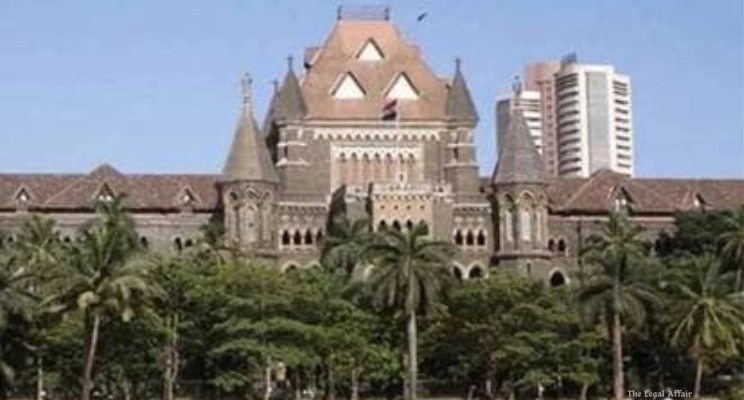
In a significant ruling, the Bombay High Court upheld the dismissal of a college library attendant for misconduct, emphasizing that disorderly and rowdy behavior in educational institutions cannot be tolerated. The judgment reflects the court’s stance on maintaining high standards of discipline within schools and colleges, which are viewed as places of learning and character-building. The case centered on the petitioner, a library attendant at Sree Narayan Guru College in Mumbai, who was dismissed from service for repeated misconduct, including abusing colleagues and disrupting college activities. The court affirmed the Mumbai University and College Tribunal’s decision, underscoring the need for strict discipline in educational settings to uphold the reputation of such institutions.
Background of the Case:
The petitioner, Mallinath Vithal Vathakar, was initially appointed as a watchman at Sree Narayan Guru College in Chembur, Mumbai, in 1996. After completing his probation period, he was confirmed in his position and later appointed as a Library Attendant in 2003. The position was reserved for Scheduled Caste (SC) candidates, and the petitioner was duly appointed under this category.
However, shortly after assuming his new role, the petitioner began exhibiting behavior that was deemed unacceptable in an educational environment. His actions included misbehavior with colleagues, abusing professors, picking quarrels with staff, disrupting a blood donation camp, and even preventing a professor from conducting a class. These repeated incidents of misconduct eventually led the college administration to initiate disciplinary action against him, culminating in his dismissal from service.
The petitioner challenged his dismissal before the Mumbai University and College Tribunal (MUCT), which upheld the college’s decision. Dissatisfied with the tribunal’s ruling, the petitioner then approached the Bombay High Court, seeking relief from the order of dismissal.
Arguments of Both Sides:
Petitioner’s Arguments:
The petitioner, represented by Advocate S.K. Tripathi, argued that the punishment of dismissal was excessively harsh and disproportionate to the alleged misconduct. He contended that his actions, though perhaps inappropriate, did not warrant the extreme penalty of dismissal. The petitioner sought the court’s intervention to either set aside the dismissal or impose a lesser punishment that would allow him to retain his employment.
The petitioner also argued that the disciplinary proceedings against him were conducted in a manner that was unfair and biased. He claimed that he was not given a fair opportunity to defend himself against the charges of misconduct and that the decision to dismiss him was premeditated. The petitioner urged the court to consider his long service and clean record prior to the incidents in question, arguing that these factors should have been taken into account when determining the appropriate punishment.
Respondent’s Arguments:
The respondents, represented by Advocates S.C. Naidu, Rahul D. Oak, Pradeep Kumar, and Gunjan on behalf of the University of Mumbai, along with Assistant Government Pleader S.D. Rayrikar representing the State, defended the decision to dismiss the petitioner. They argued that the petitioner’s conduct was entirely unbecoming of an employee of an educational institution and that his actions had caused significant disruption within the college.
The respondents provided detailed accounts of the petitioner’s misconduct, including his abusive behavior towards colleagues and professors, his disruption of college events, and his interference with academic activities. They contended that such behavior could not be tolerated in any workplace, let alone in an educational institution where discipline and decorum are of paramount importance.
The respondents also argued that the disciplinary proceedings were conducted fairly and in accordance with due process. They maintained that the petitioner was given ample opportunity to present his case and defend himself against the charges. The decision to dismiss him was made after careful consideration of the evidence and was deemed necessary to maintain the integrity and reputation of the college.
Furthermore, the respondents emphasized that the punishment of dismissal was not disproportionate to the petitioner’s misconduct. They argued that his repeated infractions demonstrated a clear disregard for the rules and standards of the institution and that his continued presence would have undermined the discipline and order necessary for the college to function effectively.
Court’s Judgment:
After considering the arguments from both sides, the Bombay High Court, presided over by Justice R.M. Joshi, upheld the decision to dismiss the petitioner from his position as a library attendant. In his judgment, Justice Joshi emphasized the importance of maintaining high standards of discipline in educational institutions, which serve as models for students and contribute to the overall reputation of the institution.
Justice Joshi observed that educational institutions differ from other types of workplaces, such as factories, in that they require a higher standard of discipline due to their role in shaping the character and behavior of students. He noted that disorderly behavior among employees in such institutions could have serious repercussions, not only for the institution itself but also for the students and the broader community.
The court concurred with the Mumbai University and College Tribunal’s assessment that the petitioner’s behavior constituted misconduct and that the punishment of dismissal was appropriate given the circumstances. Justice Joshi rejected the petitioner’s argument that the punishment was disproportionate, stating that the conduct of the petitioner was entirely unacceptable in an educational setting and that leniency was not warranted.
Justice Joshi further remarked that the increasing tolerance of disorderly and rowdy behavior among employees in educational institutions was a troubling trend that needed to be addressed. He stressed that allowing such behavior to go unchecked would only encourage further misconduct and damage the reputation of educational institutions. The court’s ruling, therefore, was intended to send a clear message that such behavior would not be tolerated and that strict discipline would be enforced to maintain the integrity of educational institutions.
In conclusion, the Bombay High Court upheld the petitioner’s dismissal, affirming that the punishment was not “shockingly disproportionate” to the proven misconduct. The court’s decision underscored the necessity of maintaining discipline within educational institutions and reinforced the principle that employees in such settings must adhere to higher standards of behavior.
Conclusion:
The Bombay High Court’s ruling in this case serves as a stern reminder of the importance of discipline in educational institutions. By upholding the dismissal of the petitioner, the court has reinforced the idea that disorderly and rowdy behavior among employees cannot be tolerated, especially in environments where they are expected to set an example for students. This judgment underscores the need for strict enforcement of rules and standards within educational settings to ensure that such institutions maintain their reputation and continue to serve as places of learning and character development.