


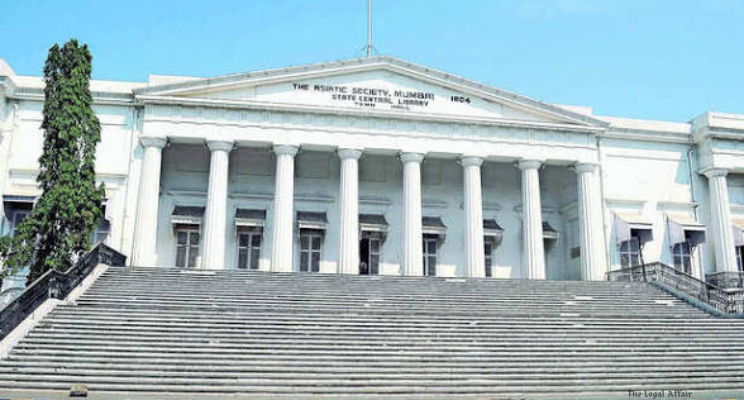
Introduction:
The present case, Kumar Chintaman Ketkar & Others v. Charity Commissioner, Maharashtra State, Mumbai & Others, was adjudicated by the Bombay High Court and addresses a significant issue concerning the extent of powers vested in the Charity Commissioner in regulating the affairs of public trusts. The matter was heard by Justice Farhan P. Dubash, who examined the legality of orders passed by the Charity Commissioner appointing an interim administrative structure for the Asiatic Society of Mumbai.
The petitions arose from orders dated 13.03.2026, whereby the Charity Commissioner constituted an interim committee comprising a “fit person” along with certain members of the Managing Committee to oversee the day-to-day affairs of the Society. Additionally, a sub-committee was appointed for the purpose of preparing a voters’ list to facilitate the conduct of fresh elections.
The petitioners, who were members of the Society, challenged these directions on the grounds that the Charity Commissioner lacked the authority to constitute such committees and that the orders were passed in violation of principles of natural justice.
The case thus raised important questions about the balance between administrative oversight and autonomy of public trusts, as well as the scope of judicial review in matters involving interim administrative arrangements.
Arguments on Behalf of the Petitioners:
The petitioners contended that the impugned orders passed by the Charity Commissioner were without jurisdiction and ultra vires the provisions of the governing statute. It was argued that the power to appoint an interim committee or a “fit person” to manage the affairs of a public trust was not available in the manner exercised in the present case.
The petitioners emphasized that the Managing Committee of the Asiatic Society had been duly elected in September 2023 and continued to function in accordance with the Society’s rules. Although the change report relating to the said elections had been rejected, the petitioners argued that the pendency of an appeal against such rejection meant that the status of the Managing Committee was not conclusively determined.
It was further contended that the Charity Commissioner’s intervention amounted to an unwarranted intrusion into the internal affairs of the Society. According to the petitioners, the autonomy of a public trust must be respected, and any administrative interference must be strictly within the bounds of statutory authority.
A key plank of the petitioners’ argument was the alleged violation of principles of natural justice. It was submitted that the orders were passed without affording adequate opportunity to the concerned office bearers to present their case. The petitioners claimed that the decision-making process lacked transparency and fairness.
The petitioners also challenged the necessity of constituting a sub-committee for preparing the voters’ list. They argued that such functions were already being carried out by the existing committees of the Society and that the appointment of a parallel mechanism would create confusion and undermine the established governance structure.
In essence, the petitioners sought to demonstrate that the impugned orders were arbitrary, lacked legal foundation, and resulted in undue interference with the functioning of the Society.
Arguments on Behalf of the Respondents:
The respondents, including the Charity Commissioner, defended the impugned orders by emphasizing the statutory powers vested under Section 47 of the relevant law governing public trusts. It was argued that the Charity Commissioner is empowered to take necessary measures to ensure the proper administration of trusts, particularly in situations where irregularities or disputes threaten their functioning.
The respondents pointed out that the tenure of the Managing Committee had effectively expired in September 2025, and the rejection of the change report further weakened its claim to legitimacy. Despite this, the Committee continued to take substantive decisions, including admission of members and preparation of the voters’ list, which was impermissible beyond routine administration.
It was further submitted that serious concerns had been raised regarding the functioning of the Society, including discrepancies in membership records and reports of missing books. These issues warranted an inquiry, which was duly conducted by an Inspector appointed by the Charity Commissioner. The findings of this inquiry provided a factual basis for intervention.
Addressing the allegation of violation of natural justice, the respondents asserted that multiple hearings had been conducted, and the concerned parties were given ample opportunity to present their submissions. The impugned orders were passed only after considering the material on record, including affidavits and representations made by the parties.
The respondents also argued that the appointment of an interim committee and a sub-committee for preparing the voters’ list was a temporary and pragmatic measure aimed at ensuring smooth functioning and facilitating the conduct of fair elections. These measures, it was contended, did not permanently alter the governance structure but were necessary to address the prevailing administrative vacuum.
The respondents urged the Court to refrain from interfering with the orders, emphasizing that they were passed in good faith, within the scope of statutory powers, and in the interest of the Society.
Court’s Judgment:
After a detailed examination of the facts and legal provisions, the Bombay High Court upheld the orders passed by the Charity Commissioner and dismissed the writ petitions.
At the outset, the Court addressed the issue of natural justice. It carefully reviewed the record and found that the petitioners had been afforded adequate opportunity to be heard. The Court noted that multiple hearings were conducted on different dates, and the submissions and affidavits of the parties were duly considered. Consequently, the allegation of violation of natural justice was found to be without merit.
The Court then turned to the question of the Charity Commissioner’s powers. It observed that under Section 47 of the relevant statute, the Charity Commissioner possesses sufficient authority to pass orders ensuring proper administration of a public trust, including the creation of interim arrangements where necessary.
The Court emphasized that such powers are particularly relevant in situations where there is uncertainty or dispute regarding the management of the trust. In the present case, the rejection of the change report and the expiry of the Managing Committee’s tenure created a situation where continuity of governance was at risk.
The Court also took note of the irregularities highlighted in the Inspector’s report, including discrepancies in membership records and concerns regarding missing books. These findings justified the initiation of an inquiry and the subsequent intervention by the Charity Commissioner.
Importantly, the Court observed that the Managing Committee, whose tenure had effectively ended, continued to take substantive decisions beyond routine administration. Such actions were found to be impermissible and underscored the need for an interim arrangement.
The Court held that the appointment of an interim committee comprising a “fit person” and certain members of the Managing Committee was a reasonable and proportionate measure. Similarly, the constitution of a sub-committee for preparing the voters’ list was necessary to ensure that elections could be conducted in a fair and transparent manner.
The Court further clarified that the impugned orders were interim in nature and aimed at facilitating proper administration and timely elections. They did not amount to a permanent takeover of the Society’s management and therefore did not unduly infringe upon its autonomy.
In exercising its writ jurisdiction, the Court reiterated that interference is warranted only when there is illegality, arbitrariness, or procedural impropriety. In the present case, none of these grounds were established. The Court found that the Charity Commissioner had acted within the scope of his powers, based on relevant material, and after following due process.
Accordingly, the Court dismissed both writ petitions, affirming the validity of the impugned orders and the authority of the Charity Commissioner to ensure proper governance of public trusts through interim measures when circumstances so require.