


Introduction:
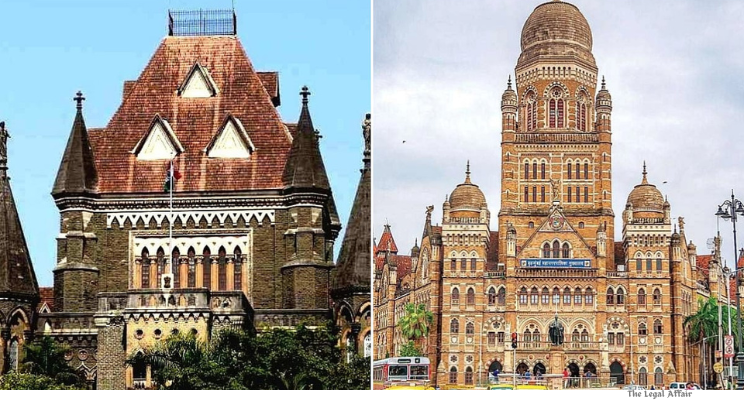
In the case of M/s. Mehta & Co. vs Municipal Corporation of Greater Mumbai (Appeal From Order 638 of 2024), the Bombay High Court came down heavily on the Municipal Corporation of Greater Mumbai (MCGM) for arbitrarily and insensitively demolishing a structure used to provide food and temporary shelter to impoverished cancer patients undergoing treatment at Tata Memorial Hospital. The judgment, delivered by Justice Gauri Godse on April 4, 2025, categorically condemned the corporation’s actions as a violation of fundamental duties and natural justice. M/s. Mehta & Co., the plaintiff, had built a charitable structure offering aid to needy cancer patients, which was razed under the pretext of redevelopment. The Court’s strong remarks, combined with the imposition of Rs. 2 lakh in costs against the MCGM, highlighted the judiciary’s protective stance toward humanitarian efforts and constitutional ethics.
Arguments of both sides:
The plaintiff, M/s. Mehta & Co., through Advocates Kunal Bhanage, Priyanka Acharya, and Akshay Pawar, argued that the structure demolished by the MCGM was vital for providing charitable services such as food and temporary shelter to underprivileged cancer patients attending Tata Memorial Hospital. The plaintiff maintained that the demolition was not only arbitrary but conducted without due notice or adherence to lawful procedure, thus depriving them of their right to aid the needy and violating basic principles of natural justice. Furthermore, they emphasized that the structure was part of a redevelopment plan under Regulation 33(9) of the Development Control and Promotion Regulation 2034 (DCPR 2034) and was eligible for permanent rehabilitation. On the other hand, the BMC, represented by Advocates Chaitnya Chavan, Amol Diwte, Om Suryavanshi, and Komal Punjabi, offered a plain denial of the plaintiff’s claims and attempted to justify the demolition under procedural grounds.
Judgement:
Justice Gauri Godse found this response unsatisfactory, particularly in the absence of any material to disprove the charitable activities claimed by the plaintiff. The Court sharply criticized the BMC for acting in ‘unholy haste’ by demolishing the structure on the very day the plaintiff was set to seek interim relief, indicating mala fide intent. The judge underscored the importance of following due process and respecting Article 51-A of the Constitution, which outlines the fundamental duties of citizens, including public officers. Observing that the officers had shown a complete lack of sensitivity and disregarded both the Mumbai Municipal Corporation Act and the rule of law, the Court labeled the case as “absolutely unfortunate.” Justice Godse granted a mandatory injunction in favor of the plaintiff and imposed a cost of Rs. 2 lakh on the MCGM, also allowing the corporation to recover the amount from the erring officers. The Court emphasized that failure to grant such an injunction would essentially reward the arbitrary and illegal actions of the municipal officers, thus setting a dangerous precedent. In holding that even the trial court had erred in not providing timely relief, the High Court concluded that the demolition had unjustly deprived not just the plaintiff, but also the cancer patients of critical support during their medical treatment.