


Introduction:
The Bombay High Court has issued urgent and preventive directions for the safe and immediate discharge of LPG cargo from the vessel LPG Amir Gas, observing that continued detention of the highly hazardous cargo could create a serious risk of fire, explosion and potentially catastrophic consequences. Justice Abhay Ahuja passed the directions while considering an Interim Application filed by JSW Jaigarh Port Limited in an admiralty proceeding concerning the arrested vessel.
The matter arose in Jhang Union International LLC FZ v. LPG Amir Gas, Commercial Admiralty Suit No. 26 of 2026. The vessel had been arrested pursuant to an order dated April 29, 2026, and, at that stage, the Court had directed that the cargo on board should not be discharged. The subsequent proceedings brought before the Court a pressing practical difficulty: the vessel was carrying LPG which required continuous monitoring and cooling, and prolonged detention without appropriate discharge arrangements could itself create a danger to life, property and the surrounding environment.
The dispute therefore involved more than the competing commercial interests of parties to an admiralty suit. It required the Court to consider how an order of arrest over a vessel should operate when the property on board is inherently hazardous and its continued retention presents a potential threat to public safety.
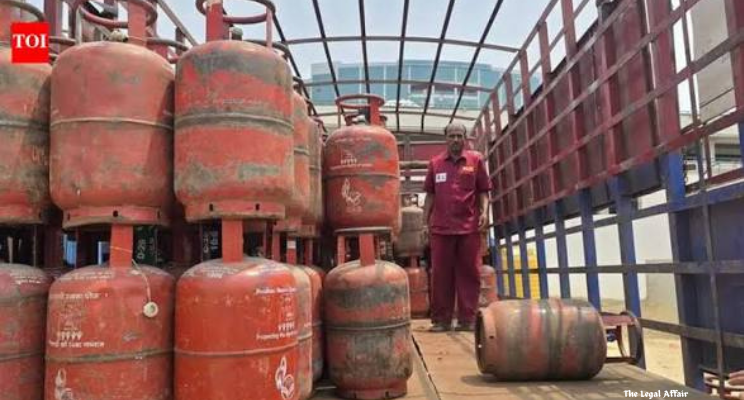
LPG, or liquefied petroleum gas, is ordinarily stored and transported under controlled conditions involving pressure and temperature management. The Court was informed that the cargo aboard LPG Amir Gas required continuous cooling operations through the vessel’s cooling pumps. If the required temperature was not maintained, the cargo could heat up and create a heightened risk of fire or explosion.
The consequences of such an occurrence would not necessarily be confined to the vessel or its crew. The Court was informed that an incident involving a large quantity of LPG could potentially affect port facilities, nearby vessels, infrastructure and the surrounding environment and ecology. In an operational port, therefore, the continued detention of such cargo could become a matter of public safety and disaster management.
The Applicant, JSW Jaigarh Port Limited, brought the issue before the Court through an Interim Application seeking appropriate directions concerning the cargo. The underlying commercial dispute between the parties had apparently not been resolved, particularly regarding the manner in which the cargo was to be dealt with and the financial security to be furnished.
The Plaintiff stated that although the parties had attempted to arrive at a settlement regarding the sharing of the cargo, no final settlement had been reached. Nevertheless, it expressed willingness to deposit AED 34,78,481 before the Court. The amount represented the value of two invoices and was proposed as security in connection with the release and discharge of the LPG cargo.
The Court was therefore confronted with two immediate considerations. On one side was the need to preserve the commercial and legal claims involved in the admiralty proceedings. On the other was the urgent need to ensure that the cargo did not remain on board in circumstances that could result in an avoidable safety disaster.
The Court ultimately adopted a solution that attempted to protect both interests. It permitted discharge of the LPG cargo in favour of any party depositing AED 34,78,481 as security with the Court. At the same time, the Court made clear that the arrest of the vessel itself would continue.
This distinction was crucial. The Court did not treat the discharge of the cargo as equivalent to releasing the vessel from arrest. Instead, the order separated the immediate safety issue concerning the cargo from the continuing legal consequences of the vessel’s arrest.
The Court also took a broader precautionary approach. It issued urgent notice to the Director General of Shipping, the State Disaster Management Authority, the District Disaster Management Authority concerned with Jaigarh Port and the National Disaster Management Authority. These authorities were directed to cooperate in the safe discharge of the LPG and, importantly, to prepare for a discharge or release even if the security amount was not deposited.
The direction demonstrated that the Court considered the matter to have implications extending beyond the private dispute between the litigating parties. The possibility of a fire or explosion involving a large quantity of LPG required governmental and disaster-management authorities to be prepared for all eventualities.
The Court’s intervention can therefore be viewed as an exercise in balancing admiralty jurisdiction, preservation of commercial claims and the overriding necessity of protecting life and public safety.
Arguments of the Parties:
The Applicant, JSW Jaigarh Port Limited, brought to the Court’s attention the condition and nature of the LPG cargo aboard LPG Amir Gas. Its concern was not merely commercial. It submitted that the cargo required continuous monitoring and cooling, and that the cooling process had to be maintained through the vessel’s cooling pumps.
According to the Applicant, failure to maintain the appropriate temperature of the cargo could result in a dangerous increase in temperature and pressure, creating a substantial risk of fire or explosion. Such an incident could have consequences extending far beyond the vessel itself.
The Applicant pointed out that the vessel was situated at Jaigarh Port, where other vessels, port infrastructure, personnel and facilities could potentially be exposed to the consequences of an accident involving the LPG cargo. The surrounding environment and ecology could also be affected by a large-scale release or combustion of the substance.
The urgency of the application was therefore founded upon the nature of the cargo and the practical consequences of keeping it on board under an arrest order without adequate arrangements for its discharge.
The earlier order of April 29, 2026, had restrained the discharge of the cargo. The Applicant’s subsequent application essentially brought before the Court the changed or developing circumstances that made continued restraint problematic from a safety perspective.
The Plaintiff, Jhang Union International LLC FZ, informed the Court that the parties had been unable to arrive at a settlement concerning the sharing of the cargo. Nevertheless, the Plaintiff demonstrated its willingness to provide financial security.
The Plaintiff offered to deposit AED 34,78,481 before the Court, corresponding to the amount of two invoices. This proposal provided the Court with a mechanism through which the commercial claim could continue to remain secured while the physical cargo could be removed from the vessel.
The Plaintiff’s willingness to deposit the amount was significant because the Court was not required to choose between completely protecting the commercial claim and addressing the safety risk. Instead, the security could serve as a financial safeguard while permitting the hazardous cargo to be discharged.
The circumstances also required consideration of what would happen if no party deposited the required security. A situation in which the cargo remained aboard indefinitely could not simply be permitted to continue if the safety risk became acute.
The Court consequently considered the involvement of the statutory and administrative authorities necessary. The Director General of Shipping, disaster-management authorities at the State and district levels, and the National Disaster Management Authority were brought into the process so that a coordinated response could be developed.
Although the detailed opposing submissions are not set out extensively in the case summary, the underlying position was shaped by the continuing admiralty dispute and the earlier restraint against discharge. The Court’s task was therefore to ensure that any order permitting discharge did not improperly extinguish or prejudice the parties’ substantive commercial claims.
The solution adopted by the Court addressed this concern by making the deposit of the specified amount a condition for discharge in favour of a party claiming the cargo, while expressly continuing the arrest of the vessel.
The Court also recognised that the danger could not be treated as dependent entirely upon the parties’ willingness to cooperate. If no security was deposited, the possibility of a hazardous incident would remain. The authorities therefore needed to plan for safe discharge or, if circumstances required, controlled release of the cargo.
The Court’s concern was thus essentially preventive. It did not wait for an actual emergency before involving disaster-management authorities. Instead, it required preparation in advance to minimise the possibility of a catastrophe.
This approach was particularly important because a large-scale LPG incident could develop rapidly and leave little time for an improvised governmental response. The Court therefore directed the relevant authorities to prepare in advance rather than merely react after an accident had occurred.
The competing considerations before the Court can accordingly be understood as involving the preservation of the parties’ financial and proprietary interests on one side and the protection of life, property and the environment on the other.
The Court’s directions ultimately sought to ensure that neither interest would unnecessarily defeat the other.
Court’s Judgment:
Justice Abhay Ahuja of the Bombay High Court allowed the Interim Application to the extent necessary to secure the immediate and safe discharge of the LPG cargo from LPG Amir Gas.
The Court’s primary concern was the hazardous nature of the cargo. It recognised that LPG could not be treated in the same manner as ordinary commercial goods merely because the cargo formed part of an admiralty dispute.
The material before the Court indicated that the LPG required continuous cooling and monitoring through the vessel’s cooling pumps. A failure in that process could lead to heating of the cargo and create a serious risk of fire or explosion.
The Court therefore treated the matter as one involving an urgent safety concern rather than simply a dispute over possession or entitlement to commercial cargo.
The Court found that the possibility of a large-scale release of LPG could have “catastrophic consequences”. The expression was significant because it demonstrated the Court’s assessment that the potential harm was not merely theoretical or limited to financial loss.
A major accident could affect the crew, the arrested vessel, other vessels in the vicinity, port infrastructure, personnel and the surrounding environment. In those circumstances, continuing a restraint on discharge without a workable safety mechanism could create an unacceptable risk.
The Court consequently directed that any party depositing AED 34,78,481 with the Court as security would be permitted to have the LPG cargo discharged in its favour.
The amount represented the value of two invoices and provided a financial safeguard in the event of competing claims or unresolved commercial issues.
Since the Plaintiff had itself agreed to deposit the amount, the Court directed that upon confirmation of the deposit, immediate steps should be taken for discharge of the cargo.
The direction was not, however, equivalent to an unconditional release of the vessel. The Court expressly clarified that the restraint on discharge of the LPG cargo would stand vacated upon deposit of the security amount, but the arrest of the vessel would continue.
This distinction preserves the legal character of the admiralty proceedings. The Court effectively separated the urgent physical issue of the hazardous cargo from the continuing legal claim against the vessel.
Thus, the discharge of the LPG did not mean that the underlying suit had become infructuous or that the vessel was released from arrest. The arrest continued, ensuring that the parties’ substantive claims remained subject to the Court’s jurisdiction.
One of the most important aspects of the order was the Court’s decision to involve public authorities even though the dispute originated as a commercial admiralty proceeding.
The Court issued urgent and immediate notice to the Director General of Shipping, the State Disaster Management Authority, the District Disaster Management Authority concerned with Jaigarh Port and the National Disaster Management Authority.
The purpose was not merely to inform these authorities of the litigation. The Court directed them to cooperate and assist in the safe discharge of the LPG cargo.
More importantly, the Court required them to plan and prepare for discharge or release of the cargo even if no amount was deposited.
This direction reflected a precautionary approach to judicial decision-making in circumstances involving hazardous materials. The Court recognised that public safety could not be made entirely dependent upon whether the litigating parties resolved their commercial dispute or complied with a financial security condition.
If no party deposited the required amount, the authorities still had to be prepared to act so as to prevent a disaster.
The Court’s reasoning is particularly significant from the perspective of preventive jurisdiction. Courts dealing with commercial disputes ordinarily focus on the rights and obligations of the parties before them. Here, however, the physical characteristics of the property involved meant that an ordinary commercial approach could have potentially serious public consequences.
The LPG cargo was not merely an asset capable of remaining indefinitely under judicial restraint. It was a hazardous substance requiring active management.
The Court therefore recognised an important distinction between preserving property and preserving it safely. An order intended to protect a litigant’s interest cannot be implemented in a manner that creates a disproportionate risk to human life or public safety.
The Court’s direction also illustrates the importance of judicial flexibility in admiralty matters. Arrest is an established mechanism through which courts secure maritime claims. But the fact that cargo is connected to an arrested vessel does not necessarily mean that it must remain physically aboard the vessel regardless of changing circumstances.
Where the cargo itself presents a danger, the Court may fashion appropriate directions to preserve the underlying financial claim while allowing the physical property to be moved or discharged.
The security mechanism adopted in the present case is an example of such judicial balancing.
The Court did not decide the ultimate ownership or entitlement to the LPG cargo merely because it permitted discharge. Instead, it required financial security to be deposited, thereby preserving the commercial interests involved pending adjudication.
The continued arrest of the vessel further reinforced that the Court was not finally determining the parties’ rights through the interim order.
Another important aspect of the judgment was the Court’s concern with emergency preparedness. The authorities were directed not only to assist in the event of a planned discharge but also to prepare for circumstances in which no party deposited the required amount.
This was an acknowledgement that disasters involving hazardous substances do not wait for litigation to conclude.
The Court’s reference to the possibility of fire or explosion demonstrates that the risk assessment extended beyond the immediate legal controversy. If the cargo became unstable, an emergency could affect people and property beyond the parties to the suit.
The involvement of the disaster-management authorities therefore ensured that responsibility for the safety response would not rest exclusively upon the litigating parties or the port operator.
The order also underscores the importance of cooperation between judicial and administrative institutions when hazardous materials are involved. The Court directed the relevant authorities to work together for the safe discharge and to make advance preparations.
This is particularly relevant in port environments, where the consequences of an accident can spread quickly because of the concentration of vessels, fuel, cargo, infrastructure and personnel.
The Court’s approach can also be understood through the broader principle that public safety must receive priority where an activity creates a foreseeable risk of grave harm. The Court did not wait for the occurrence of a fire, explosion or large-scale release before issuing preventive directions.
Instead, it acted on the information placed before it regarding the cargo’s condition and the need for continuous cooling.
The order therefore represents a preventive judicial response rather than a reaction to an actual disaster.
At the same time, the Court maintained fairness between the parties. The Plaintiff was required to provide the specified security before obtaining the benefit of discharge. The Court did not simply hand over the cargo without financial safeguards.
This was important because the underlying dispute concerning the cargo had not been fully resolved. The security requirement ensured that the commercial claims would continue to have financial protection.
The Court thus created a two-track arrangement. The hazardous cargo could be safely discharged, addressing the immediate physical risk, while the vessel remained under arrest and the financial security preserved the parties’ respective claims.
The order also demonstrates that judicial orders must sometimes be adapted when the continued operation of an earlier direction creates a new or heightened risk. The April 29 order had restrained discharge of the cargo. The subsequent circumstances placed the safety consequences of that restraint before the Court.
The Court therefore modified the position concerning discharge without disturbing the underlying arrest.
The direction to prepare for discharge even in the absence of a security deposit is perhaps the strongest indication of the Court’s concern. It makes clear that the prevention of catastrophe was considered an independent and urgent objective.
The Court did not permit the possibility of a continuing commercial dispute to become a reason for authorities to remain unprepared for a potentially dangerous LPG incident.
The order consequently has significance beyond the immediate admiralty dispute. It illustrates how courts may reconcile commercial remedies with public safety where the subject matter of litigation consists of hazardous material.
The central principle emerging from the decision is that judicial custody or restraint over property must be exercised responsibly, particularly where the property carries an inherent risk to life, infrastructure or the environment.
The Court’s intervention was therefore not merely about releasing cargo. It was about ensuring that the legal process itself did not inadvertently create or aggravate a public safety hazard.
Ultimately, the Bombay High Court directed that upon deposit of AED 34,78,481, the restraint against discharge of the LPG cargo would stand vacated and immediate discharge should be undertaken. The arrest of LPG Amir Gas, however, would continue.
The Court simultaneously directed the Director General of Shipping, the State Disaster Management Authority, the District Disaster Management Authority and the National Disaster Management Authority to provide cooperation and assistance for safe discharge and to prepare for an emergency discharge or release if the security amount was not deposited.
The Interim Application was accordingly allowed to that extent.
The decision demonstrates a careful judicial balance between private commerc