


Introduction:
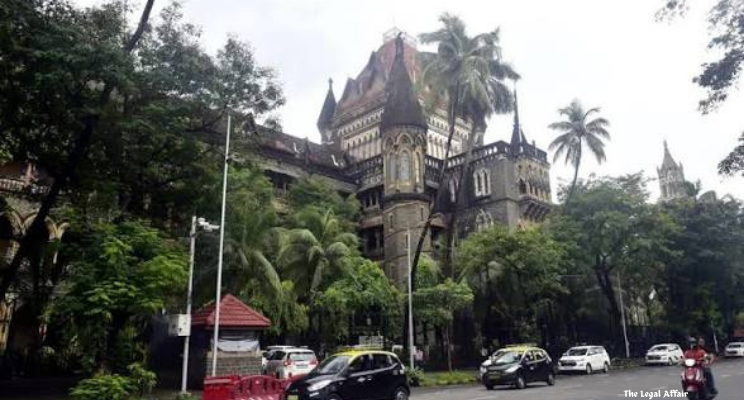
The Bombay High Court has strongly deprecated the misuse of judicial proceedings to harass an elderly parent, holding that the statutory protection intended for persons suffering from mental illness cannot be converted into a weapon by an adversarial family member. A Division Bench comprising Justice Ajay Gadkari and Justice Kamal Khata dismissed an intra-court appeal filed by Jitendra Gorakh Megh against his 78-year-old father, Gorakh Govind Megh, and imposed exemplary costs of ₹5 lakh upon the son for what the Court found to be a malicious and abusive attempt to drag his ailing father into further litigation.
The dispute arose from Jitendra’s attempt to invoke Section 105 of the Mental Healthcare Act, 2017, seeking a direction for his father to be referred to the Mental Health Review Board (MHRB) for an assessment of his mental health. The application had earlier been rejected by a Single Judge, Justice Farhan Dubash, who found that the provision could not be employed as a litigation weapon. Rather than accepting that decision, Jitendra challenged it before the Division Bench, thereby initiating the proceedings in Appeal No. 70 of 2026.
The Division Bench, in its order dated August 25, 2026, found that the appeal was not a genuine attempt to secure appropriate medical assessment or protection for the elderly father. Instead, the Court concluded that the proceedings formed part of an attempt to repeatedly drag the aged man into litigation and exert pressure upon him in relation to an underlying property dispute.
The controversy was connected with a suit concerning partition of ancestral property. The Court took note of the fact that Jitendra had already instituted proceedings before the High Court concerning the partition of the ancestral property. It was in this backdrop that he subsequently questioned his father’s mental capacity and sought to invoke Section 105 of the Mental Healthcare Act.
The statutory provision relied upon by Jitendra assumes importance in understanding the dispute. The Mental Healthcare Act, 2017 is fundamentally a protective legislation intended to safeguard the rights, dignity and welfare of persons with mental illness. The statutory framework provides mechanisms through which questions concerning mental health and the rights of affected persons can be addressed by appropriate authorities. The Division Bench therefore considered whether such a protective provision could be invoked by one litigating party as a means of obtaining an advantage in an ongoing civil dispute.
The Court answered the question firmly in the negative. It agreed with the Single Judge that Section 105 could not be permitted to become a tool of litigation strategy. The Bench observed that the provision was intended to operate as a shield for the protection of persons with mental illness and could not be wielded as a sword against them by an adversarial party.
The factual circumstances surrounding the father’s health also played an important role in the Court’s assessment. Gorakh was around 78 years old and was suffering from various ailments. The medical certificate relied upon by Jitendra stated that his father was diabetic and experienced hypoglycaemic episodes after administration of insulin. These episodes were said to be associated with temporary symptoms such as confusion, forgetfulness, delusions and perspiration.
The Division Bench carefully considered the medical material rather than accepting the certificate as proof of a continuing mental-health disorder. It noted that the symptoms described in the certificate were generally temporary and could resolve when normal blood glucose levels were restored. Thus, the medical document relied upon by the son did not, in the Court’s view, establish a sufficient basis for invoking the machinery of Section 105 against the elderly father.
The Court also noted an important admission made by Jitendra himself. He accepted that he was not a medical expert and had not relied upon any independent medical opinion demonstrating that his father suffered from a mental illness requiring intervention under the Mental Healthcare Act.
Against this background, the Division Bench found that the appeal represented an afterthought and a malicious proceeding designed to put the elderly father under continued litigation pressure. The Court expressed particular concern that a son had initiated proceedings against his aged father despite knowing his advanced age and various medical conditions.
The Court’s decision therefore goes beyond the narrow question of whether an individual was entitled to seek a mental-health assessment. It addresses the broader responsibility of litigants to use statutory mechanisms honestly and for the purpose for which Parliament created them. Judicial proceedings are not intended to become instruments of coercion, harassment or strategic advantage in private disputes.
The judgment also highlights the courts’ inherent responsibility to prevent abuse of their process. Where litigation is pursued for an improper purpose, courts possess the power to dismiss such proceedings and impose realistic or exemplary costs to ensure that the wrongdoer does not obtain any advantage from frivolous litigation.
The Division Bench ultimately dismissed the appeal and directed Jitendra to pay ₹5 lakh to his father as exemplary costs. The Court explained that realistic costs were necessary both to compensate the elderly father for the harassment caused to him and to deter the appellant from initiating similar proceedings in the future.
Arguments of the Parties:
Jitendra Gorakh Megh appeared before the Division Bench as a party-in-person and challenged the order of the Single Judge refusing to direct that his father be referred to the Mental Health Review Board under Section 105 of the Mental Healthcare Act, 2017.
The substance of Jitendra’s case was that there were legitimate concerns regarding his father’s mental health and that these concerns warranted examination by the competent statutory forum. He relied upon a medical certificate in support of his contention. The certificate recorded that his father was a diabetic patient who experienced hypoglycaemic episodes after taking insulin and that these episodes could manifest through symptoms including confusion, forgetfulness, delusions and perspiration.
By placing this material before the Court, Jitendra sought to justify his request for an assessment of his father’s mental condition. His contention, in substance, was that the existence of symptoms affecting cognition or behaviour was sufficient to warrant an examination by the Mental Health Review Board rather than allowing the issue to remain unresolved.
The appellant challenged the Single Judge’s conclusion that Section 105 was being used improperly. He sought reconsideration of the matter by the Division Bench and attempted to establish that his concerns regarding his father’s mental health were genuine.
However, the Court found a significant weakness in this position. Jitendra himself acknowledged that he was not a medical expert. Further, apart from the medical certificate relied upon by him, he did not produce another medical opinion supporting the assertion that his father suffered from a mental-health condition warranting proceedings under the Mental Healthcare Act.
The father, Gorakh Govind Megh, opposed the appeal and was represented by Advocates Aditya Sharma, Mohiteshwari Prasad, Sumati Gupta, Amey Pandey and Hitesh Gupta. The father’s case was that the proceedings were not genuinely concerned with protecting his mental health but were instead part of an attempt to harass him through repeated litigation.
The circumstances surrounding the proceedings supported this contention. The Court noted that there was already litigation concerning partition of ancestral property. The appellant had himself instituted proceedings concerning the property before the High Court. It was against this background that the father’s mental capacity was questioned and Section 105 was invoked.
The father’s side therefore effectively challenged the bona fides of the appellant’s proceedings. The argument was that the statutory mechanism designed to protect persons with mental illness could not be transformed into a procedural weapon in an adversarial property dispute.
The Court was required to consider these competing positions in the context of the legislative purpose of the Mental Healthcare Act. The statute does not create a general mechanism for one individual to have another person’s mental capacity judicially scrutinised merely because the parties are involved in litigation. The protective framework must be invoked for legitimate purposes consistent with the rights and dignity of the person concerned.
The medical material itself also required careful evaluation. The certificate did not necessarily demonstrate a permanent or established mental disorder. The symptoms were described in the context of hypoglycaemic episodes following insulin administration. According to the Court, such symptoms could be transient and could disappear once normal blood glucose levels were restored.
The distinction was significant because a temporary medical episode cannot automatically be equated with mental illness or incapacity. The Court was not prepared to permit a family member, without expert medical support, to convert such symptoms into a basis for subjecting an elderly person to statutory mental-health proceedings.
The father was also approximately 78 years old and suffering from various ailments. The Division Bench viewed the additional litigation through that lens. Rather than treating the appeal as an ordinary dispute between two litigants, the Court considered the human consequences of requiring an elderly and medically vulnerable parent to repeatedly participate in proceedings initiated by his own son.
The Court’s assessment was therefore influenced not merely by the absence of strong medical evidence but also by the broader circumstances in which the proceedings had been initiated.
The appellant’s reliance on Section 105 was consequently found to be misplaced. The provision could not be allowed to operate as an instrument for pressuring a person into submission in a property or family dispute. The Court agreed with the Single Judge that the protective character of the legislation meant that it had to be used to protect the person concerned rather than to place that person under additional litigation pressure.
The father accordingly urged the Division Bench to dismiss the appeal and protect him from what he contended was continuing harassment. The circumstances ultimately persuaded the Court that the proceedings had crossed the line from legitimate litigation into abuse of the judicial process.
Court’s Judgment:
Justice Ajay Gadkari and Justice Kamal Khata delivered a strong rebuke to the appellant’s conduct and dismissed the appeal with exemplary costs of ₹5 lakh. The Bench found that the proceedings were an abuse of the process of the Court and that the elderly father had been unnecessarily subjected to further litigation.
The Division Bench first examined the foundation of the appeal. The appellant sought to challenge the Single Judge’s refusal to invoke Section 105 of the Mental Healthcare Act and refer his father to the Mental Health Review Board. The Single Judge had already concluded that the statutory provision could not be used as a litigation weapon.
The Division Bench concurred with that reasoning.
A crucial factor was the context in which the father’s mental health had been questioned. The appellant had already instituted a suit concerning partition of ancestral property. The Court noted that the challenge to his father’s mental health arose in the backdrop of that ongoing dispute. This raised serious concerns about whether the mental-health proceedings were genuinely intended to protect the father or were being used to secure a litigation advantage.
The Bench found that the appeal was an afterthought and a malicious proceeding intended to drag the father, who was around 78 years old, into further litigation. The Court was particularly critical of the fact that the father was suffering from several ailments and yet was being subjected to proceedings initiated by his own son.
The Court’s reasoning was not based merely on the existence of a family dispute. Family members are, of course, entitled to approach courts where genuine legal rights are involved. However, the Court drew a clear distinction between bona fide litigation and proceedings instituted for an improper purpose.
The circumstances surrounding the appellant’s medical allegations were central to this distinction.
The appellant relied upon a medical certificate which recorded that his father was diabetic and experienced hypoglycaemic episodes following insulin administration. The symptoms referred to in the certificate included confusion, forgetfulness, delusions and perspiration.
The Bench noted that these symptoms were ordinarily temporary and could resolve after restoration of normal blood glucose levels. Thus, the certificate did not, by itself, establish that the father suffered from a mental illness warranting the extraordinary intervention sought by the appellant.
The Court also considered the appellant’s own admission that he was not an expert. This admission was important because the appellant had attempted to draw conclusions regarding his father’s mental condition without supporting those conclusions through an independent medical opinion.
The Court was therefore unwilling to treat the appellant’s interpretation of the symptoms as sufficient justification for subjecting the father to the statutory process under the Mental Healthcare Act.
The Bench then turned to the purpose of Section 105. The Court emphasised that the provision forms part of a protective statutory framework. It is intended to safeguard persons with mental illness and ensure that their rights and interests are properly protected.
It cannot, however, be used by an adversarial party as a means of attacking or pressuring the very person whom the legislation is intended to protect.
The Court’s observation that Section 105 must operate as a “shield” rather than a “sword” captures the central principle of the judgment. Protective legislation cannot be converted into an instrument of oppression. A statutory remedy must be employed consistently with its legislative purpose and cannot be manipulated merely because it offers a procedural avenue that may assist one litigant in another dispute.
The Bench also invoked the principle against abuse of the judicial process. Courts exist to adjudicate genuine disputes and provide remedies to persons whose legal rights are infringed. Their processes cannot be permitted to become tools for harassment, coercion or attrition.
The Court found that the appellant’s conduct was particularly troubling because of the age and health of the person against whom the proceedings were directed. A 78-year-old person suffering from multiple ailments should not be required to repeatedly defend himself in proceedings that lack a genuine legal foundation.
The Court consequently imposed exemplary costs of ₹5 lakh. This was not merely a symbolic penalty. The Bench expressly explained that realistic costs must be imposed to ensure that persons who misuse judicial proceedings do not derive any profit or advantage from frivolous litigation.
The costs were directed to be paid by Jitendra to his father for the undue harassment caused to him at a belated stage of his life.
The Court also expressed the hope that the costs would deter the appellant from initiating further frivolous proceedings and abusing the process of the Court. The reasoning reflects an increasingly important judicial principle: access to justice does not mean an unrestricted licence to repeatedly litigate without a legitimate basis.
Courts must remain open to genuine grievances, but they must simultaneously protect litigants from proceedings that are initiated for collateral purposes. Otherwise, the process of litigation itself can become a punishment.
The judgment is particularly significant in family disputes, where legal proceedings can sometimes be used as a means of exerting pressure upon elderly parents or other vulnerable family members. The Court’s approach makes clear that family relationships do not provide immunity from judicial scrutiny when litigation is abused, and neither does the formal invocation of a protective statute automatically make proceedings bona fide.
The Court also implicitly recognised the importance of dignity in old age. The right to approach a court is accompanied by a responsibility not to subject another person to unnecessary litigation merely because the legal process can be invoked.
The Bench therefore found no reason to interfere with the Single Judge’s order. It affirmed the conclusion that Section 105 of the Mental Healthcare Act could not be deployed in the circumstances presented by the appellant.
The appeal was accordingly dismissed with exemplary costs of ₹5 lakh.
The ruling serves a broader purpose beyond the immediate family dispute. It reminds litigants that statutory provisions must be invoked according to their intended purpose. A law enacted to protect persons with mental illness cannot be transformed into a mechanism for questioning the competence or dignity of an elderly person merely because a family member finds such a course strategically useful.
At the same time, the judgment should not be understood as suggesting that genuine concerns regarding the mental health of an elderly person cannot be brought before the appropriate authorities. Where there is credible medical evidence and a genuine concern for a person’s safety, welfare or legal rights, the statutory framework remains available. What the Court has rejected is the misuse of that framework as an adversarial tool.
The distinction between genuine protection and strategic litigation is therefore central to the decision.
The Court’s imposition of ₹5 lakh costs also carries an institutional message. Frivolous litigation imposes costs not only on the opposing party but also on the judicial system. It consumes court time, requires an elderly litigant to spend resources defending himself and delays the resolution of genuine disputes. Exemplary costs can therefore serve both compensatory and deterrent purposes.
The judgment ultimately places responsibility on litigants to approach courts with clean hands and genuine grievances. Where the judicial process is manipulated to harass a vulnerable person, the courts are entitled to intervene decisively.
In the present case, the combination of the pending ancestral property dispute, the absence of convincing independent medical evidence, the appellant’s own admission that he was not medically qualified, the temporary nature of the symptoms recorded in the certificate and the advanced age and medical condition of the father led the Division Bench to conclude that the proceedings were malicious and abusive.
By dismissing the appeal and awarding ₹5 lakh in exemplary costs, the Bombay High Court reaffirmed that the dignity of an elderly litigant cannot be sacrificed at the altar of frivolous litigation. The judgment also sends a clear warning that protective laws must be used for protection, not as weapons in family disputes.