


Introduction:
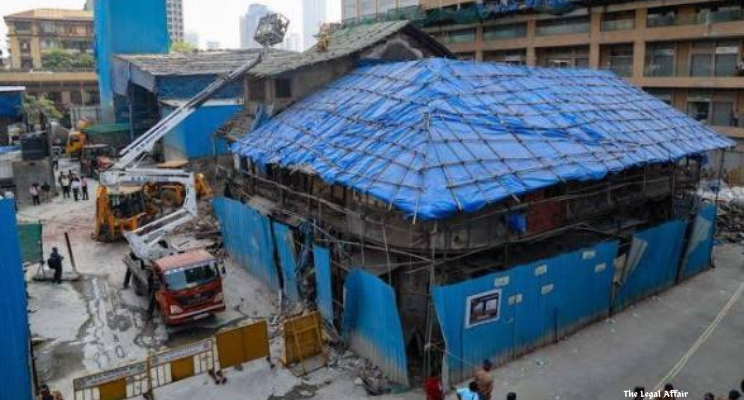
The Bombay High Court has intervened to temporarily halt the proposed demolition of an 87-year-old building in Mumbai’s Pakmodia Street, popularly known as Musafir Khana, which is historically associated with the family of fugitive gangster Dawood Ibrahim. A Division Bench comprising Chief Justice Mahesh Chandra Tripathi and Justice Advait Sethna directed the Brihanmumbai Municipal Corporation (BMC) to maintain status quo with respect to the demolition of the structure until November 23, 2026, at 3 PM.
The interim order was passed on Thursday, November 19, while hearing a petition challenging the civic body’s proposed demolition of the building. The Court also directed the BMC to submit its response to the petition by November 23. The direction came at a time when civic officials and a substantial police force had already been deployed at the site to facilitate the demolition.
The dispute concerns Musafir Khana, also known as Haji Ismail Haji Habib Musafirkhana, situated in Mumbai’s Bhendi Bazaar area. Constructed in 1939, the building was originally intended to provide accommodation to Haj pilgrims visiting the city. Over time, however, it acquired a different historical association after Dawood Ibrahim’s family reportedly began residing there in the early 1970s, before he became a prominent figure in Mumbai’s underworld.
The building’s association with Dawood Ibrahim has attracted public attention, but the immediate dispute before the High Court concerns the municipal decision to demolish an old structure classified as dilapidated and dangerous. According to reports, the BMC had proposed taking down the building on safety grounds, with demolition scheduled for November 18 and 19.
The matter raises questions concerning the exercise of municipal powers over ageing and potentially unsafe buildings, particularly where the proposed action is challenged before a court. Municipal authorities have statutory responsibilities to protect residents and the public from structures that may pose a threat to life and safety. At the same time, decisions affecting existing buildings and the interests of those connected with them must remain subject to applicable legal procedures and judicial scrutiny.
The High Court’s intervention is significant in this context because it temporarily prevents the civic authority from proceeding with demolition while the challenge is being considered. However, the order is an interim measure and should not be understood as a final finding on whether the building is structurally safe, whether the BMC’s decision was legally justified, or whether demolition should ultimately be permitted.
Arguments of the Parties:
The petition was filed challenging the proposed demolition of Musafir Khana by the BMC. The precise grounds raised by the petitioners and the detailed submissions made by their counsel are not available in the case summary. It would therefore be inappropriate to attribute specific legal or factual arguments to them beyond the fact that they approached the High Court seeking intervention against the proposed action.
The petitioners’ challenge placed the proposed demolition before the Court for judicial consideration before the civic authority could complete the exercise. By passing an order of status quo, the Bench ensured that the building would not be demolished while the petition remained under consideration and the BMC’s response was awaited.
The BMC, on the other hand, had proposed demolition after the structure was reportedly classified as dilapidated and dangerous. The civic authority’s stated basis for the proposed action was therefore connected with the condition of the building and the need to address the potential risks associated with an ageing structure.
The presence of civic officials and heavy police deployment at the site indicated that arrangements had already been made to carry out the demolition. The authorities were prepared to proceed with the operation, and the police force had been deployed to facilitate the exercise and manage the situation at the location.
During the hearing, the BMC informed the Court that withdrawing the police force deployed at the site would require at least an hour. This submission reflected the practical arrangements already in place for the proposed demolition. In view of the Court’s direction to maintain status quo, the deployment and the proposed operation had to be reconsidered in light of the interim judicial restraint.
The competing considerations in the matter are important. On one side is the civic body’s responsibility to prevent possible accidents arising from buildings considered unsafe. On the other is the requirement that a demolition decision, particularly one challenged before a constitutional court, should not be implemented in a manner that makes the pending legal challenge ineffective.
The Court’s direction to the BMC to file its reply by November 23 provides the civic authority an opportunity to place its position and the basis for the proposed demolition before the Bench. The petitioners will, in turn, have the opportunity to pursue their challenge in accordance with the proceedings before the Court.
Court’s Judgment:
The Division Bench of Chief Justice Mahesh Chandra Tripathi and Justice Advait Sethna passed an interim order directing the parties to maintain status quo with respect to the demolition of Musafir Khana until November 23, 2026, at 3 PM.
The order effectively restrained the BMC from proceeding with the demolition during the period specified by the Court. Since demolition activity was scheduled for November 18 and 19 and arrangements had already been made at the site, the direction ensured that the proposed action would not be completed before the Court had an opportunity to consider the matter further.
The Bench also directed the BMC to file its reply to the petition by November 23. This direction is significant because it allows the civic authority to explain the circumstances in which the building was classified as dilapidated and dangerous, the basis for its demolition decision, and the relevant material supporting the proposed action.
The Court’s decision to grant temporary protection must be understood in the context of the limited stage at which the proceedings currently stand. The Bench has not, on the basis of the information available, declared the building safe or held that the BMC lacks authority to demolish it. Nor has it finally determined the legality of the civic body’s decision. Instead, it has preserved the existing position for a short period so that the dispute can be examined without the proposed demolition rendering the proceedings ineffective.
Interim protection and the need to preserve the subject matter of litigation
A court considering a challenge to proposed administrative action may, where the circumstances justify it, grant interim protection to prevent an irreversible change before the legality of that action can be examined. Demolition of a building is ordinarily an irreversible act. Once a structure has been brought down, a subsequent judicial determination in favour of the person challenging the action may not be capable of restoring the original position.
The direction to maintain status quo therefore serves an important procedural purpose. It preserves the subject matter of the dispute until the Court receives the civic authority’s response and can consider the competing positions. Such interim protection does not automatically establish that the petitioner is entitled to succeed. It merely ensures that the legal challenge is not defeated by the completion of the very action under challenge before judicial consideration.
In the present matter, the timing of the proposed demolition was particularly relevant. The BMC had reportedly made arrangements to carry out the exercise, including the deployment of police personnel and civic officials. The High Court’s order prevented the situation from becoming irreversible while the petition remained pending.
Municipal responsibility to address dangerous buildings
The dispute also brings into focus the responsibility of municipal authorities to deal with buildings that may pose a danger to occupants and the public. Urban local bodies are entrusted with maintaining public safety and ensuring that buildings within their jurisdiction comply with applicable municipal requirements. Where a structure is found to be structurally unsafe, the relevant municipal law may empower the authority to take appropriate measures, including requiring repairs, restricting occupation or, where legally justified, ordering demolition.
Such powers are important in densely populated urban areas like Mumbai, where ageing buildings may present serious risks. A building’s age alone, however, does not conclusively establish that demolition is the only permissible course. The nature and extent of the structural danger, the material relied upon by the authority, the applicable statutory procedure and the circumstances of the affected persons may all become relevant when a demolition decision is challenged.
The BMC’s classification of Musafir Khana as dilapidated and dangerous is therefore central to the dispute. The civic authority will have to place its justification before the Court in its reply. The High Court’s interim order does not prevent the BMC from defending its decision; rather, it requires the authority to do so before proceeding further during the period covered by the status quo direction.
Historical association does not determine the legal dispute
Musafir Khana has attracted attention because of its reported connection with Dawood Ibrahim’s family. The building was originally constructed to accommodate Haj pilgrims and later became the residence of his family in the early 1970s. That historical association explains the public interest surrounding the proposed demolition.
Nevertheless, the legal question before the High Court is not determined merely by the identity of a person who once lived in the building. The relevant considerations concern the building’s present condition, the legal authority under which the BMC proposes to act, and the validity of the decision when examined against the applicable municipal framework.
The building’s historical background and its reported use over several decades may form part of the broader factual context, but they do not, by themselves, establish either that demolition is unlawful or that it must necessarily proceed. The Court’s role is to examine the legal and factual basis of the challenged action rather than allow public attention surrounding the property to replace the applicable legal standards.
Significance of the direction to file a reply
The direction requiring the BMC to submit its response by November 23 indicates that the Court intends to consider the civic authority’s explanation at the next stage of the proceedings. The authority will have an opportunity to place relevant facts and its justification for the proposed demolition on record.
The status quo order is limited in duration and operates until 3 PM on November 23, unless the Court passes a further direction. Consequently, the future course of the demolition will depend on the proceedings and any subsequent order passed by the Bench. The interim restraint should not be treated as a permanent stay or as a final adjudication in favour of the petitioners.
The Court’s order also highlights the importance of judicial supervision where administrative action is challenged shortly before its implementation. While public authorities must be able to discharge their statutory duties, the exercise of those powers remains subject to judicial review. Temporary restraint can be necessary where proceeding immediately may make it difficult, if not impossible, to provide meaningful relief later.
Ultimately, the Bombay High Court directed that the demolition of Musafir Khana be kept on hold and that the BMC file its reply by November 23, 2026. The matter is therefore expected to come up for further consideration after the civic body places its response before the Court. Until then, the building’s demolition cannot proceed in disregard of the status quo direction. The final legality of the proposed action remains open for consideration.