


Introduction:
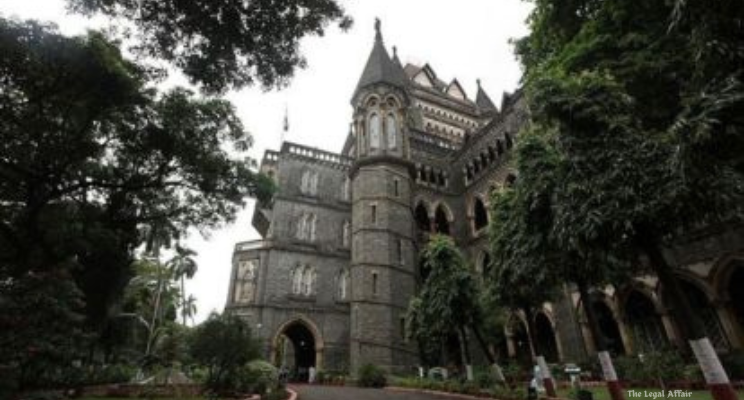
In a case that stirred political debate but failed to meet legal thresholds, the Bombay High Court on June 25, 2025, firmly rejected a public interest petition challenging the results of the Maharashtra Legislative Assembly elections held in November of the previous year. The division bench of Justices Girish Kulkarni and Arif Doctor dismissed the petition filed by Chetan Ahire, which alleged widespread irregularities in the polling process, particularly emphasizing that over 75 lakh votes were cast after the official polling deadline of 6 PM. The petition also raised concerns about discrepancies between the number of votes polled and the number of votes counted in as many as 95 assembly constituencies. While the Court refrained from imposing costs on the petitioner, it made clear its strong disapproval of the litigation, categorizing it as a waste of judicial time. Justice Kulkarni, delivering the oral pronouncement, stated unequivocally in open court that the petition was devoid of merit and that the Court’s valuable time had been squandered entertaining the matter for an entire day.
Arguments:
The petition, argued by senior advocate Prakash Ambedkar and supported by advocates Sandesh More and Hitendra Gandhi, sought to nullify the results of the entire Maharashtra Assembly elections based on alleged massive procedural violations. The primary contention revolved around the assertion that a staggering number of votes—estimated to be over 75 lakh—were cast either during the final minutes leading to 6 PM or after the deadline had passed. Counsel for the petitioner argued that the Election Commission of India (ECI) failed to establish any transparent mechanism for authenticating or verifying these late votes. Further, the petition highlighted discrepancies in vote tallies across nearly one hundred constituencies, where the polled votes recorded in voting registers did not match with the counted votes announced during result declaration.
The petition also accused the Returning Officers (ROs) of violating clear procedural norms as laid out in the ‘Handbook for Returning Officers’ issued by the ECI. Specifically, it was claimed that the Handbook requires ROs to report any material inconsistencies or errors to the Election Commission and to suspend the announcement of results until directions are received. However, in the case of Maharashtra’s elections, the petitioner alleged, such protocol was disregarded, leading to an erosion of the sanctity and legality of the electoral process. Consequently, the prayer in the petition was to declare the entire election process null and void, based on these alleged irregularities.
Opposing this plea, the Election Commission of India and the Chief Electoral Officer for Maharashtra robustly challenged the maintainability and substance of the petition. They argued that the petition was speculative, lacked evidentiary backing, and was procedurally flawed. It was further submitted that the statutory framework governing elections under the Representation of the People Act, 1951, provides a defined mechanism for electoral grievances, including election petitions before the High Court under Section 80, which must be filed by candidates or other qualified individuals and not in the form of public interest litigation. The ECI contended that the petitioner, not being a contesting candidate, had no locus standi to question the outcome of the elections in the manner sought. Moreover, they denied the allegations of procedural impropriety and affirmed that the polling and counting were conducted strictly in accordance with law.
Judgement:
In considering the arguments, the High Court did not find any merit in the petitioner’s claims. The bench noted that the allegations of votes being cast after 6 PM were not substantiated with any primary material evidence. It recognized that the ECI has systems in place to allow voters who are in queue at the closing time to cast their vote, which is a well-established practice in Indian elections. The Court found that the petitioner had misinterpreted this provision as a systemic lapse. Regarding the alleged discrepancies in 95 constituencies, the Court held that these were general allegations lacking specificity, particularization, or documentary proof. It stated that vague assertions without verifiable data cannot form the basis for invalidating an election outcome.
The bench also agreed with the respondents that the Handbook referred to by the petitioner does not override the statutory provisions of the Representation of the People Act. While the Handbook may guide Returning Officers, it is not a binding law and any alleged non-compliance with its provisions does not, by itself, constitute a ground to annul election results. More importantly, the Court reiterated that there exists a specific legal procedure to challenge elections through election petitions, and PILs cannot be used to bypass this statutory remedy. The judiciary cannot entertain generalized public interest litigations seeking to overturn completed elections unless there is glaring illegality supported by robust and cogent evidence, which was conspicuously absent in the present case.
In a stern rebuke, the bench expressed that entertaining such petitions drains judicial resources and hampers the disposal of other pressing matters. Justice Girish Kulkarni observed in open court, “We have no manner of doubt that this petition needs to be rejected. The whole day of this Court was wasted while hearing this petition. We were of the view that costs should be imposed on them but we refrain from doing so.” The bench’s comments serve as a reminder that courts must discourage litigation that seeks to use the judicial forum for political or speculative purposes under the garb of public interest.
While a detailed written order is yet to be released, the oral observations made by the Court have already set a precedent in discouraging the misuse of PILs for contesting election results. The Bombay High Court has maintained a strict line distinguishing between genuine legal grievances and politically motivated or procedurally flawed petitions. The Court’s refusal to entertain baseless claims is also significant in the context of maintaining public confidence in democratic processes and the sanctity of electoral outcomes.
The case also casts light on the responsibilities of litigants and legal counsel in framing and presenting petitions of public importance. The lack of credible evidence, the absence of locus standi, and the failure to follow proper legal channels all contributed to the petition’s downfall. Though the petitioner might have had genuine concerns about transparency in the election process, the High Court emphasized that such concerns must be backed by facts and pursued through appropriate statutory mechanisms.
The verdict underscores the importance of procedural discipline in election law and the limited role that courts can play once elections have been concluded and results declared, barring exceptional circumstances. It also reinforces the judicial stance that PILs should not be treated as instruments to challenge political outcomes in the absence of demonstrable illegality or fraud. Courts remain custodians of democratic principles, but their role is bounded by the constitutional and statutory framework that governs the conduct of elections in India.