


Introduction:
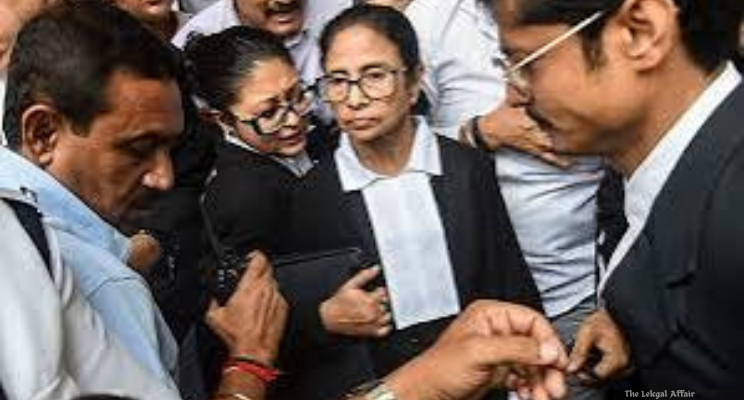
A fresh legal and professional controversy emerged after the Bar Council of India sought detailed information from the Bar Council of West Bengal regarding the enrollment and practice status of former West Bengal Chief Minister Mamata Banerjee. The development came after Banerjee reportedly appeared before the Calcutta High Court wearing advocate’s robes and white bands during proceedings conducted on May 14, 2026.
The issue immediately attracted nationwide attention because it involved questions concerning professional ethics, the statutory framework regulating advocates in India, and the applicability of the Bar Council of India Rules governing legal practice and courtroom appearance. The BCI, through a formal communication issued by its Principal Secretary Srimanto Sen, directed the State Bar Council to furnish complete records relating to Banerjee’s enrollment as an advocate, her status on the State Roll, any suspension or cessation of practice during her tenure as Chief Minister, and whether she presently holds a valid Certificate of Practice.
According to the communication, the BCI took note of “various media reports” indicating that the former Chief Minister appeared before the High Court in full legal attire. The Council clarified that it was not expressing any final opinion regarding the permissibility or legality of such appearance at that stage. However, it emphasized that verification of the factual position relating to her enrollment and practice status was necessary under the regulatory framework governing advocates in India.
The controversy arises in the broader context of the statutory scheme established under the Advocates Act, 1961 and the Rules framed by the Bar Council of India regulating enrollment, professional conduct, right to practice, and courtroom dress code for advocates. Under Indian law, only duly enrolled advocates possessing a valid and active Certificate of Practice are entitled to practice before courts and appear in prescribed legal attire.
The matter also raises significant questions regarding the professional status of individuals who hold constitutional or political offices while simultaneously remaining enrolled advocates. Since Banerjee served as Chief Minister of West Bengal continuously from 2011 to 2026, the BCI considered it necessary to examine whether any voluntary suspension, cessation, or subsequent resumption of practice had been officially recorded during that period.
The BCI’s letter further instructed the State Bar Council to preserve all original records in their existing condition and warned against any alteration, overwriting, correction, or reconstruction except in accordance with law and after due intimation to the national regulatory body. The Council sought certified copies of all relevant entries and documents within two days, thereby indicating the urgency and seriousness attached to the matter.
The development has generated widespread debate within legal circles regarding the ethical obligations of advocates, the distinction between enrollment and active practice, and the extent to which political office-holders may participate in courtroom proceedings after prolonged absence from legal practice.
Arguments of the Parties:
Although the issue presently remains at a preliminary verification stage rather than a contested judicial proceeding, the controversy has already triggered competing legal and professional viewpoints concerning the interpretation of the Advocates Act and Bar Council Rules.
The Bar Council of India, through its communication, effectively raised concerns regarding procedural compliance with statutory requirements governing legal practice. The BCI’s position, as reflected in the letter, is rooted in the need to verify whether a person appearing before a constitutional court in advocate’s attire satisfies the legal requirements prescribed under the regulatory framework for advocates.
The Council referred to the Bar Council of India Rules governing professional conduct and dress code, which prescribe that advocates appearing before courts must comply with enrollment and practice requirements. The BCI therefore sought verification of crucial details including the enrollment number, date of enrollment, continuation on the State Roll, validity of Certificate of Practice, and any records relating to suspension or cessation of practice.
A significant concern underlying the BCI’s inquiry relates to the distinction between remaining enrolled as an advocate and actively practicing law. Under the existing legal framework, enrollment alone may not automatically entitle an individual to practice indefinitely if procedural requirements concerning Certificates of Practice, renewal, or declaration of non-practice become relevant.
The BCI also appeared concerned about whether any formal intimation had been given regarding voluntary suspension or discontinuation of legal practice during Banerjee’s tenure as Chief Minister. Since constitutional and political offices involve full-time executive responsibilities, the Council sought to ascertain whether official records reflected any interruption or resumption of practice during the relevant period.
The letter further demonstrated the BCI’s emphasis on record integrity and procedural transparency. By directing preservation of original records and cautioning against alteration or reconstruction, the Council sought to ensure that the verification process remains credible and legally reliable.
On the other hand, supporters of Banerjee and sections of the legal community have argued that enrollment as an advocate remains valid unless specifically suspended, cancelled, or removed in accordance with law. According to this perspective, holding public office does not automatically extinguish enrollment status unless statutory disqualifications are attracted or formal steps are taken to surrender or suspend practice rights.
It has also been argued in some legal circles that the right to appear before courts flows primarily from valid enrollment under the Advocates Act, subject to compliance with procedural requirements. Therefore, unless there exists any order of suspension, removal from the rolls, or invalidation of Certificate of Practice, appearance in court may not automatically amount to professional misconduct.
Another aspect likely to emerge in the broader debate concerns the distinction between occasional appearance and regular legal practice. Some legal observers contend that an enrolled advocate may appear in isolated matters without necessarily maintaining continuous professional practice, provided statutory conditions are fulfilled.
At the same time, critics have emphasized that courtroom appearance carries institutional significance because advocates occupy a regulated professional position under the legal system. According to this view, strict compliance with enrollment records, practice certification requirements, and Bar Council regulations becomes necessary to preserve public confidence in professional standards and courtroom decorum.
The controversy therefore reflects competing interpretations regarding the nature of legal practice, the continuing rights of enrolled advocates, and the regulatory authority of professional bodies over courtroom appearances by individuals holding or having held political office.
Court’s Judgment:
At present, there is no judicial determination or adjudicatory order by the Calcutta High Court regarding the legality of the former Chief Minister’s appearance in advocate’s attire. The matter presently concerns an administrative and regulatory inquiry initiated by the Bar Council of India seeking factual clarification from the State Bar Council.
Nevertheless, the legal significance of the controversy lies in the statutory and constitutional principles governing legal practice in India. The Advocates Act, 1961 establishes a comprehensive framework regulating enrollment, professional conduct, disciplinary control, and right to practice. Under the statute, State Bar Councils maintain rolls of advocates, while the Bar Council of India exercises supervisory and regulatory authority at the national level.
One of the central issues likely to arise in any future consideration is the legal effect of holding constitutional or political office on an advocate’s professional status. Indian law does not automatically prohibit enrolled advocates from entering politics or assuming public office. However, questions may arise regarding continuity of practice, renewal requirements, and compliance with professional regulations during extended periods away from active legal work.
The BCI’s inquiry also touches upon the importance of Certificates of Practice within the regulatory framework. In recent years, the Bar Council of India has implemented verification mechanisms aimed at identifying non-practicing advocates and maintaining updated professional records. These measures were introduced to ensure authenticity of practice status and prevent misuse of enrollment privileges.
Another significant legal principle underlying the controversy concerns courtroom attire and professional identity. Advocate’s robes and white bands are not merely ceremonial clothing but symbols of a regulated profession governed by ethical obligations and statutory discipline. Courts and Bar Councils therefore treat unauthorized or improper use of legal attire with seriousness because it concerns institutional dignity and professional integrity.
The BCI’s decision to avoid expressing any immediate opinion on permissibility demonstrates procedural caution and adherence to principles of natural justice. Instead of prematurely concluding misconduct or irregularity, the Council chose first to ascertain factual records from the competent State authority. This approach reflects the regulatory principle that professional determinations must be based on official documentation rather than media speculation alone.
The directive requiring preservation of records is equally important from a legal standpoint. Such directions are commonly issued when regulatory authorities seek to prevent alteration or tampering of official records during sensitive inquiries. By instructing the State Bar Council to maintain all original records in their present form, the BCI sought to ensure transparency and evidentiary reliability.
The matter may also potentially raise broader constitutional questions regarding the balance between professional regulation and an individual’s right to participate in legal proceedings. However, such questions would arise only if the issue eventually reaches a stage of disciplinary adjudication or judicial review.
As matters presently stand, the BCI’s action represents a fact-finding and verification exercise rather than a final determination of wrongdoing. The outcome will depend upon examination of enrollment records, practice certificates, correspondence files, and any declarations relating to cessation or resumption of practice.
The controversy nevertheless highlights the importance of maintaining clear and updated professional records within the legal profession. It also underscores the regulatory responsibilities of Bar Councils in ensuring that courtroom appearances comply with statutory requirements and professional norms.
Ultimately, the issue transcends individual personalities and touches upon larger institutional concerns involving professional ethics, regulatory accountability, and public confidence in the legal system. Whether the inquiry ultimately reveals procedural compliance or irregularity, the episode serves as a reminder that the legal profession in India remains governed by a structured statutory framework designed to preserve the dignity, discipline, and integrity of courtroom practice.