


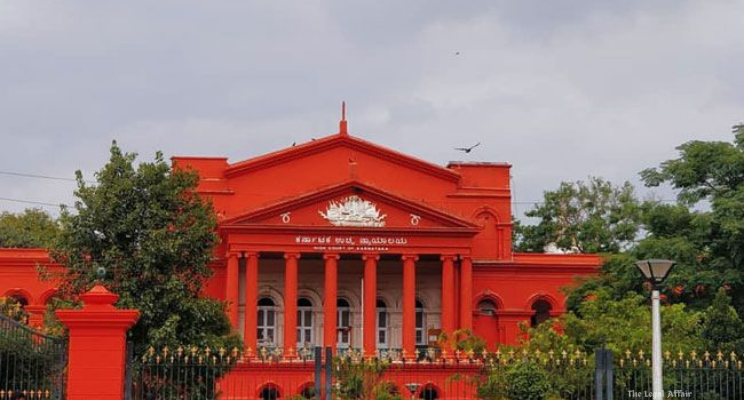
Introduction:
In Shri Naveen R & Anr. v. State of Karnataka & Anr., Writ Petition No. 4513 of 2026, the Karnataka High Court reaffirmed the constitutional balance between democratic expression and reasonable regulation. The petition was filed by the Centre for Indian Trade Unions (CITU) and its President challenging an endorsement dated February 4, 2026 issued by the Assistant Commissioner of Police (ACP), Malleshwaram, Bengaluru, rejecting their application to use loudspeakers mounted on two autorickshaws to create awareness about a proposed protest. The police had declined permission citing the presence of educational institutions, hospitals, No Honking Zones, senior citizens, and unwell residents in the locality. Justice B.M. Shyam Prasad, while disposing of the writ petition, observed that an awareness campaign is a facet of the democratic process and cannot be restricted unreasonably. The Court found that the impugned endorsement bore the colour of unreasonableness, particularly when similar permissions had been granted by ACPs of other divisions subject to regulatory conditions. Ultimately, the Court directed the ACP, Malleshwaram, to permit the petitioners to use two autorickshaws with loudspeakers on February 12, 2026, subject to conditions ensuring public order, traffic discipline, and compliance with noise pollution norms. The ruling thus underscores that administrative discretion must be exercised fairly and proportionately, especially when fundamental democratic activities are at stake.
Arguments of the Petitioners:
Appearing for the petitioners, counsel argued that the rejection of their application was arbitrary and failed to consider whether reasonable conditions could have been imposed instead of outright denial. It was submitted that the proposed use of loudspeakers was limited in scope—two autorickshaws for awareness creation regarding a protest—and was neither excessive nor disruptive by design. The counsel emphasized that awareness campaigns are intrinsic to democratic participation and are often conducted through public announcements. It was further argued that ACPs of other sub-divisions in Bengaluru had granted similar permissions to the Union on stipulated conditions, such as ensuring that autorickshaws do not obstruct traffic, avoiding educational institutions and hospitals, using only box loudspeakers (and not DJs), refraining from defamatory material, complying with prescribed noise limits, and ceasing operations before 10 p.m. The petitioners contended that the ACP, Malleshwaram, failed to consider these precedents and instead adopted a blanket refusal. They asserted that such refusal disregarded the principle of parity and non-arbitrariness in administrative action. While the original request sought permission for February 10 and 11, 2026, counsel submitted that the Court could direct the authorities to permit the use on a subsequent date, subject to reasonable conditions. The central thrust of the petitioners’ argument was that the State’s power to regulate cannot translate into suppression of legitimate democratic expression, particularly when safeguards can mitigate potential inconvenience.
Arguments of the Respondents:
The State authorities, represented through the ACP’s office, defended the rejection by highlighting the sensitive nature of the Malleshwaram area. It was submitted that the locality houses several educational institutions, hospitals, and designated No Honking Zones, making it vulnerable to disturbance from amplified sound. The presence of senior citizens and persons who are unwell was cited as an additional concern. The ACP argued that public order and public health considerations justified refusal of permission. The State contended that the police are entrusted with maintaining law and order and ensuring compliance with environmental and traffic regulations, including the Noise Pollution (Regulation and Control) Rules. It was suggested that permitting loudspeakers in such a locality could potentially disrupt academic activities, medical services, and residential peace. The respondents thus maintained that the decision was taken in the interest of public welfare and did not warrant judicial interference. However, they did not dispute that similar permissions had been granted in other divisions subject to conditions.
Court’s Judgment:
Justice B.M. Shyam Prasad approached the issue through the prism of constitutional reasonableness. The Court observed that awareness campaigns are a legitimate facet of democratic process, enabling citizens and organisations to mobilize opinion and participation. While recognizing that the State has authority to impose reasonable restrictions in the interest of public order and health, the Court emphasized that such restrictions must not be disproportionate or arbitrary. The Bench found that the impugned endorsement bore the colour of unreasonableness because the ACP had not examined whether conditions could be imposed to balance competing interests. The Court noted that ACPs of other sub-divisions had granted permission to the same Union with safeguards such as avoiding educational institutions and hospitals, adhering to noise pollution norms, preventing obstruction of traffic, limiting operations to before 10 p.m., and ensuring no defamatory content. The failure to consider similar conditional permissions rendered the rejection unsustainable. The Court thus directed the ACP, Malleshwaram, to permit the petitioners to use two autorickshaws with loudspeakers on February 12, 2026, subject to the same conditions earlier adopted in other divisions. By doing so, the Court reaffirmed that administrative discretion must align with constitutional values of fairness, parity, and proportionality. The judgment reflects a nuanced approach—protecting democratic freedoms while safeguarding legitimate public interests.