


Introduction:
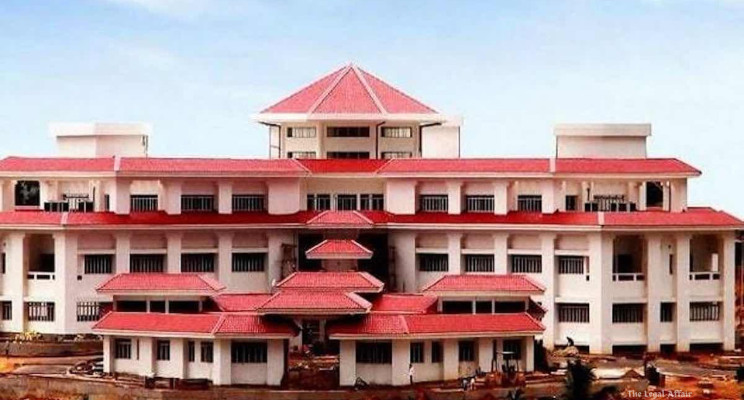
The case of Shri Samir Ranjan v. The Agartala Municipal Corporation & Ors. came before the Tripura High Court in the form of a writ appeal challenging the dismissal of a writ petition by a learned Single Judge. The dispute arose out of long-standing inaction by municipal authorities in addressing an alleged unauthorized construction in a residential area of Agartala. The appellant, a resident of the city, had been raising grievances since 2015 regarding the illegal construction of a multi-storey building by his neighbour without obtaining necessary permissions from the Agartala Municipal Corporation. Acting on these complaints, the competent authority had issued a notice and subsequently passed a demolition order under Sections 133 and 135 of the Tripura Municipal Act, 1994 in August 2015, directing the removal of unauthorized portions of the building. Despite the existence of this order and its affirmation by the Appellate Authority in 2018, the authorities failed to conduct even a technical inspection for several years, effectively rendering the statutory order meaningless. Aggrieved by such prolonged administrative inaction, the appellant approached the High Court seeking enforcement of the Appellate Authority’s order. However, the writ petition was dismissed on the ground that an alternative remedy before a civil court was available. Challenging this, the appellant preferred a writ appeal before the Division Bench comprising Chief Justice M.S. Ramachandra Rao and Justice Biswajit Palit. The central issue before the Court thus revolved around whether statutory authorities could evade compliance with binding appellate directions through delay and whether the writ jurisdiction of the High Court could be invoked to compel enforcement of such orders.
Arguments of the Appellant:
That the appellant contended that the municipal authorities had failed in their statutory duty by not implementing the demolition order passed under Sections 133 and 135 of the Tripura Municipal Act, 1994, despite repeated complaints and follow-ups since 2015. It was argued that the continued inaction of the authorities had allowed the illegal construction to persist, thereby infringing upon the appellant’s rights and undermining the rule of law.
That the appellant submitted that the Appellate Authority had already upheld the demolition order on 25 May 2018, making it binding upon the municipal authorities. Once such an order had attained finality, it was incumbent upon the authorities to act promptly and enforce the same. Their failure to do so for nearly eight years was characterized as arbitrary, unjustified, and contrary to statutory obligations.
That the appellant further argued that he had already exhausted the statutory remedies available under the Act by approaching the Appellate Authority, and therefore, it was erroneous for the learned Single Judge to dismiss the writ petition on the ground of availability of an alternative remedy before a civil court. It was contended that requiring the appellant to initiate fresh civil proceedings would amount to denying him effective relief and would perpetuate injustice.
That reliance was placed on the principle that writ jurisdiction under Article 226 of the Constitution can be invoked where statutory authorities fail to discharge their duties or act in defiance of binding orders. The appellant argued that the present case squarely fell within this category, as the authorities had not only failed to act but had also ignored a binding appellate order.
That the appellant emphasized that the prolonged delay in conducting even a technical inspection demonstrated gross negligence and administrative apathy. It was argued that such unexplained delay could not be permitted to defeat statutory orders or the rights flowing from them.
That the appellant ultimately prayed for issuance of a writ of mandamus directing the authorities to implement the Appellate Authority’s order and to take necessary steps for demolition of the unauthorized construction.
Arguments of the Respondents:
That the respondents sought to justify the dismissal of the writ petition by contending that the dispute between the parties was essentially civil in nature, involving property rights and construction disputes between neighbours. It was argued that such matters are more appropriately adjudicated by civil courts rather than through writ proceedings.
That the respondents submitted that the appellant had an effective and efficacious alternative remedy available before the civil court, where issues relating to title, possession, and legality of construction could be comprehensively examined. On this basis, it was contended that the writ petition was not maintainable.
That the respondents did not provide any satisfactory explanation for the delay in implementing the Appellate Authority’s order or for the failure to conduct a technical inspection for nearly eight years. However, it was suggested that administrative and procedural constraints may have contributed to the delay.
That it was also argued that the municipal authorities were required to follow due process before taking coercive action such as demolition, and that such processes may take time. The respondents attempted to justify the delay by implying that procedural safeguards must be adhered to before enforcing demolition orders.
That the respondents thus prayed for dismissal of the writ appeal, contending that no interference with the order of the learned Single Judge was warranted.
Court’s Judgment:
That the Tripura High Court, after carefully considering the submissions of both parties, allowed the writ appeal and set aside the order of the learned Single Judge. The Court held that the reasoning adopted by the Single Judge was erroneous in law and contrary to settled principles governing writ jurisdiction.
That the Court categorically held that once the appellant had already availed the statutory remedy under the Tripura Municipal Act, 1994 by approaching the Appellate Authority, it was not open to the Single Judge to direct him to pursue an alternative remedy before a civil court. The Court emphasized that the existence of an alternative remedy does not bar the exercise of writ jurisdiction in cases where statutory authorities fail to perform their duties or act in violation of binding orders.
That the Court observed that the Appellate Authority’s order dated 25 May 2018 was binding on the municipal authorities, and they were duty-bound to implement it without undue delay. The failure to conduct even a technical inspection for eight years, despite repeated requests by the appellant, was held to be wholly unjustified and indicative of administrative inaction.
That the Court strongly remarked that statutory authorities cannot evade their obligations by resorting to prolonged inaction. It held that unexplained administrative delay cannot defeat statutory orders or the rights that flow from them. Such conduct was found to be contrary to the principles of good governance and rule of law.
That the Court further held that in such circumstances, it is well within the powers of the High Court to issue a writ of mandamus compelling the authorities to perform their statutory duties. The Court reiterated that writ jurisdiction is meant to ensure that public authorities act in accordance with law and do not frustrate statutory mandates through inaction.
That the Court rejected the respondents’ contention that the dispute was purely civil in nature, observing that the statute itself provides a mechanism under Sections 133 to 135 for addressing issues relating to unauthorized construction. Since the appellant had already invoked these provisions, the matter could not be relegated to a civil court.
That the Court concluded that the appellant had been subjected to undue hardship due to the inaction of the authorities and that the denial of relief by the Single Judge was unsustainable. Accordingly, the writ appeal was allowed, and appropriate directions were issued to ensure implementation of the Appellate Authority’s order.