


Introduction:
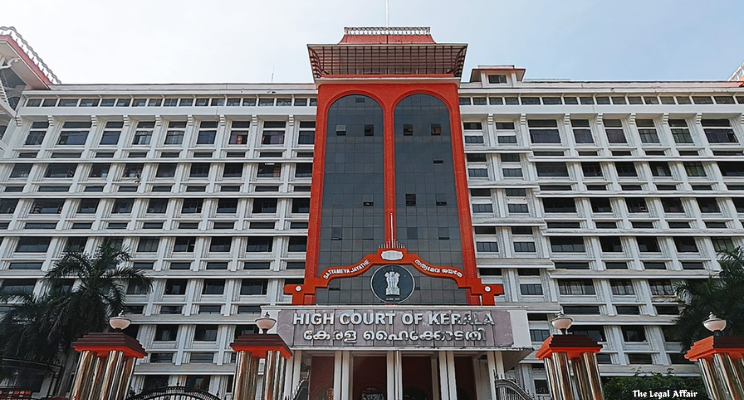
In the matter of Thankamany and another v. Asst. Executive Engineer, KSEB and others [RFA No. 531 of 2009 & RFA No. 243 of 2016], the Kerala High Court, presided over by Justice A. Badharudeen, delivered a significant ruling interpreting the limits of appellate court jurisdiction in matters of court fee waiver. The appellants had originally filed civil suits before the Sub Court, Kochi, in their capacity as indigent persons and were granted such status for both the original suit and subsequent appeals. After an adverse judgment at the trial level, they preferred Regular First Appeals (RFAs) before the High Court, where the parties ultimately reached a mediated compromise. The compromise agreement included a clause—Clause 5—wherein both parties agreed to request the appellate court to set aside the direction of the trial court regarding the realisation of the court fee. This raised an important legal question before the Court: Whether an appellate court has the authority to waive or cancel the recovery of court fees directed by the trial court after a decision on the merits, merely because the appeal ends in a compromise.
Arguments of both sides:
The appellants argued that since the case was settled at the appellate level through court-referred mediation and since they were recognised as indigent litigants both at the trial and appeal stages, the High Court ought to accept the parties’ mutual request to waive the court fees directed to be realised by the trial court. They placed reliance on two prior decisions of the Kerala High Court: Kochupailo v. Reena & Ors., wherein it was held that a plaintiff permitted to sue as an indigent person could not be compelled to pay court fee even after losing the case, and Santha & Ors. v. KSEB & Ors., in which the High Court permitted waiver of appellate court fee upon settlement. Invoking these precedents and highlighting Clause 5 of the mediation settlement, the appellants contended that the appellate court had discretion under law, especially within the framework of Section 89 of the Code of Civil Procedure, to effect such a waiver as part of compromise facilitation. The respondents, represented by various standing counsels for the Kerala State Electricity Board (KSEB), strongly opposed this plea, arguing that the Kerala Court Fees and Suit Valuation Act (KCF and SV Act) provides no authority—either express or implied—for an appellate court to waive a statutory obligation like court fee payable before a lower court. They highlighted that such fees are determined by statute and cannot be negotiated or relinquished even by mutual consent, as such obligations are towards the State and not inter partes.
Judgement:
Justice A. Badharudeen concurred with the respondents’ interpretation and undertook a detailed reading of Sections 69 and 69A of the KCF and SV Act. He observed that Section 69 permits refunds of court fees only in cases of compromise under Section 89 CPC or where suits are disposed of on admissions, but such refunds apply to fees already paid, not to exempt those who have not yet paid due to indigent status. He further pointed out that Section 69A only contemplates refunds in limited circumstances and does not empower courts to waive fee obligations arising from trial court proceedings. Emphasising that there is no statutory mechanism under the KCF and SV Act or the CPC allowing the appellate court to nullify trial court directives on fee realisation once a case has been adjudicated on merits, the Court held that Clause 5 of the settlement agreement was beyond legal competence. Consequently, while the Court accepted the remaining clauses of the compromise and allowed the RFAs accordingly, it categorically excluded Clause 5, ruling that the request to waive the trial court fee must fail. The Court, however, did grant relief by not insisting on recovery of the court fee payable at the appellate stage, which was permitted under precedent. Thus, the appeal was disposed of in terms of settlement, save for the request about trial court fees.