


Introduction:
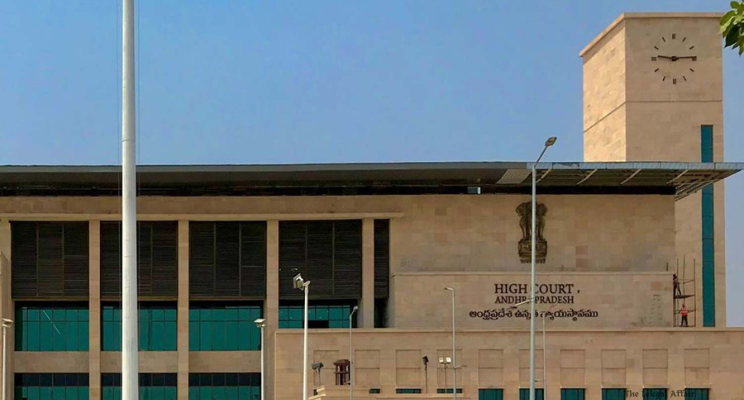
In the case of B. Venkateswara Rao v. The State of Andhra Pradesh and Others, Writ Petition Nos. 28673 of 2024 and 424 of 2025, a significant judgment was delivered on 06.05.2025 by the Andhra Pradesh High Court through a Single Judge Bench led by Justice Gannamaneni Ramakrishna Prasad. The case revolved around the denial of a student’s third semester result and his subsequent disallowance from attending the fourth semester classes at GMR Institute of Technology, referred to as Respondent No. 4 in the petition, due to his lack of attendance stemming from two medically certified spells of illness. The petitioner’s inability to fulfill the required attendance as per the institute’s Academic Regulation No.9(b) led to the college refusing to publish his exam results and denying him admission into the subsequent semester. In a pathbreaking decision, the Court struck down the said regulation, terming it arbitrary and violative of Article 14 of the Constitution of India. This judgment not only reinstated the petitioner’s right to education but also set a precedent against rigid private institutional rules that fail to account for genuine and involuntary student hardships such as illness.
Arguments of Both Sides:
The petitioner, B. Venkateswara Rao, a B.Tech student enrolled in the Artificial Intelligence and Data Science program at GMR Institute of Technology, filed the writ petition after being denied his third semester results and not being allowed to attend the fourth semester classes due to shortfall in attendance. He had suffered from two separate spells of illness: from 19.08.2024 to 30.08.2024 due to Acute Gastroenteritis and Widal Fever and later from 21.10.2024 to 31.10.2024 due to Typhoid Fever. For both periods, he submitted valid medical certificates issued by the Medical Officer of the Primary Health Centre, Boddam, located in Vizianagaram District. Despite the submission of the said certificates, the college refused to consider his plea, citing their Academic Regulation No.9(b), which allowed for a maximum condonation of only 10% attendance shortage, even on medical grounds. The petitioner argued that such a rigid cap failed the test of Article 14, as it treated unequals equally and disregarded the involuntary nature of his absence due to health conditions that were beyond his control. Further, he contended that education is a fundamental right, and it cannot be curtailed through mechanical application of private regulations that lack compassion and flexibility. The petitioner also brought to the Court’s attention that though he was permitted to write the exams following an earlier interim order, his results were never published, nor was he allowed to participate in fourth semester academic sessions. The respondent college, on the other hand, defended its decision by heavily relying on Academic Regulation No.9(b), asserting that their hands were tied as the attendance shortfall exceeded the permissible 10% threshold for condonation, even for medical reasons. They contended that the regulation was uniformly applied to all students and hence not discriminatory.
Judgement:
The core question before the Court thus became whether such a regulation, set by a private institution, could survive constitutional scrutiny under Article 14, which mandates equality before the law. Justice Prasad, while analyzing the validity of Regulation No.9(b), observed that the regulation failed to acknowledge the nature and unpredictability of human illnesses, which can incapacitate individuals beyond their control. The Court emphasized that no blanket regulation could be applied to medical absences, especially when supported by legitimate evidence such as government medical certificates. The Court drew parallels from the Patna High Court judgment in All India Students Federation vs. The State of Bihar & Others [2016 SCC OnLine Pat 7383], where it was held that a student should not be punished with penal consequences solely due to attendance shortage if a genuine case of medical exigency is made out. Justice Prasad strongly observed that the impugned regulation was not framed by a public university but rather by a private educational institution, which made its irrationality even more problematic, as private institutions are also bound by constitutional mandates when performing public functions like education. The judgment elaborated that the Regulation No.9(b) was not only lacking in humane application but also arbitrary in the sense that it did not provide any discretionary leeway to condone attendance in exceptional circumstances such as serious illness. It treated a medically incapacitated student the same as a willfully negligent one, thereby violating the principle of reasonable classification enshrined in Article 14. The Court held that education, being a part of the right to life under Article 21, cannot be curtailed by such unreasonable rules. As a result, the Court quashed the application of Regulation No.9(b) in the petitioner’s case and directed GMR Institute of Technology to immediately publish the petitioner’s third semester results and allow him to continue attending the fourth semester classes without any further hindrance. The Court also took a strong note of the mental agony caused to the petitioner due to this unwarranted delay and the mechanical conduct of the institution in failing to act empathetically. In delivering its judgment, the Court reminded private educational institutions of their constitutional obligations and the duty to act in a manner that furthers the cause of education rather than frustrating it through rigid bureaucratic conduct. Justice Prasad concluded that students cannot be made victims of ill-thought academic policies and that institutions should not adopt a one-size-fits-all approach to matters affecting individual rights. The Court’s intervention thus marked a crucial check on private institutional overreach and reaffirmed the judiciary’s role in protecting the educational rights of students, especially in scenarios involving involuntary hardships like illness.